
🐦 At a glance
- What it is
- A ~110,000-acre estuarine research reserve
- Where
- Just south of Naples, behind the barrier islands
- Why it's rich
- Mangrove + tidal flats + freshwater mix, almost no development
- Signature wildlife
- Eagles, spoonbills, manatees, dolphins
- Tours
- Run alongside and border the reserve
What Rookery Bay is
Rookery Bay is a national estuarine research reserve — about 110,000 acres of mangrove islands, oyster bars, tidal creeks and open bay stretching from the south end of Naples down toward Marco Island. The name comes from the wading-bird rookeries that nest on its islands. What makes it special isn't a single landmark; it's that this much coastline got protected before it got paved. Drive Naples' beaches and you're in a city. Slip behind the barrier islands into Rookery Bay and you're in one of the last places the Gulf coast still looks the way it did a century ago — quiet water, green mangrove walls, and birds everywhere.
Why it's packed with wildlife
An estuary is where rivers and rain meet the sea, and that blend is the secret. Freshwater drainage off the land mixes with salt Gulf water to make brackish water that's wildly productive — more food per acre than either pure fresh or pure salt. Add the mangrove nursery, the oyster bars and seagrass, and the twice-daily tide stirring it all, and you get a food machine. Then protect it from development so the animals can actually use it, and they show up in numbers: ospreys and bald eagles hunting the bays, herons and roseate spoonbills working the flats, and fish stacked thick enough to feed them all.
What you'll actually see
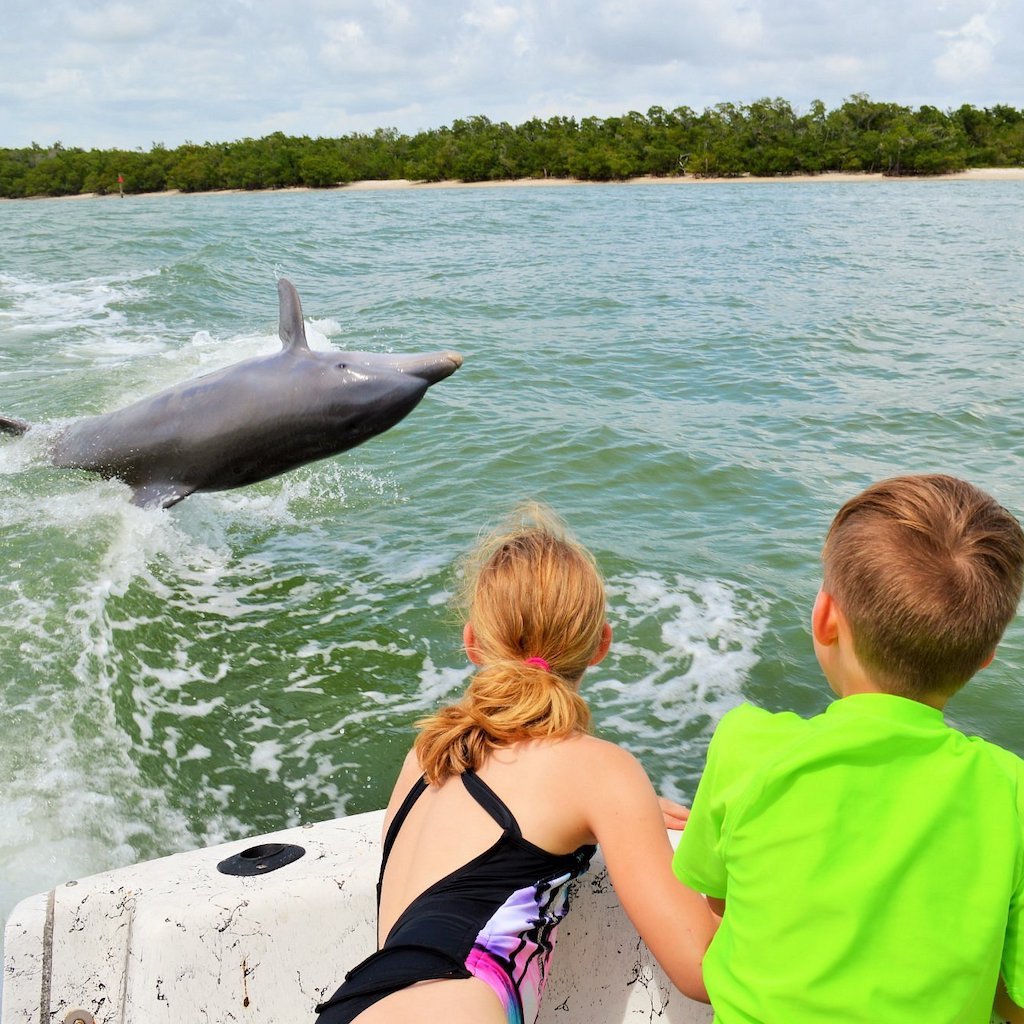
Honest expectations beat hype, so here's the real spread. Bottlenose dolphins live in these waters year-round and are the headline sighting on most trips. Birds are nearly constant: pelicans, osprey, herons, egrets, ibis, and the showstopper pink of a spoonbill. In the cooler months — roughly November through March, when the Gulf drops below about 68°F — manatees move into the reserve's warmer, sheltered creeks, though they're dispersed here rather than herded in big springs like Crystal River. Nothing in the wild is guaranteed, but Rookery Bay stacks the odds.
| Wildlife | When | Where to look |
|---|---|---|
| Bottlenose dolphins | Year-round | Passes & creek mouths |
| Wading birds & spoonbills | Year-round, peak spring | Mangrove flats & rookeries |
| Bald eagles & ospreys | Year-round, nesting winter | Tall snags & open bay |
| Manatees | Nov–Mar (below ~68°F) | Warm sheltered creeks |
Touring its edge
Rookery Bay is a research reserve with rules that protect it, and our tours respect them — we run alongside and border the reserve's waters rather than disturbing its core. From Goodland and Naples, our dolphin and wildlife tours trace the same mangrove edges, passes and flats that make this estuary so alive, idling slow and keeping a respectful distance from rookeries and resting animals. You can also dig deeper into the place itself in our Rookery Bay Reserve guide.
From the Helm: Choosing which creek mouth of Rookery Bay to run, tide by tide
Most mornings, we decide where inside Rookery Bay we’re headed before the dock lines are even off, and the tide chart makes that call more than the calendar does. On an incoming tide we lean toward the mouth of Henderson Creek, where the push of water carries bait up against the mangrove roots and pulls wading birds down to the banks to meet it. On a falling tide, that same creek mouth empties out fast and gets skinny, so we’ll swing wide instead and work water that holds depth longer. Wind changes that math too — a north wind piles extra water into the upper creeks and buys us an extra hour of usable depth we wouldn’t get on a calm morning.
When the tide sits up near slack, we often idle out toward the open flats of Hall Bay instead, because that’s where you can actually watch from height — an osprey circling tight, or a bald eagle parked in a snag with a clear sightline to the water below, is as good a sign as any that there’s bait moving underneath. We’ll shut the outboard down and sit there quietly for several minutes, letting whatever’s hunting keep hunting instead of scattering everything the second we show up.
| Tide stage | Where we work | What tends to show |
|---|---|---|
| Incoming | Henderson Creek mouth | Bait pushed in, wading birds stacking the banks |
| High slack | Hall Bay flats | Ospreys and eagles working from height |
| Outgoing | Blackwater River drainage | Mullet showers, dolphins working the current |
An outgoing tide changes the whole picture again. Down toward the Blackwater River drainage, the current reverses and pushes bait back out of the mangroves, and that’s when we start watching for nervous water — a patch of surface that ripples wrong, or a mullet suddenly clearing the water in a shower of little silver arcs. More often than not that’s a dolphin working the drop-off, or occasionally a manatee moving through if the season’s cool enough to have pulled them off the open Gulf.
Guests are usually surprised how much of this reads as quiet rather than dramatic — we’re drifting, not chasing, and the payoff is watching an entire creek mouth’s food chain play out in front of you rather than one animal at a time. We’ll point out what’s circling overhead, what’s working the bank, and what just broke the surface, and let the estuary do the rest. It’s one of the only places locally where that many species stack up in the same short stretch of water. We keep a short mental list of backup creek mouths for exactly this reason, since a slow morning at Henderson isn’t always slow twenty minutes further up the reserve.
We can’t promise any single sighting on a given morning — Rookery Bay is a wild reserve, not a stocked exhibit, and every creature in it keeps its own hours regardless of ours. What we can promise is that we’ll run the stretch the tide favors that day rather than force a spot that isn’t producing. If wading birds are more your speed than dolphins, our roseate spoonbill page covers the pink flash you’ll often catch moving between these same creek mouths at low tide.