
🗺️ At a glance
- What it is
- A marked pass south of Goodland into the Ten Thousand Islands
- Landmark
- The historic Coon Key Light daymarker
- Connects
- The Intracoastal Waterway to the southern Ten Thousand Islands
- Type
- A backwater gateway route, not open Gulf
- Best by
- Boat — it's the road into the backcountry
Where Coon Key Pass goes
Just south of the fishing village of Goodland, the Intracoastal Waterway makes a turn and Coon Key Pass opens up — a marked channel that threads down into the heart of the Ten Thousand Islands. This isn't a wide Gulf inlet like Caxambas or Gordon; it's a backwater pass, sheltered and winding, the kind of route that feels like a doorway. On one side is the last edge of Marco-area development; on the other, the islands scatter south toward the Everglades with no town, no road and no crowd. For boats coming out of Goodland and Marco, it's the natural way in to the southern backcountry.
The Coon Key Light
Standing watch over the pass is the Coon Key Light, an old daymarker that's become a quiet landmark of this coast. It's not a grand lighthouse — it's a working navigation marker — but generations of fishermen and guides have used it to find the channel and find their way home off the dark backcountry water. When you see the Coon Key Light, you know exactly where you are: at the seam between the marked waterway and the wild islands. Our captains read these markers the way you'd read street signs, which is what keeps a backcountry run safe and easy even where the water all starts to look the same.
Into the southern islands
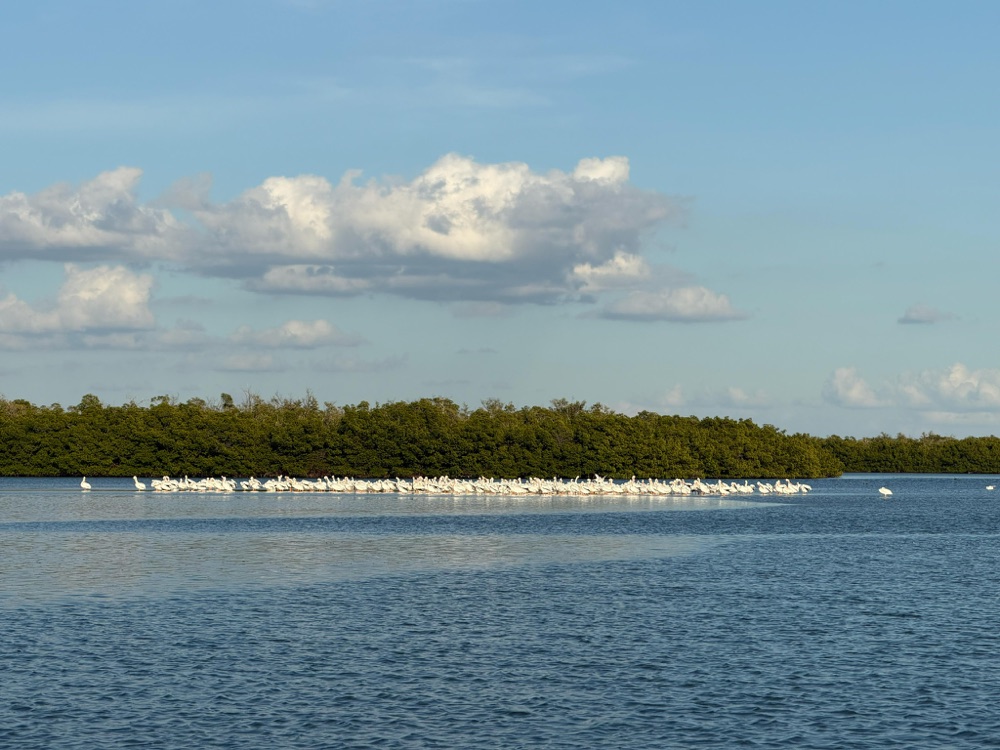
Past the light, the southern Ten Thousand Islands open up — and this is some of the best wildlife and fishing water on the whole coast. The mangrove shorelines hold snook and redfish, the oyster bars draw birds and the occasional dolphin, and the sheer remoteness means you'll often have a stretch of water entirely to yourself. Compared with the open-Gulf passes, the character here is different.
| Coon Key Pass | Gulf inlets (Caxambas, Gordon) | |
|---|---|---|
| Type | Backwater gateway | Open-Gulf inlet |
| Leads to | Southern Ten Thousand Islands | Open Gulf & barrier beaches |
| Feel | Sheltered, remote, mangrove | Wide, busy, beachy |
| Best for | Backwater fishing & wildlife | Shelling runs & dolphins on the wake |
Whether you come to fish the roots or just to disappear into the islands for an afternoon, Coon Key Pass is one of the doorways we use most.
Exploring from Coon Key
You can't reach Coon Key Pass or the islands beyond it by car — it's boat-only backcountry, which is exactly why it stays so wild. A trip through here works best as a backwater fishing charter or an island-and-wildlife outing where the goal is the journey itself: idling the mangrove edges, watching for birds, and letting the tide and the markers carry you deeper into the Ten Thousand Islands. Tell your captain you want the quiet southern backcountry, and the Coon Key Light is right where we'll point the bow.
From the Helm: Coon Key Pass: threading the marked cut off Goodland at a falling tide
We like to time the run through Coon Key Pass to the tide, not the clock. On a falling tide the flats either side of the cut firm up fast, and the current funnels itself down the center in a way you can spot from fifty yards out — a visible seam where the darker, deeper water pulls away from the paler shallows. Run it an hour before dead low and you’re threading a groove barely wider than the channel itself. Get the timing wrong on a big spring tide and that same groove turns thin and pushy, current stacking against the markers harder than the plotter lets on.
Charts lag this stretch of coast by a season or two, and we’ve learned not to trust the plotter blindly past the outer markers. Sandbars here migrate with every big blow, so we idle down well before the numbers say we should and read the color instead — the hard tan-brown of packed sand under two feet, the deeper root-beer tint where it drops off. Our captains keep one hand near the throttle and one eye on the depth sounder through this stretch, because Coon Key rewards patience and punishes anyone running it on faith alone.
What you notice from the helm that you’d never catch from shore is how fast Goodland disappears behind you. One minute you’re passing docked stone crab boats and tin-roofed stilt houses, the next the mangrove walls close in tight enough to touch, and an osprey nest sits lashed to almost every third channel marker. Crab trap floats scatter across the shallows in loose, working lines — not tourist clutter, but gear that’s still hauled daily. It’s the fastest transition from village to wilderness anywhere we run.
When a stiff north wind stacks water against an outgoing tide, the cut gets a short, choppy stand-up right at the throat that we’d rather not push a full boat through broadside. On those mornings we favor the inside bend along the eastern mangrove fringe instead of running dead center on the marked line, trading a few extra minutes for a softer ride. If that wind holds past midday, we’ll sometimes flip the route order entirely and work the backcountry from the far end first, saving the pass for the calmer run home.
Run it right and Coon Key Pass opens into the wide, quiet skein of the southern Ten Thousand Islands — the same water our fishing charters lean on to reach backcountry snook and redfish grounds few private boaters bother finding. It’s also the fastest sheltered link out of Goodland for guests who want the wild islands without a long open-Gulf run first. Land visitors see a chart line; from the helm, it’s the moment the trip actually starts.