
🎣 At a glance
- What it is
- Red drum (Sciaenops ocellatus), an inshore drum species
- Tell-tale
- Copper-bronze body; one or more black spots near the tail
- Where
- Oyster bars, grass flats & mangrove edges in the Ten Thousand Islands
- When
- Year-round; low tide is prime for sight-fishing tailing reds
- Rule
- Regulated & seasonal — your captain handles licensing and the day's rules
How to identify a redfish
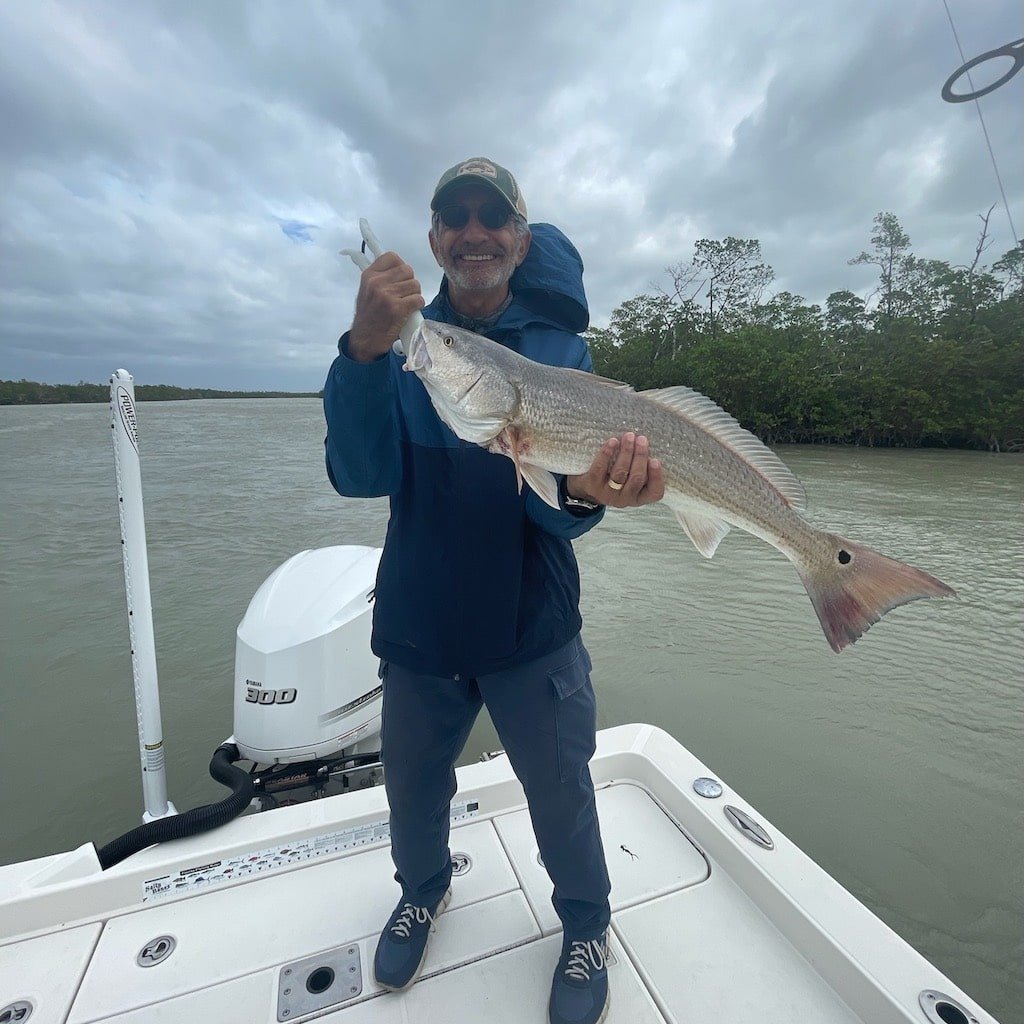
Reds wear their name. The body runs a warm copper-bronze that can flash almost gold in clear, sunny water, fading to a pale belly. The clincher is the eyespot: at least one inky black dot right at the base of the tail, and some fish carry a scatter of extras down their back like somebody flicked a paintbrush. Biologists think that false eye fools predators into striking the wrong end — you just get a free ID.
Run a hand along one and you'll feel a stout, slightly down-turned nose built for rooting crabs and shrimp out of the bottom. They're thick-shouldered and dogged, less of a sprinter than a snook but every bit as stubborn once hooked.
Where redfish live around Naples & the 10k Islands
Redfish are bottom-grubbers, so we look for the buffet: oyster bars studded through the bays, seagrass flats, and the mangrove shorelines where they cruise the edge on a rising tide. The maze of the Ten Thousand Islands is redfish heaven — endless flats, bars and creek mouths, with new water flooding in on every tide.
The magic happens at low tide. As the water drains off a flat, reds get pushed up shallow and start tailing — nosing down to feed with their tails breaking the surface. That's when we go sight-fishing, easing along and casting to a fish we can actually see. It's some of the most exciting backwater fishing we run.
What it takes to catch a redfish, and bring the kids
Reds are forgiving, which makes them a fantastic family fish. A live shrimp on the bottom near an oyster bar will get bit; so will a soft-plastic worked slow or a gold spoon flashed past a tailing fish. The bite is a solid thump and then they lean into a strong, head-down run — not the rocket-launch of a snook, but a steady freight-train pull that kids love because they can actually hold on.
Because redfish are regulated and seasonal, we follow whatever the rules are that day and let your captain sort the licensing — on a charter the vessel covers everyone. Want a slower, surer bite for little anglers? Pair reds with spotted seatrout on our family fishing trips.
| Clue | What it means |
|---|---|
| Tail breaking the surface | Fish is feeding head-down — cast ahead of it |
| Bronze wake pushing shallow | A red cruising the edge on the tide |
| Mud puffs over a bar | Reds rooting for crabs in the bottom |
When are redfish best in Naples?
The honest answer locals love: redfish are here every month of the year, which is why we lean on them so hard. Cooler months can bunch them up in bigger schools on the flats, while warm months spread them along the mangroves. The real variable is the tide, not the calendar — a good low tide on the right flat beats a fancy date every time. Our captains pick the water; you pick the cast. Start with our inshore charters.
From the Helm: Sight-casting redfish on a dead-low tide off Coon Key
A dead-low tide on a calm, sunny morning is exactly what we hope for on a redfish trip, because that’s when the oyster bars around Coon Key shrink down to their bones and push tailing fish onto the last skinny water still covering them. High sun overhead, light wind, and water clear enough to hold color — those three things together mean we can pole the flat instead of running the trolling motor, and poling is what actually lets us spot a copper back or a waving tail before the fish ever notices the boat.
We rig light for this — a quarter-ounce weedless jighead under a soft-plastic paddletail in natural gold or copper, tied straight to twenty-pound fluorocarbon rather than braid, because these fish sit in gin-clear water over broken shell and any flash of thick line puts them down before the cast even lands. On a moving morning tide we’ll switch to a gold weedless spoon instead, since a jig sinks too fast to stay above the oyster shell without hanging up on nearly every retrieve.
We work the edges of the bars rather than the open sand behind them, because that seam is where redfish push up to root for crabs as the water thins out. The take rarely looks like a strike — it’s a slow-motion push of wake toward the bait, then the line simply comes tight, and the fish’s first run peels drag in one long, stubborn pull rather than the sudden burst a snook gives you. Guests who’ve only ever felt a bass hit are usually caught off guard by how much weight a mid-size redfish puts into that first run.
We keep the fish in the water as much as we can while working the hook free, supporting it horizontally rather than hanging it by the jaw, and we’re quick with the release on anything outside what’s currently regulated to keep. If the tide floods in too fast to keep sight-fishing, we’ll shift off the bar entirely and work the deeper mangrove points nearby instead, where redfish hold tight to structure rather than skinny sand once the water covers the shell for good.
There’s a particular quiet that settles over the boat the moment someone spots a tail waving above the surface — voices drop, rods come up, and everyone leans the same direction at once. It’s one of our favorite moments to watch happen on a fishing charter, right up there with a snook crushing bait boat-side in the mangroves. Redfish reward a quiet approach and real patience more than any other inshore species we chase through the Ten Thousand Islands. That first flash of copper against pale sand reads completely differently than a bobber going under, and it’s usually the moment a first-time sight-fisher turns into a lifelong one.