
🗺️ At a glance
- What it is
- Outer Ten Thousand Islands key with a Gulf-front beach
- Where
- Far southern edge of the Ten Thousand Islands, off Marco Island
- Legend
- The Juan Gomez / “Gomez Key” tale
- Access
- Remote & boat-only; primitive camping & shelling
- Rule
- Empty shells only — live collection is banned in Collier
A real Gulf beach at the edge of the maze
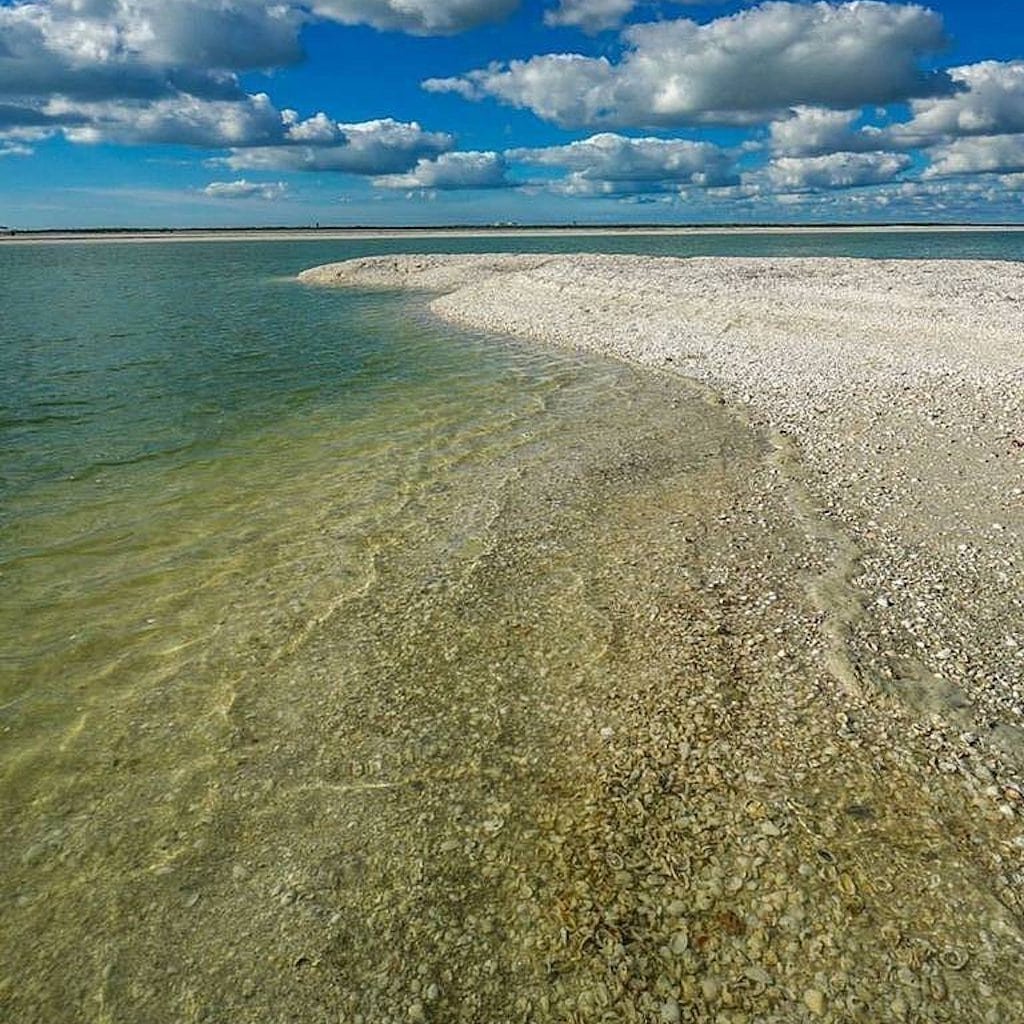
Most of the Ten Thousand Islands are mangrove keys with no beach at all — just oyster bars and roots down to the waterline. Panther Key is one of the exceptions. Out on its Gulf-facing side you get genuine open-water sand, the kind that catches whatever the tide and the storms push in. Because it’s so far out and so hard to reach, far fewer feet have walked it than the drive-up beaches, which means the shelling can be excellent on the right tide. Whelks, conchs, olives and the occasional surprise turn up where nobody’s beaten you to them.
This is deep into the wild end of the Ten Thousand Islands, well past the named beaches near town. If you want the feeling of stepping onto sand at the literal edge of the map, this is it. For broader strategy on these remote keys, our Ten Thousand Islands shelling guide lays out the where and when.
The Juan Gomez legend
Panther Key earned its other name — Gomez Key — from Juan Gomez, who lived out here as a fisherman in the late 1800s. The story he told was a whopper: that he was born around 1778, making him over 120 years old, that he’d met Napoleon as a boy, sailed with the pirate Gasparilla, and buried treasure in the islands. Almost none of it holds up to a historian’s squint, but Gomez was real, he really lived alone on this key into very old age, and he reportedly drowned out here when his fishing line tangled. True or tall, the legend is half the reason people want to set foot on Panther Key.
It’s a fitting island for a tall tale. The whole outer coast is full of hermits, pirates and frontier characters — the same lore that clings to Dismal Key a little to the north.
| Island | Beach? | Best for |
|---|---|---|
| Panther Key | Yes — Gulf-front | Remote shelling, camping, the Gomez legend |
| Kice Island | Yes — long beach | Closer wild shelling off Marco |
| Cape Romano | Yes — shoals | Big shells & the toppled dome ruins offshore |
Getting there & shelling the key
There’s no easy way to Panther Key — it’s a long run by boat from Marco Island or Goodland, out past the inner maze to where the islands meet open Gulf. That distance is exactly why it stays quiet. Our captains pick the tide and the weather window, because this is open water and you want it calm. Time it for a low tide and you’ll have fresh sand to comb and room to spread out. Remember the local rule: in Collier County you keep empty shells only — no live animals, sand dollars or starfish.
Because the run is long and the water is open, Panther Key is best done with a captain who reads this coast. We’ll get you out there safely, tell you the Gomez story on the way, and turn you loose on a beach almost nobody else reaches. Lock it into a private or shared shelling tour and let us handle the navigation.
From the Helm: Threading Gullivan Bay’s oyster bars to reach Panther Key
Getting to Panther Key is less about following a route than about making a string of small decisions, one bar at a time. Once we’re clear of the last marked channel and into Gullivan Bay, the water ahead isn’t marked at all — it’s read off the surface, the color shifts, and a chart that’s honestly more suggestion than guarantee out here on a bottom that moves with every big storm.
We favor running out on the last two hours of a high tide, because the oyster bars scattered through this stretch sit just under the surface then, covered enough to cross but still close enough to read by their slightly different water color and the small ripple they throw against the current. Miss that window and the same bars turn into a maze you have to idle or pole around instead of over.
Wind direction decides more of this run than distance does. A northeast breeze against an outgoing tide can turn Coon Key Pass into a washing machine, short and choppy, while the same wind with the tide running the other way barely raises a ripple — so our captains check both before committing to the direct line versus the longer way around through calmer water.
Once we’re through the bars and the beach at Panther Key opens up, the change is immediate: open Gulf swell instead of bay chop, and a stretch of sand that sees almost none of the boat traffic closer islands get, simply because so few boats are willing to make that last run through the maze to reach it.
We always keep a plan for the run back — if the tide’s dropped further than forecast by the time we’re ready to leave, we’ll take the longer, deeper route out rather than gamble on a bar that held fine going in but won’t hold coming out hours later on a lower stage of tide. Our captains would rather add twenty minutes to the ride home than sit and wait on the tide to come back for us.
It’s the kind of run where a trolling motor and a long push-pole earn their space on board more than any electronics do, since the last stretch into skinny water sometimes comes down to easing off the outboard entirely and finishing on muscle and patience.
It’s one of the further reaches we take guests on a fishing charter or a longer private charter, since the run itself takes real time and a tide window that doesn’t always line up with a shorter trip. Guests picking through the beach here should remember the same rule as anywhere in Collier County: empty shells only.