
🎣 At a glance
- Best on the plate
- Mangrove snapper, pompano, sheepshead, seatrout, grouper
- Sport-only (released)
- Tarpon (catch-and-release only) & jack crevalle
- Flavor
- Mild, sweet, flaky — great fried, grilled or blackened
- Rules
- Regulated & seasonal — your captain handles what's legal
- Cleaning
- Many waterfront spots will cook your catch
The top table fish off our coast
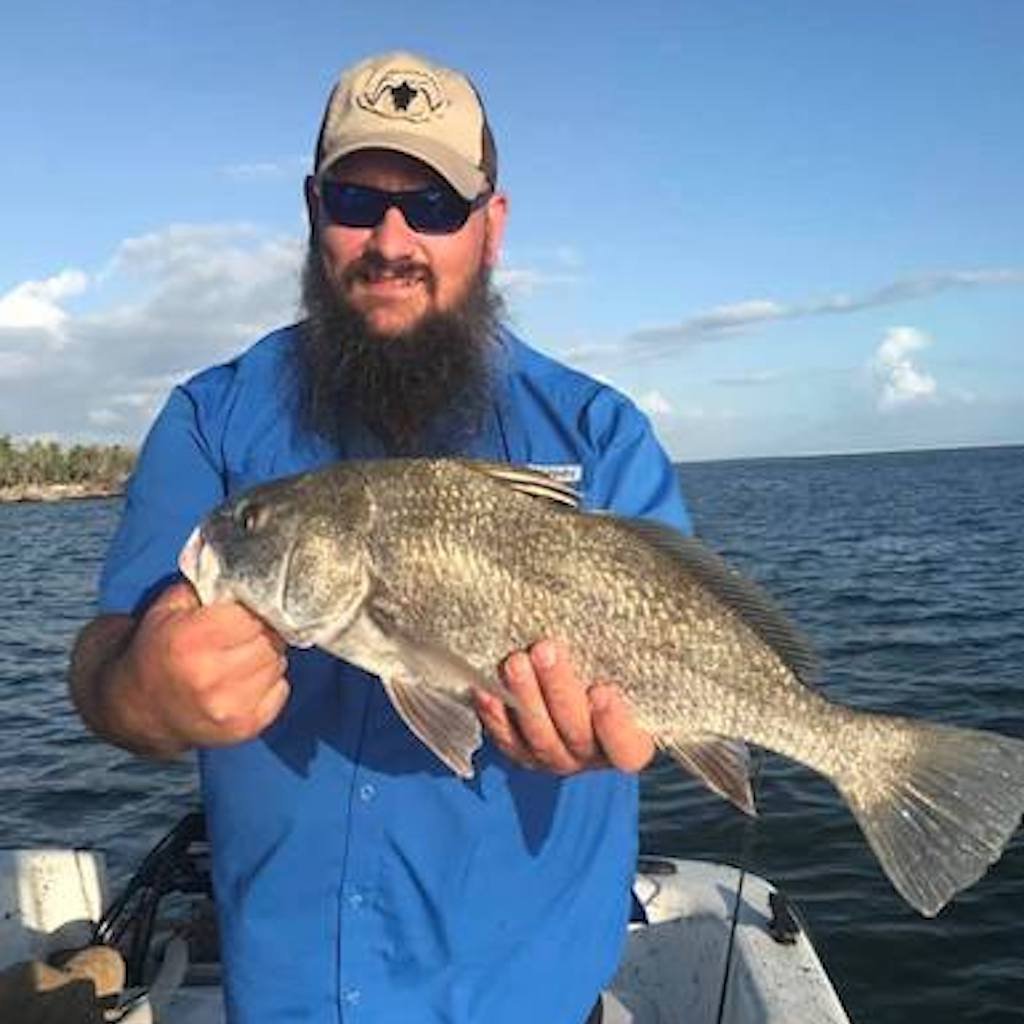
If we're talking pure flavor, a handful of locals stand out. Mangrove snapper is the crowd favorite for a reason — clean, sweet, mild fillets that fry up gorgeous. Pompano is the prize, a rich, buttery fish chefs pay a premium for; catch one and you've earned dinner. Sheepshead looks goofy with those human-like teeth but the meat is firm, white and faintly sweet from a shellfish diet. Spotted seatrout is a mild, delicate classic, and grouper is the famous one — thick, meaty fillets that anchor a proper grouper sandwich.
Every one of these is mild rather than "fishy," which makes them perfect for folks who think they don't like fish. Fried, grilled, or blackened, they all shine the night you catch them.
| Fish | Flavor & texture | Best cooked |
|---|---|---|
| Mangrove snapper | Sweet, mild, flaky | Fried or grilled |
| Pompano | Rich, buttery | Grilled whole |
| Sheepshead | Firm, white, faintly sweet | Pan-seared |
| Spotted seatrout | Mild, delicate | Lightly fried |
| Grouper | Thick, meaty | Sandwich, blackened |
The fish we let swim
Not everything that pulls hard tastes good, and some great fighters are protected. Tarpon — the silver king, the fish of a lifetime — is catch-and-release only, period. You fight it, you photograph it, you revive it and watch it swim off. Jack crevalle will absolutely destroy your tackle and your arms, but the meat is dark, bloody and strong; nobody's putting jacks on the dinner table, so back they go. Knowing what to keep and what to release is half of fishing responsibly here.
Keeping it legal (and why we keep it vague on purpose)
Florida's harvest rules change by species, by season, and sometimes by the year — sizes, seasons and how many you can keep all shift. That's why you won't find hard numbers on this page; printed limits go stale fast and we'd rather not steer you wrong. The good news is you don't have to track any of it. Your captain knows exactly what's open, what's legal-size, and what's in season the day you fish, and they'll sort the keepers from the releases for you. Want the bigger menu of what bites? Our inshore catch list runs the lineup.
Cooking your catch
Half the joy is eating fresh. Plenty of Naples and Marco waterfront restaurants will cook your cleaned catch the same day — you reel it, they plate it. Keep it simple: these fish are too good to bury in sauce. A little oil, salt, citrus and heat is all a fresh fillet needs. Hungry yet? Book an inshore fishing charter and let's go fill the cooler with the good stuff.
From the Helm: Choosing a hard-bottom sheepshead run off Big Marco Pass on a cold-snap morning
A cold front pushing through changes what we target more than almost anything else. Water temperature drops, snook and trout get sluggish and hug deep cover, and that’s usually the morning we point the bow toward the hard bottom and channel markers off Big Marco Pass instead of the open flats, because sheepshead bite best in exactly the cold, clear water that shuts other fish down.
We’re weighing three things before deciding whether a table-fish trip is even the right call that day: water clarity, current speed over the structure, and who’s aboard. Sheepshead want a slow, precise presentation against pilings and rock in clean water, which is a different kind of fishing than a family wants on a windy, blown-out morning. If conditions don’t line up for structure fishing, we’ll pivot toward mangrove snapper in calmer backwater instead, chasing the same dinner-plate goal a different way.
When the first piling or rock pile gives us nothing after a handful of drops, we don’t sit on it. We work down the pass marker by marker, because sheepshead hold in patches on structure rather than spreading evenly across it, and one dead piling doesn’t mean the next one twenty feet away is empty too. Most mornings it only takes two or three moves before the bites turn steady and predictable.
What catches most guests off guard is how subtle a sheepshead bite feels — not a hard pull but a faint tick, almost like the sinker brushed something, and missing that tick means missing the fish entirely. We coach that touch at the rail before the first drop, because a fish famous for stealing bait clean off the hook rewards a quick, confident hookset over a hard yank every time.
We downsize gear for sheepshead more than for almost anything else we target off the pass. A light spinning outfit and a small, sharp hook beat anything heavier, because a bulkier hook gets shaken loose by that same crafty bite that steals shrimp clean off a rig built for redfish. It feels like the wrong tool for a fish that size until you’ve felt one thump the rod tip and realized finesse, not muscle, is what actually seals the hookup here.
What you keep for dinner is always regulated and seasonal, so we check current rules before anyone fills a cooler, and we’ll happily point you toward the season’s best-eating option even if it’s not the fish you had in mind that morning. Compare that hard-bottom approach with the zone-picking on our Marco & Goodland spots guide, or just book a fishing charter and let your captain make the call for you.