
🎣 At a glance
- The core four
- Snook, redfish, spotted seatrout, pompano
- Snook hold
- Shady mangrove edges & points
- Redfish hold
- Oyster bars & shallow flats
- Trout hold
- Open grass flats in moving water
- Variety
- The mix changes with tide, season & wind
The inshore all-stars
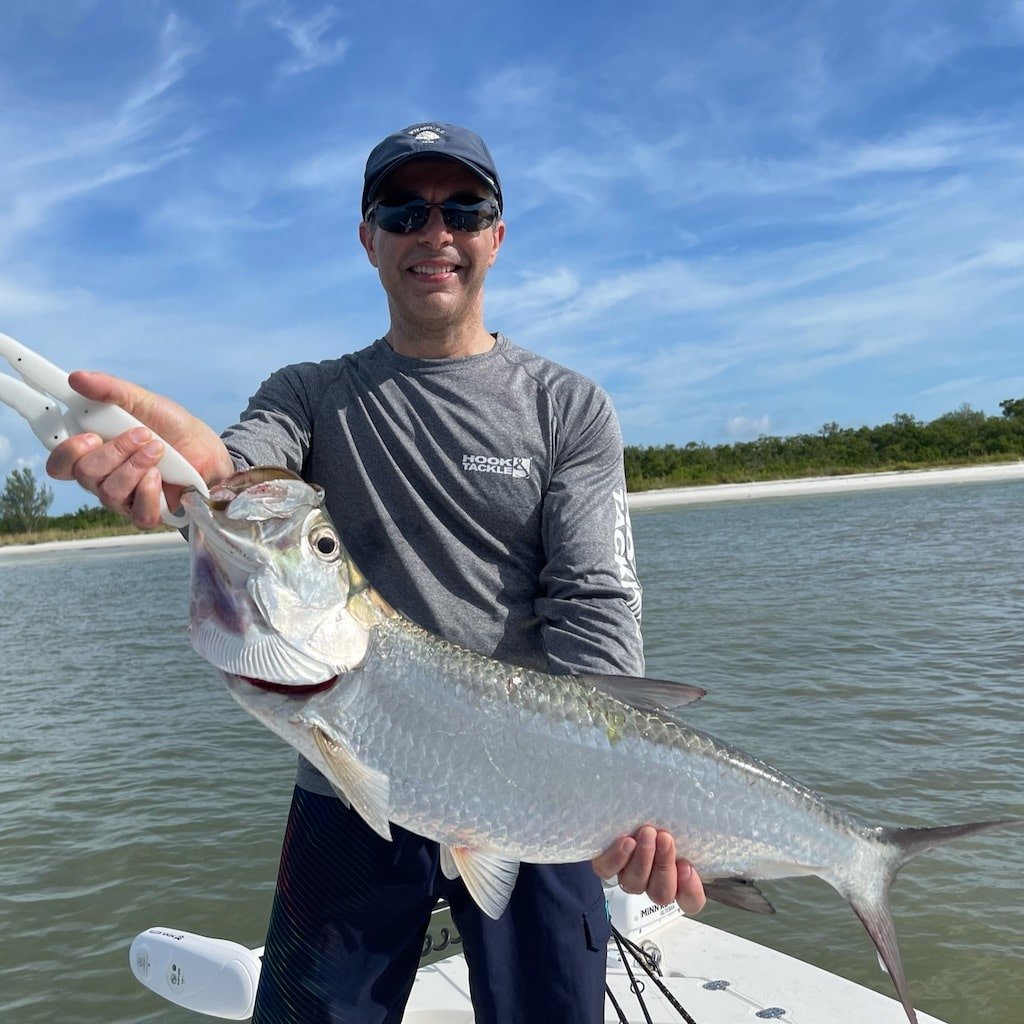
Four fish carry the show out here, and getting all four in a day is the classic backcountry goal. Snook are the prize — sleek, hard-charging ambush hunters with a black lateral line that look like they were built in a wind tunnel. Redfish bring the bulldog fight and that signature black tail spot. Spotted seatrout deliver the steady numbers that keep everyone bent over a rod. And pompano punch way above their weight on light line. Land a snook, a redfish and a trout in one trip and you've got the inshore slam — the local badge of honor.
Where each one lives
The reason a good captain matters is that each fish wants a different address. Snook hug structure and shade — mangrove roots, dock pilings, current-swept points. Redfish nose around oyster bars and skinny flats, often tailing in water barely deep enough to float them. Trout fan out over the grass where the tide pushes bait, and pompano scoot along clean sandy bottom near the passes. Knowing which spot is firing on which tide is the whole game.
| Fish | Where it holds | Signature move |
|---|---|---|
| Snook | Mangrove edges & points | Explosive ambush from the shade |
| Redfish | Oyster bars & skinny flats | Bulldog runs, tailing in the shallows |
| Spotted seatrout | Open grass flats | Steady, all-day numbers |
| Pompano | Clean sand near passes | Hard, dogged fight on light gear |
Bonus and surprise fish
Half the fun of inshore fishing is the stuff you didn't plan for. Hook a jack crevalle and hang on — pound for pound they may be the hardest-pulling fish in the bay. Ladyfish turn into jumping machines, kids love them, and they make great bait for bigger predators. Mangrove snapper stack up around structure and eat like little tigers, and on the right tide a sheepshead or a juvenile shark might crash the party. Sizes and seasons are regulated, your captain handles licensing for everyone aboard, and we fish a healthy release ethic on every trip. Want the full play-by-play? Our what-to-expect guide walks through a whole day.
From the Helm: setting the morning’s target list before the lines go in near Rookery Bay
The net comes up and nobody quite knows what’s in it until it hits the deck — that’s usually the moment on an inshore trip when a mixed bag gets sorted out loud: a keeper-sized redfish, a mangrove snapper that snuck onto the same shrimp, maybe a ladyfish that bent the rod like something twice its size. Our captains like letting that reaction play out before explaining what’s actually going on the stringer and what’s headed straight back over the rail.
Who’s aboard changes what we chase first. With kids along, we’ll start on an oyster bar in the back creeks of Rookery Bay where bites come fast and often, even if the fish run smaller, since a quiet twenty minutes with no action is a rough way to open a young angler’s morning. With serious anglers aboard, we’ll skip that warm-up entirely and run straight for the mangrove points holding the bigger snook and reds, trading bite frequency for better fish right from the start. It’s a call our captains make within the first few minutes of meeting the group at the dock.
Bait choice on a falling tide is almost automatic for us — live shrimp under a popping cork covers the water column well enough to find whatever’s actually feeding that morning, and we’ll only switch to cut bait or a jig once we know which species has turned on. It’s less about carrying the fanciest rig aboard and more about not burning the first hour of good tide figuring out what the fish want that day.
If the bar we planned on comes up empty — sometimes the bait just isn’t stacked there that morning — we don’t sit and wait it out. Our captains keep two or three backup stops in mind before the trip even leaves the dock, usually a mix of structure types across the creek system, so a dead oyster bar means a five-minute run to a dock line or a deeper grass flat instead of a long stretch with nothing on the line. We’d rather burn a few extra gallons of fuel than a few extra hours of a guest’s one morning on the water.
The real surprise for most first-timers is how often the best fish of the day isn’t the one anyone expected — a cobia that follows the boat in out of curiosity, or a jack crevalle that flat empties the reel on the first run. That unpredictability is half the appeal of booking one of our fishing charters, and it’s the same reason some guests come back specifically chasing the full inshore slam instead of whatever happens to bite first.