
🎣 At a glance
- Charter gives you
- Local spots, gear, bait & a license that covers all guests
- DIY gives you
- Freedom, your own schedule, lower up-front cost
- Biggest DIY hurdle
- Reading an unfamiliar maze of islands & shifting bites
- No-boat option
- A charter needs no boat, trailer or ramp permit
- Best for visitors
- A guided charter, almost every time
What a charter actually buys you
The thing you're really paying for is time on the right water. Our captains grew up reading the Ten Thousand Islands and Naples Bay, and they know which oyster bar is firing on this tide, which pass the snook are stacked in, and where the trout moved when the water cooled. That knowledge took years to earn, and it's the difference between a slow day and a great one. Everything else comes bundled: rods, reels, bait, tackle, and a vessel license that covers every guest aboard so nobody buys their own. You step on with sunscreen and step off with photos.
You also skip every headache that eats a DIY morning — no trailer, no boat ramp line, no fuel run, no wondering whether you're in a no-motor zone. Want the full picture of what guided days look like? Our inshore fishing page lays it out.
The honest reality of going out on your own
We won't talk you out of it — plenty of folks love running their own boat, and there's nothing like it. But be clear-eyed about the curve. The islands down here look identical from the water, the channels shift, and the flats are skinny enough to ground a careless prop. A bite that was on fire last week can vanish when the wind swings. Out-of-towners often spend the first half of the day just finding water deep enough to run, let alone finding fish. If you do go DIY, study the tides hard and start conservative.
| Guided charter | On your own | |
|---|---|---|
| Local knowledge | Included — years of it | You build it the hard way |
| Gear & bait | Provided | You supply everything |
| License | Vessel license covers all guests | You need your own |
| Boat & ramp | None needed | Trailer, fuel, ramp hassle |
| Learning curve | None | Steep in an unfamiliar maze |
| Best for | Visitors, families, short trips | Locals with time to learn |
The license question, settled
This one trips people up constantly. If you go out on your own, every adult angler needs a valid Florida saltwater license. On a licensed charter, you need nothing — our captain's vessel license covers every paying guest, full stop. That alone removes a chunk of paperwork from your vacation. And what you can keep is regulated and seasonal; your captain knows exactly what's legal that day so you never have to guess.
How to decide for your trip
If you live here and have a boat and time to learn the water, going your own way is a joy — chase it. If you're visiting, traveling with kids, or just want to actually catch fish in a limited window, a charter wins almost every time. You compress years of local knowledge into a single morning. New to all of it? Start with a beginner charter, then graduate to your own boat once you know the maze. Either way, when you want a sure thing, book a fishing charter and let us do the reading for you.
From the Helm: why we wouldn’t idle a rental pontoon alone through the cuts behind Panther Key
Ask one of our captains where they’d genuinely turn a first-time renter loose on their own, and the answer comes fast: the open water in front of Marco, maybe, on a calm day. Not the braided, unmarked cuts behind Panther Key, where three channels look identical at half tide and the fourth one quietly dead-ends on an oyster bar. We’ve idled through there enough winter mornings to know which cut still holds two feet of water at dead low and which one doesn’t, and that isn’t something a paper chart or phone app tells you on its own.
The bigger tell isn’t the water at all — it’s the sky. A pop-up thunderstorm rolling off the Everglades on a summer afternoon can turn a twenty-minute run home into an hour of picking a path around cells on radar, and that’s a call our captains make constantly with a boat full of guests aboard, not something a first-timer wants to be learning live. Our plan on a squally afternoon is simple: shorten the outside stops, tuck into the lee of Coon Key or one of the passes, and keep working structure close to the barn instead of pushing the original route further out.
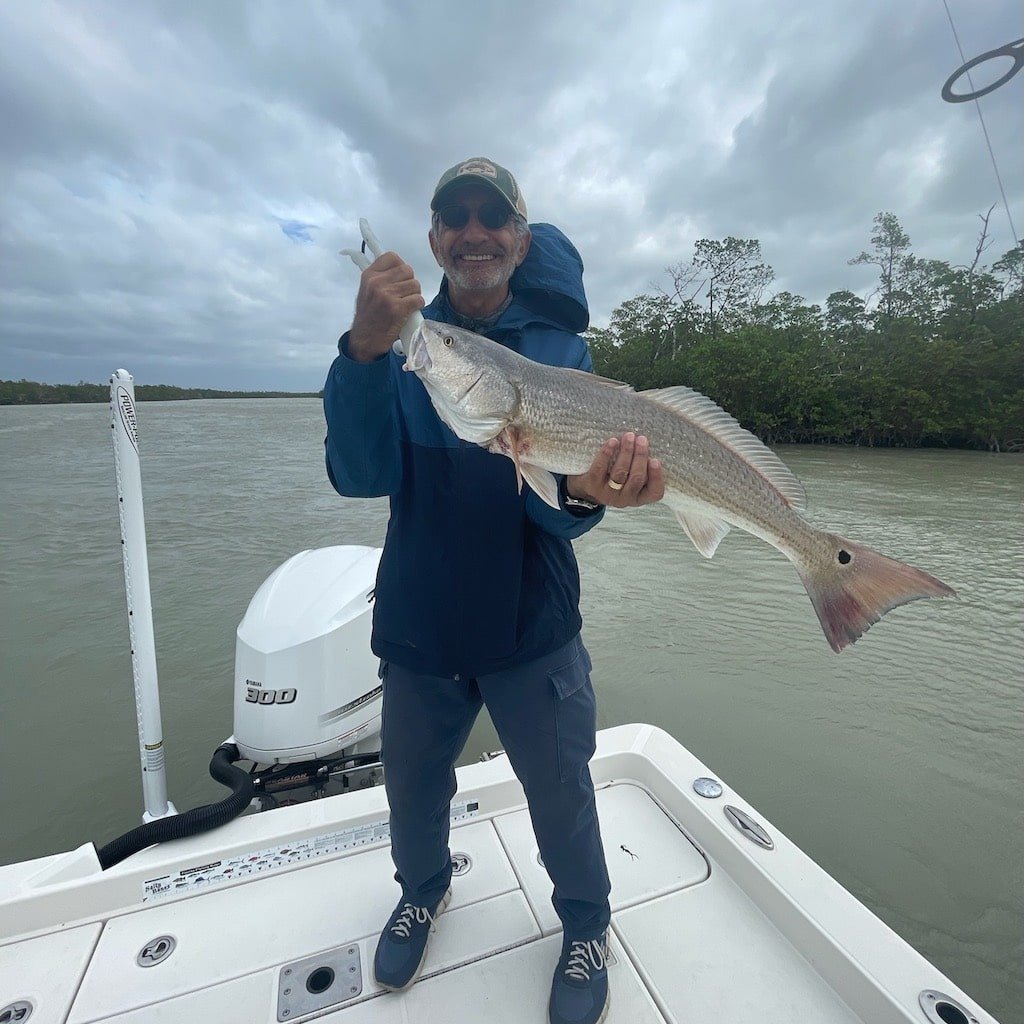
Here’s what surprises people who’ve only fished lakes back home: the tide, not the clock, runs the whole day out here. A spot stacked with redfish on the last hour of a rising tide can go dead quiet twenty minutes later, and knowing which of a dozen nearby oyster bars fills in next is the difference between a slow morning and a good one. It’s less about finding fish once and more about staying a step ahead of the water as it moves, a rhythm that takes real seasons on the water to feel out alone.
We’re straightforward with anyone who asks whether to rent a boat instead. With a full week to spend learning these cuts the slow way, go enjoy it, and ease into the backcountry only after a few calmer days close to the ramp. With one morning on the calendar, our captains would rather you spend it fighting a fish than fighting a chart plotter that’s a season out of date — which is really the whole case for booking one of our fishing charters instead of going it alone.
That’s also why we keep an eye on conditions past what most rental outfits even track — wind direction, the state of the grass flats, whether last week’s backwater bite has pushed out toward the open bay yet. None of that shows up on a laminated rental map, but it’s the whole difference between idling around hoping and running straight to fish that are actually there that particular morning.