
🎣 At a glance
- Scientific name
- Carcharhinus limbatus
- Looks like
- Sleek gray shark with distinct black fin tips
- Where & when
- Flats & nearshore off Naples; larger fish in summer
- Famous for
- Smoking runs & spinning jumps clear of the water
- Rules
- Many sharks are protected catch-and-release — captain handles it
How to identify a blacktip
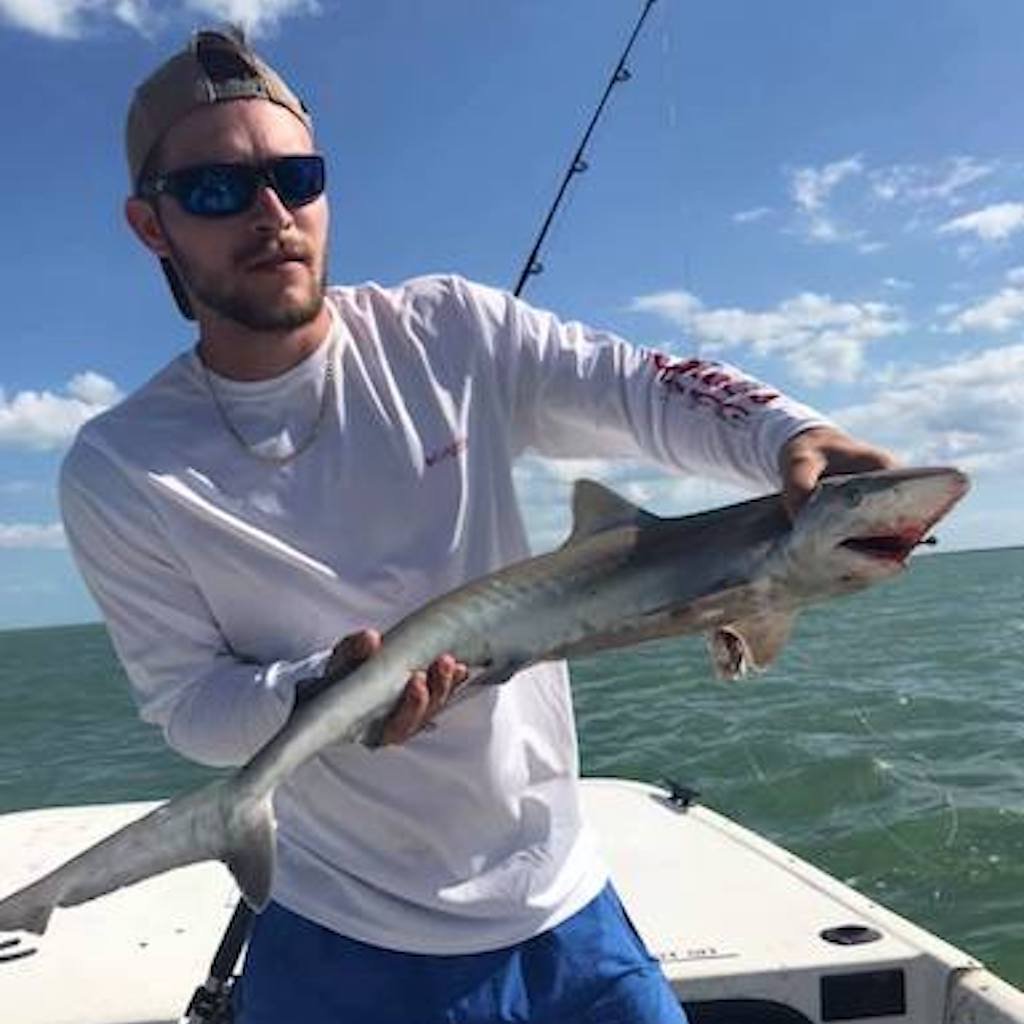
Blacktips look exactly like their name: a streamlined gray shark with crisp black markings on the tips of the fins, especially the dorsal, pectorals, and lower tail lobe. They're built for speed — pointed snout, torpedo body — and that shows the instant you hook one. They're one of the most common sharks we see, and on a calm day you'll sometimes spot them slashing through a bait school or even leaping on their own. If you want the full rundown of who else has teeth out here, our guide to the sharks around Naples and Marco covers the whole cast.
Where to find them
Blacktips roam both the flats and the nearshore Gulf, which makes them a flexible target. We find them prowling the grass flats and sandy edges, working the passes, and cruising just off the beaches where bait stacks up. The warmer months tend to put bigger fish within reach. They love the same baitfish-rich water that draws Spanish mackerel and jack crevalle, so when the bait is thick, the sharks aren't far. A live or fresh-cut bait fished on the right tide is usually all it takes to get one's attention on an inshore trip.
How we catch them
We rig up with appropriate tackle and a bite-proof leader — those teeth are no joke — and present a chunk of fresh bait where blacktips are working. When one eats, hang on: the first run is breathtaking and the jumps, when they come, are the stuff of fish stories. Just as important is what happens at the end. Many shark species are protected catch-and-release in Florida, and we treat all our sharks that way: we keep the fight short, keep the fish in the water for the photo, use proper release tools, and send it off strong. It's the same ethic behind our broader catch-and-release approach, and it's how the thrill stays sustainable. Your captain manages every rule and handles the shark safely.
| Trait | Why it matters |
|---|---|
| Black fin tips | Easy, unmistakable ID |
| Blistering runs | Reel-screaming first surge |
| Jumps | Can clear the water spinning |
| Where | Flats and nearshore — very accessible |
If you want the rod nearly ripped from your hands and a story to tell at dinner, a blacktip delivers — come get one with us on a Naples fishing charter.
From the Helm: Sight-casting the outside bar for blacktips through a summer push
We watch for a particular kind of morning before we run the outside bar for blacktips — light wind, high sun, and enough tide movement to stack bait against the second trough without a hard chop breaking up the surface. That flat calm lets a captain spot dark shapes cruising the drop-off from thirty yards out, well before a rod ever bends. If the wind kicks up and the water turns the color of coffee, we’ll scrap the sight-casting entirely and blind-cast the same stretch instead, because a blacktip you can’t see is still a blacktip you can hook.
Our leader logic starts with a short length of single-strand wire crimped above a length of heavy fluorocarbon, since a blacktip’s skin is rough enough to fray straight mono in a few head-shakes. We fish a whole ladyfish or a chunk of fresh mullet on a strong circle hook, cast a rod-length ahead of a cruising shark rather than right on top of it, and let the current carry the bait into its path. Too much splash directly on the fish and it peels off; a quiet lead-in bait almost always gets eaten instead.
The take is rarely subtle. The rod tip slams down, the reel starts singing, and more often than not the fish clears the water on that first run — a full, twisting jump that pulls an audible reaction out of everyone at the rail. From there it’s long, sustained runs rather than short bursts, and a good-sized blacktip will take you well into your backing before it ever turns. We keep the drag set light early in the fight specifically so that first run doesn’t pop the leader on a fish that’s still fresh and fast.
Landing one means keeping the fish in the water the entire time — we never lift a blacktip over the gunwale. Our captains grab the wire leader boatside, back the hooks out with long-handled pliers, and hold the shark alongside for a quick photo before it kicks off under its own power. Sharks along this stretch of coast are catch-and-release, so the whole handling routine is built around a fast, calm release rather than a fight to bring one aboard. Guests chasing that first-run adrenaline get it best on one of our fishing charters, run specifically around a calm, high-sun morning like this one.
When the outside bar goes flat and the blacktips move off, we’ll run in to a pass mouth instead, where moving current pushes bait past a rock jetty and holds smaller sharks tighter to structure. It’s a shorter cast, a faster bite, and a scrappier fight than the open flats produce, and it keeps the morning alive even when the bar itself goes quiet. We’d rather make that call ten minutes in than sit on a spot that’s stopped producing, since a blacktip morning lives and dies by staying on fish, not by loyalty to one stretch of sand.