
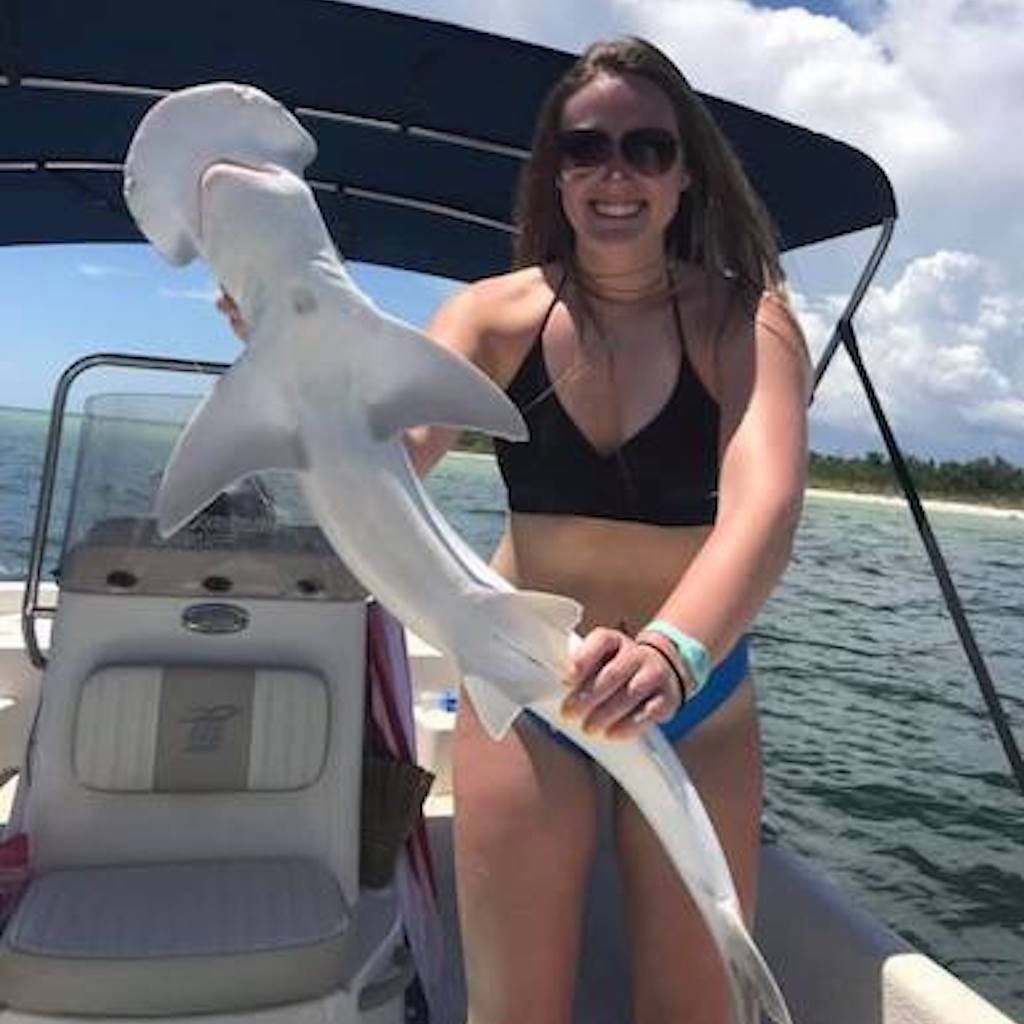
🎣 At a glance
- Scientific name
- Sphyrna tiburo
- Looks like
- Small shark; smooth, rounded shovel-shaped head; a mini hammerhead
- Where & when
- Backcountry bays around Naples & Marco; year-round
- Best bait
- Shrimp on the bottom
- Kid-friendly?
- Very — safe, harmless, thrilling; release per captain
How to identify a bonnethead
Bonnetheads are the easiest shark to ID once you've seen the head. Instead of the wide, blocky hammer of a true hammerhead, they have a smooth, rounded, shovel-like front end — like someone took the hammer and softened all the corners. They're small, gray-brown sharks that stay manageable, which is a big part of their charm. There's no mistaking that spade-shaped head for anything else swimming in our bays, and they're gentle to handle when your captain shows you how.
Where to find them
This is a true backcountry fish for us. We find bonnetheads cruising the shallow grassy bays, oyster-bar edges, and sandy bottom inside the islands — the same protected water we work on a backwater trip through the Ten Thousand Islands. They're around all year, which makes them one of the most dependable catches when you want a sure thing. They cruise the bottom hunting crabs and shrimp, so a fresh shrimp parked in their path is hard for them to pass up. They share that water with redfish and black drum, so the bonnethead is often a fun bonus on a backcountry day.
Why kids love them
Here's why we lean on bonnetheads for families: they let a kid catch an actual shark with zero scary moments. They bite readily, fight hard enough to feel like a real battle, and they're small and harmless enough that the whole thing stays fun and safe. The story writes itself — “I caught a shark!” — and it's true. That's exactly the win we're after on a family fishing trip or a first charter. Many shark species are catch-and-release in Florida; we release ours carefully and your captain keeps everything legal and safe. For the bigger, faster cousin, see our blacktip shark page.
| Trait | Bonnethead | Blacktip |
|---|---|---|
| Size | Small, manageable | Bigger, powerful |
| Head | Smooth shovel shape | Pointed snout |
| Where | Backcountry bays | Flats & nearshore |
| Best for | Kids & first-timers | Thrill-seekers |
If you've got young anglers who'd love to land a real shark, the backcountry bonnethead is the one — come catch one with us on a Naples fishing charter.
From the Helm: Handing kids their first shark on the grass flats behind Coon Key
Handing a bent rod to a young first-timer is most of the reason we love a bonnethead trip, and the grass flats tucked behind Coon Key are where we go looking for that first fish. The water there runs skinny and clear over sandy potholes inside the turtle grass, shallow enough that a small shark shows up as a moving shadow before it ever finds the bait. We idle in slow on the trolling motor, then cut it the moment the potholes come clear through the grass and coast in on momentum alone, so we don’t push fish off the flat before a line’s even wet.
We rig light — a small circle hook on a light leader, a split shot instead of a heavy sinker, and a fresh piece of shrimp threaded so it sits naturally on the bottom of a pothole. That’s plenty of shark for a kid-sized spinning rod, and the light terminal tackle actually draws more bites, since a bonnethead nosing skinny water spooks off anything that feels unnatural. We hand the rod over the second we feel that first tap rather than setting the hook ourselves, so the whole fight, small as it is, belongs to the kid holding it.
The bite itself is a soft tap-tap rather than a strike, then a steady, determined pull that a kid can handle without help — no blistering run, no jump, just a shark that leans into the rod and won’t let go. We coach the reeling from beside them rather than taking over, calling out when to lift and when to wind, because watching a first-timer land their own shark is worth more than a faster fish. Most kids expect something scarier and end up almost disappointed by how calm the little hammerhead relative actually is at the rail.
Once it’s boatside we lift it just far enough to unhook and photograph, holding it flat and supported rather than by the tail alone, then it’s straight back over the side. Bonnetheads handle that in-and-out well compared to bigger sharks, which is part of why this particular flat works so well for beginners — low stress on the fish, low stress on a nervous parent standing at the rail. If your crew has a mix of ages, this stop pairs naturally with the calmer half of our fishing charters, built around getting younger anglers a fish they can actually manage.
When the tide sits too high or too low over that flat, the potholes lose their definition and the fish scatter, so we’ll shift to a similar grass edge further into the back bay instead, one with a sharper drop into deeper water. Bonnetheads use that break the same way, cruising the edge instead of the potholes, and a kid’s first shark still comes just as easily — it just comes from a different stretch of grass than the plan we started the morning with.