
🐬 At a glance
- Sightings
- Bottlenose dolphins live here year-round; January concentrates bait into the passes
- Best spots
- Capri Pass & Big Marco Pass feeding lanes
- Water & tides
- Gulf in the upper 60s°F; morning negative low tides
- Best window
- Mid-morning, on calm days between cold fronts
- Bonus wildlife
- Manatees disperse into Rookery Bay backwaters below ~68°F
- Crowd level
- Low — outside spring break and summer peak
Why January Is a Great Month for Dolphin-Watching
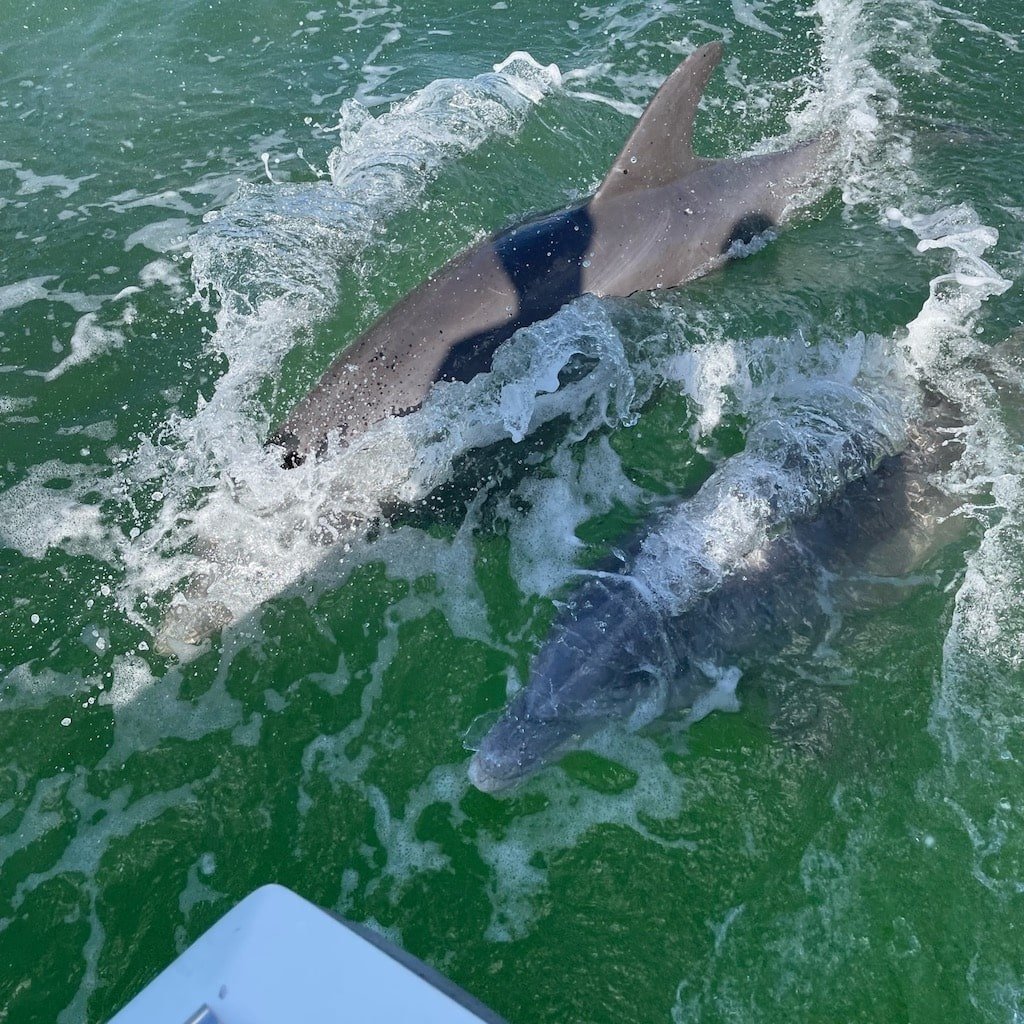
Bottlenose dolphins live in the waters around Marco Island and Naples year-round, so you’re not chasing a migration — you’re timing the conditions. January hands you the clearest water of the year. Cold fronts scrub the humidity out of the air, the Gulf sheds its summer haze, and on the calm days between fronts you can often see well down through water that looked murky-green back in August. That clarity matters because it turns dolphin-spotting from luck into pattern-reading: our captains aren’t guessing where a fin might pop up, they’re watching bait flash silver under the surface and reading the tide lines where dolphins corral fish against the current.
Winter also thins out the boat traffic. Fewer wakes crisscrossing the passes means dolphins tend to hunt closer to the surface and hold a feeding pattern longer instead of scattering at the first engine noise. Combine calmer water with concentrated bait and you get a month where a well-timed dolphin tour reads less like a scavenger hunt and more like watching nature do exactly what it does, right off the bow. It’s honestly one of the reasons our captains look forward to January trips as much as guests do — the sightings feel earned, not accidental, and there’s a rhythm to a good winter morning that a lot of returning guests come back specifically to chase.
Where the Dolphins Show Up: Capri Pass & Big Marco Pass
January’s tidal exchange through Capri Pass and Big Marco Pass turns both cuts into feeding lanes. As tide pushes in and out of the Ten Thousand Islands, it funnels baitfish through these narrow openings, and bottlenose dolphins know it. Our captains usually run these passes first on winter mornings because the geometry does the work — current squeezes bait into a tight, panicked school, and dolphins take turns working it from underneath and the sides, sometimes pushing bait right up against a sandbar or beach.
Gordon Pass, farther up toward Naples, fishes the same way on the right tide. Wherever the current is running hardest through a cut, that’s usually where you look first. It’s also why timing your trip to the tide — not just the clock — matters more in January than almost any other month; a slack tide can leave a pass quiet, while the same spot an hour later is alive with bait and fins.
January Weather, Tides & the Best Booking Window
Florida winter runs in cycles: a cold front pushes through, drops the temperature and kicks up a north wind for a day or two, then the weather settles into a stretch of clear skies, light wind and flat water before the next front arrives. Those calm, in-between windows are the sweet spot for a January dolphin tour — comfortable air, glassy passes and the water clarity that makes spotting fins from a distance easy.
Tides follow their own winter script too. This time of year, the lowest tides of the day typically fall in the morning, which is also when bait tends to stack up tightest in the passes before the afternoon sea breeze stirs things up. A mid-morning departure lines up with both patterns — you’re out on the water while the tide is doing the concentrating and before any afternoon chop rolls in. Check the full January boat-tour guide for what else the month brings, and browse the Seasonal Guide to compare January against the rest of the year before you lock in a date.
Manatees: A Cold-Season Bonus Sighting
January is also manatee season around here, though not the way most people picture it. Once Gulf and backwater temperatures drop below roughly 68°F, manatees leave the open water and gather in the warmer, more protected creeks and basins of Rookery Bay. You won’t find the packed, wall-to-wall herds people associate with Crystal River — our manatees are dispersed in small groups tucked into the mangrove-lined backwaters, which makes a sighting feel more like a discovery than a guarantee.
Most January dolphin tours don’t run directly into Rookery Bay’s manatee refuges, but captains who route through the quieter backwater stretches on the way to or from the passes usually keep an eye out, and a slow-moving shape near the surface on a cold morning is worth a second look. For the full picture on where and when to spot them, see our cold-season manatee guide.
What to Expect on a January Dolphin Tour
Pack like you would for a crisp fall morning up north, not the Florida summer you might be picturing: a light jacket or windbreaker is smart once the boat gets moving and that wind hits you. Afternoons usually warm into shirt-sleeve weather, so a lot of guests start bundled up and end up peeling off a layer by the time we idle back into the marina.
Our captains narrate the whole way — what pass we’re running, why the bait’s stacked where it is, what a corkscrew feed looks like versus a dolphin just cruising past. It’s a genuinely family-friendly trip, and January’s smaller crowds usually mean more room at the rail and more one-on-one time with the crew. If you want the whole boat to yourselves, a private charter puts the whole itinerary in your hands; if you’re building a full day, plenty of guests pair a morning dolphin tour with an afternoon on the shelling tours, since winter mornings and winter low tides both favor an early start.
Sightings are never something we can promise — these are wild animals working real tides, not a show on a schedule — but our captains usually find dolphins working one pass or another most winter mornings, and even a quiet stretch of water still hands you the scenery: mangrove islands, sandbars and a Gulf horizon with hardly another boat in sight. That honesty is exactly why January keeps drawing repeat guests who’d rather have a real chance at a great sighting than a guaranteed one that never happens as advertised.
| Month | Typical Tide Pattern | Gulf Water Temp | Manatee Bonus Odds | Crowd Level |
|---|---|---|---|---|
| December | Morning lows, building fronts | Upper 60s–low 70s°F | Rising as fronts arrive | Moderate (holidays) |
| January | Morning negative lows | Upper 60s°F | Good on cold mornings | Low |
| February | Morning lows, frequent fronts | Upper 60s°F | Good, still cold enough | Low–moderate |
| March | Morning lows shifting later | Low 70s°F, warming | Tapering as water warms | Rising (spring break) |