
🎣 At a glance
- Headline species
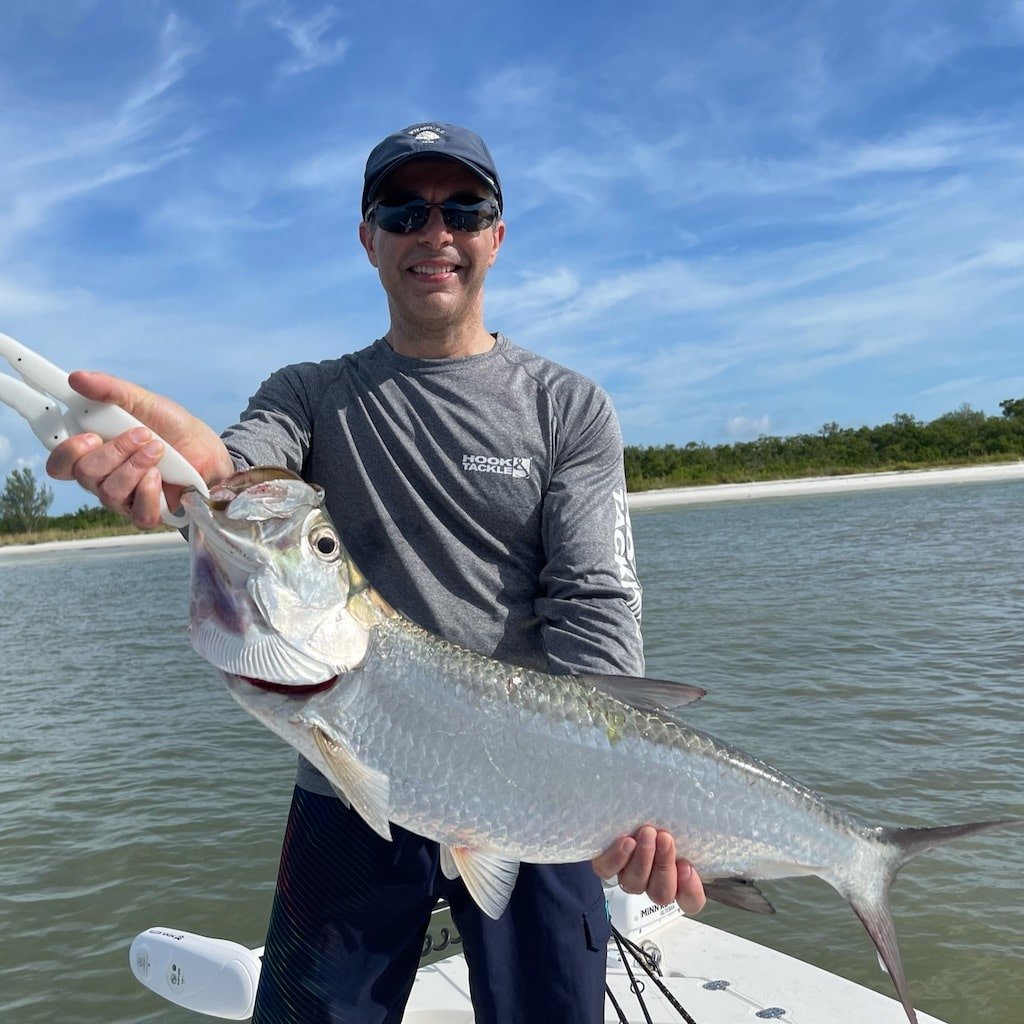
- Tarpon (Megalops atlanticus) — the migration builds fast through May
- Also running
- Snook staging toward the passes, plus reds, mackerel & the occasional cobia
- Where
- Gordon Pass, Wiggins Pass, Big Marco & Capri Pass, and the beaches in between
- Water temp
- Warming into the upper 70s–low 80s°F, right in the tarpon’s comfort zone
- Rule
- Tarpon are catch-and-release only — regulated seasons apply to other species
- License
- Covered — our charter’s vessel license covers every paying guest aboard
Is May a good time to fish Naples and Marco Island?
If you’re weighing a May date, here’s the honest answer: it’s one of the best months on the entire calendar, and for a lot of local anglers it’s the month they build their whole year around. April gets the first scattered scouts, but by May the tarpon migration is in full swing along our stretch of Gulf coast, and it overlaps with snook staging toward the same passes ahead of their own season. That combination — a marquee gamefish at its most reachable, backed up by a strong secondary bite — is what makes May stand out from the rest of the seasonal matrix. The water has warmed enough to pull fish shallow and active, but the heavy afternoon thunderstorms and true hurricane-season humidity of mid-summer haven’t set in yet, so mornings tend to run calm and fishable. Our fishing charters shift their whole game plan for this stretch, and the tarpon fishing guide goes deeper on tactics than any single seasonal page can if you want the full picture before you book.
Why May is tarpon month
Tarpon are the reason serious anglers circle May on the calendar. These are big, ancient, prehistoric-looking fish — often well over a hundred pounds — that migrate along the Gulf coast every spring, and by May the first real push has usually arrived off Naples and Marco Island in numbers worth chasing. You’ll find them doing a few different things depending on the morning: rolling on the surface to gulp air as they cruise the beaches in loose strings, laid up motionless just under the surface where a well-placed bait can trigger an explosive strike, or stacked and circling in the deeper water of the passes on a moving tide. Our captains read those patterns and position the boat to intercept fish rather than chase them, which is most of the game with tarpon — you’re rarely searching blind. Once one eats, the fight is the whole point: tarpon are famous for cartwheeling clear out of the water on the first run, and that jump is the moment most anglers remember longest. Every tarpon we hook goes back in the water to keep doing exactly that for someone else next spring — it’s a catch-and-release fishery here, no exceptions, and our captains treat that rule as a point of pride rather than a limitation.
What else is biting in May
Tarpon get the headline, but May’s supporting cast is exactly why the month rates as our best all-around stretch rather than a one-species show. Snook are the clearest example — as water temperatures climb, fish that spent winter tucked into the backwater start staging toward the passes and inlets ahead of their own summer spawning run, and that staging behavior tends to concentrate them tight to structure where they’re genuinely catchable on light tackle. Redfish continue their steady presence in the Ten Thousand Islands’ skinny backwater, sight-fishable on calm mornings the same way they are most of the year. Spanish mackerel push into the nearshore Gulf and around the passes in feeding schools that make for fast, non-stop casting when you find them working bait on top. Some Mays also bring a cobia or two cruising nearshore structure or trailing a ray, though that’s a bonus rather than something to plan a whole trip around. Snook and redfish harvest is governed by regulated seasons, sizes and bag limits that shift from year to year, so our crew will always tell you on the water exactly what’s legal to keep that day — tarpon, as always, go back regardless.
Where our captains run in May
May tarpon fishing is largely a beach-and-pass game, which is a different playbook than the backwater-heavy winter months. Gordon Pass and Wiggins Pass off Naples, and Big Marco Pass and Capri Pass off Marco Island, are the main funnels where migrating tarpon stack up on a moving tide, and the open Gulf beaches connecting them — think the stretch running past Keewaydin Island toward the Ten Thousand Islands — are where you’ll typically spot strings of fish rolling along the surface in the early morning light. When the tarpon bite is slow or the wind pushes us off the beach, that’s when the trip pivots toward snook and redfish tucked into the mangrove edges and channels of the backcountry, where the boat can tuck out of the chop. Running out of Goodland or Marco Island keeps the run to the passes short, which matters in May since the best tarpon window is often a narrow stretch around first light before the wind fills in. A day built around the tarpon migration looks and feels different from a typical Naples or Marco Island fishing charter, and our captains plan the whole route around wherever the schools are actually showing that morning rather than a fixed spot.
Weather, water & tides in May
May sits in a genuinely comfortable stretch of the Southwest Florida calendar — late enough in spring that Gulf water temperatures have climbed into the upper 70s to low 80s, which is right where tarpon want to be, but early enough that we’re still ahead of the official June 1 start of hurricane season and the heaviest of the summer thunderstorm pattern. Mornings tend to be calm and glassy more often than not, with cloud buildup and the odd afternoon storm becoming more common as the month goes on, which is exactly why our captains favor early departures in May — you want to be on the water and back in before the afternoon sky gets interesting. Tides are also mid-transition this month: winter’s script of strong morning negative lows starts giving way to the summer pattern of stronger evening lows, so the single best moving-water window can shift depending on where you are in the lunar cycle. That’s one more reason a locally guided trip pays off in May — reading which tide stage and which hour actually has water moving through the passes that day is most of the battle, and it changes week to week even though the season stays consistent.
| Species | Where They're Running | Typical Approach | Status |
|---|---|---|---|
| Tarpon | Gulf beaches & the major passes | Live bait, sight-casting to rolling or laid-up fish | Catch-and-release only |
| Snook | Staging near passes & inlets | Live bait or jigs worked tight to structure | Regulated harvest season |
| Redfish | Ten Thousand Islands backwater | Sight-fishing skinny water on calm mornings | Regulated slot & season |
| Spanish mackerel | Nearshore Gulf & around the passes | Trolling or casting jigs into feeding schools | Regulated |
| Cobia | Occasional, cruising nearshore structure | Sight-cast with live bait | Regulated |