
🐚 At a glance
- Water temp
- Mid-60s°F — comfortable for wading, water shoes still worth packing
- Best tide
- Morning negative lows, getting earlier as the month goes on
- Cold fronts
- The season’s first real fronts — less frequent than January but still effective
- Top islands
- Keewaydin Island & Kice Island, boat-access only
- Crowd level
- Moderate most of the month, heaviest Christmas & New Year’s weeks
- Rule
- Empty shells only — Collier County prohibits taking live shells, sand dollars & starfish
Is December a good month for shelling on Marco Island?
If you’re deciding when to book, here’s the honest read on December: yes, it’s a genuinely good month to go shelling on Marco Island, and it gets better as the month rolls on. December sits at the front edge of Southwest Florida’s dry season, when the first real cold fronts of the cool months start rolling through the Gulf, swinging the wind out of the northwest and pushing fresh shell material onto west-facing beaches. It’s not yet the relentless front-a-week pattern you get in January and February, but even one or two solid fronts in December is enough to reload the boat-only islands with material that’s been sitting offshore since summer and fall. Layer in the season’s first strong morning negative low tides and a low winter sun that throws long shadows across the sand — making shell edges and colors pop against white sand in a way summer’s overhead sun never does — and December earns its spot as one of the year’s better shelling months, not just a warm-up act for January. Check our December boat tour guide for how that same tide-and-front pattern shapes dolphin, sunset and fishing trips this month too.
How December’s tides and cold fronts line up
December’s shelling window is built on two things lining up: tide and weather. Like every winter month, the lowest tides of the day land in the morning instead of the evening — that flip usually happens in October and holds through April — and as December rolls toward January, those morning lows get earlier and pull back further each week. A cold front moving through does the other half of the work. Southwest Florida usually sees its first real fronts of the season in late November and December, and each one that pushes through stirs the sand flats offshore and drags material that’s been sitting in deeper water up onto the beach as the wind lays back down. The best mornings are almost always the first calm day or two after a front clears, paired with whatever the tide chart says is the lowest water that particular day. Because December’s fronts come less often than January’s, the window after each one tends to stay productive a little longer before the beach gets picked clean — one more reason our captains watch the forecast closely and shift shelling departures around it instead of running the same schedule all month.
Where to go: Keewaydin, Kice & the Ten Thousand Islands
The islands that do best in December are the ones you can only reach by boat. Keewaydin Island and Kice Island sit fully exposed to the Gulf and catch whatever swell a front pushes their way, and because there’s no bridge, road or parking lot, the material a front leaves behind doesn’t get picked over by foot traffic the way Marco’s public beaches do. Which one wins on a given December morning depends on wind direction and how many days it’s been since the last front — our Keewaydin vs. Kice comparison breaks down how to read that before you book. Running further south takes you past Cape Romano, where the old dome houses now sit as half-submerged ruins — Hurricane Ian toppled them in 2022 — a striking stop on the way even on a day when the shelling itself is secondary to the view. Departing from Goodland, on the edge of the Ten Thousand Islands, shaves real time off the run to these barrier strands, which means more minutes with sand under your feet once you arrive instead of time spent in transit.
What you’ll find shelling in December
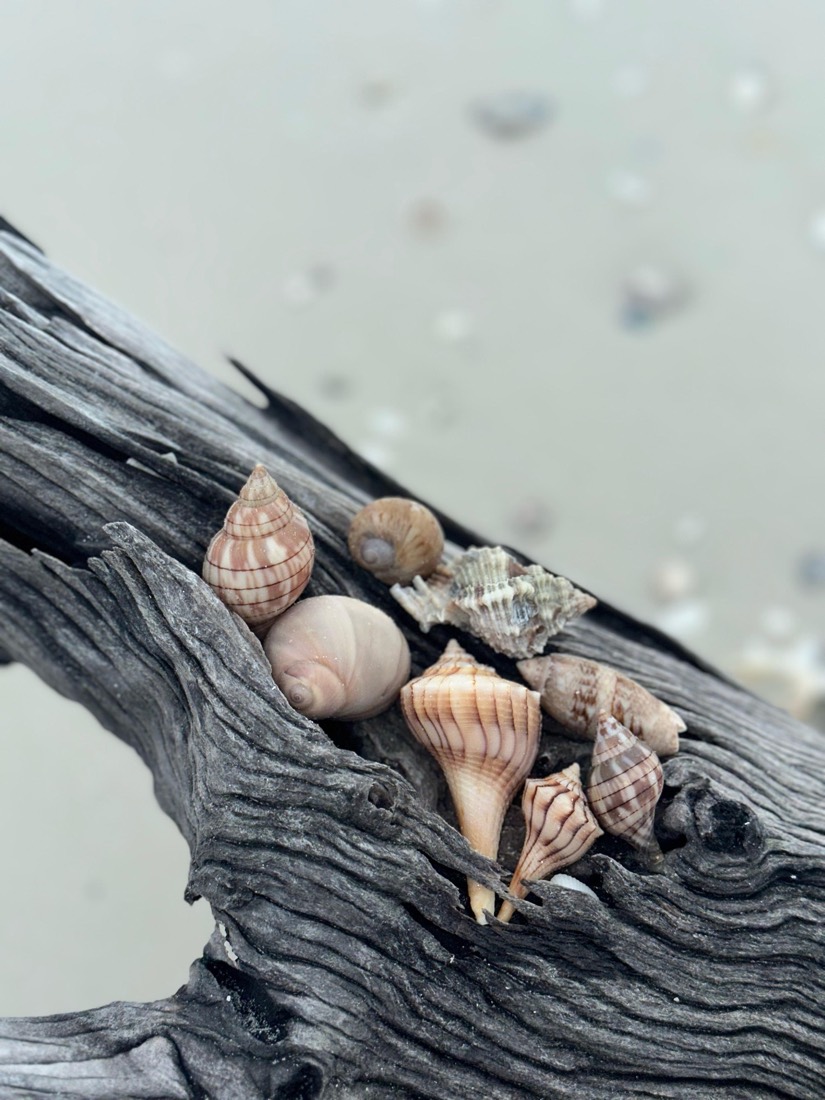
December shell piles tend to run heavy on the Gulf’s dependable regulars: lightning whelks (spire up, opening on the left is the tell), fighting conchs, olives, cockles, and after a good front, a scatter of keyhole urchins — the actual sand dollar relative you’ll find on our local beaches, not the smooth round kind people picture. It’s also a solid month to spot a horse conch, Florida’s state shell and one of the largest sea snails in the world, its orange body often peeking out of a heavy, ridged shell in the same sand flats a front just stirred up. Nobody can promise you a junonia — it lives 100 to 425 feet down and only shows up on the beach after a storm has done the work of pushing one in from deep water — but December’s early-season fronts do occasionally deliver one, without ever guaranteeing a find. Whatever ends up in your bag, the rule holds everywhere in Collier and Lee County: empty shells only. If it’s still occupied — a live shell, a live sand dollar, a live starfish — it goes back on the sand exactly where you found it. Our seashell guide covers identification in more depth if you want to study up before you go.
Holiday crowds on Marco vs. empty boat-only islands
December is also one of Marco Island’s busiest months on land, and that’s worth planning around. Snowbirds start arriving early in the month, and Christmas week and New Year’s week pack the public beach, the pass and every restaurant in town. That crowd matters for shelling because a beach full of people is a beach that gets picked over fast — by mid-morning during the holiday weeks, the easy finds along the drive-up beaches are usually already gone. The boat-only islands don’t see any of that. Reaching Keewaydin or Kice takes a boat, so the same holiday crowd that’s shoulder to shoulder on Marco’s public sand simply isn’t out there competing for shells. It’s the single biggest reason a shelling tour pays off more in December than in a quieter month — you’re trading a crowded beach for an empty one without adding much time to your morning, and you get it during exactly the weeks when the land-based alternative is at its worst.
Booking your December shelling tour
Because departures follow the tide and not a fixed clock, December start times shift morning to morning, and they’ll creep earlier as the month goes on. Christmas week and New Year’s week are the two stretches that fill up first on our schedule, so if your trip falls in either window, lock your morning slot as soon as your travel dates are set rather than waiting until you land. Dress in layers: Gulf mornings in December run cool before the sun climbs, even though the water itself stays comfortable enough for wading and shelling in shorts by mid-morning. If you’ve got a family group or want more say over timing and stops, a private charter gives you that flexibility without competing for a seat on a shared morning trip. And if December doesn’t line up with your own travel dates, our full seasonal guide breaks down what every other month gives shellers, from January’s lowest tides of the year to summer’s evening low-tide script.
| Month | Cold Fronts | Water Temp | Best Tide Window | Crowd Level |
|---|---|---|---|---|
| November | Season’s first fronts arriving | Upper 60s°F | Morning lows returning | Moderate, fall visitors |
| December | Building — first real fronts of the season | Mid-60s°F | Morning negative lows | Moderate, holiday bump |
| January | Most frequent of the season | Upper 50s–mid-60s°F | Morning negative lows, new & full moons | Busy on land, quiet at sunrise |
| February | Still frequent | Low-to-mid 60s°F | Morning negative lows | Busy — snowbird peak |