
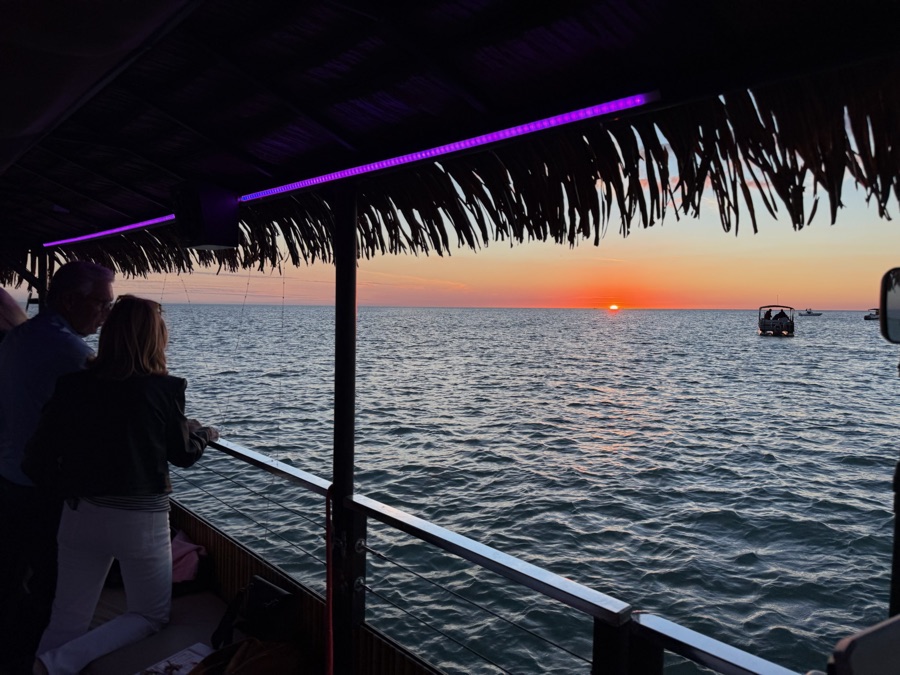
☀️ At a glance
- Sunset window
- About 6:05 pm early February to 6:25 pm by month’s end
- Weather pattern
- Dry-season lull — cold fronts space out, skies run clear and calm
- Days & evenings
- Comfortable, sunny days; breezier evenings — bring a light layer
- Peak demand
- Valentine’s Day (Feb 14) and Presidents’ Week
- Wildlife bonus
- Dolphins year-round; manatees possible in warmer passes
- Booking tip
- Reserve Valentine’s & Presidents’ Week dates well ahead
Why February Is Prime Sunset-Cruise Season
February sits right in the middle of Southwest Florida’s dry season, and that timing is no accident when it comes to sunsets. By this point in winter, the parade of cold fronts that rolled through December and January has started to space out. Instead of a front every week, you’ll often get a solid stretch of five, six, even ten days of the same stable high-pressure air — the kind that scrubs the humidity out of the sky and leaves you with a clean, deep-orange drop into the Gulf instead of a hazy smear on the horizon. That’s the honest reason our captains point visitors toward February over the muggier months: it’s not hype, it’s just how the weather behaves this time of year.
None of this means every February evening is postcard-perfect — a front can still roll through and blow out an afternoon with wind and cloud cover, and we’re never going to tell you a sunset or a sighting is guaranteed. What we can tell you is that the odds favor you more in February than almost any other month on the calendar, which is exactly why it’s one of the most requested windows for our sunset cruises.
The Weather Pattern Behind It
Southwest Florida’s dry season runs roughly November through April, and February usually falls in the calmest stretch of it. Overnight lows are mild, daytime highs sit comfortably in the 70s, and the air carries less moisture than it will by April or May. That drier air is what gives February sunsets their punch — less haze means more color, and the transition from gold to pink to purple happens fast and clean right over the water off Marco Island and Naples. Evenings can still turn breezy once the sun starts dropping, so a light jacket is worth packing even if the afternoon felt warm.
Because the sun sets earlier in February than it will once Daylight Saving kicks in come March, your cruise-then-dinner timeline stays easy. Early in the month you’re looking at sunset around 6:05 pm; by the last week it’s crept to roughly 6:25 pm. Either way, a two-hour cruise that leaves the dock mid-afternoon puts you right over the water for golden hour with plenty of daylight left to reach the barrier islands first.
Valentine’s Day & Presidents’ Week Demand
If there’s one stretch of winter our phones don’t stop ringing, it’s the run-up to Valentine’s Day. February 14 lands square in the middle of the month’s best sunset window, and it’s become the single busiest sunset-cruise week we see all winter — couples booking a cruise ahead of a dinner reservation, proposals timed to the exact minute the sun clears the horizon, anniversaries marked out on the water. Presidents’ Week isn’t far behind, when Southwest Florida fills with snowbird families squeezing in a boat trip before spring break crowds arrive.
Both stretches book out well ahead of the date, especially the classic golden-hour departure slots. If you want privacy for a proposal or a milestone anniversary, our private charters let you set your own timeline instead of sharing the boat, and our romantic sunset cruise is built specifically around this kind of evening. Either way, the honest advice our captains give every February is the same: don’t wait until the week of to call.
Wildlife You Might See En Route
February’s cooler Gulf water — typically running in the upper 60s to low 70s — changes what you’re likely to spot on the way out to sunset. Bottlenose dolphins live in these waters year-round and regularly work the wake or hunt the passes at dusk, so there’s a good chance you’ll get a look at them no matter the month. Manatees are the bigger February story: once Gulf temperatures drop below roughly 68°F, they move toward warmer, more sheltered water near Rookery Bay and the backcountry passes, so late-winter cruises through this stretch carry a real, though never guaranteed, shot at a manatee sighting that summer trips simply don’t offer.
Overhead, watch for ospreys working the shoreline and, as the light goes gold, wading birds like herons and the occasional roseate spoonbill lifting off the mangroves for the night. None of this is scripted — wildlife here does what it wants — but February’s quieter water and cooler temps put more of it within view than the height of summer does. For a fuller rundown of what lives in these waters month to month, our wildlife guide is worth a look before you head out.
Picking Your February Departure Time
Because February’s sunset creeps later as the month goes on, the right departure time depends on your exact date. A cruise booked for February 1 needs to be on the water well before 6 pm to catch the drop; by February 28, you’ve got almost 20 extra minutes of daylight to work with. Booking is set to match the actual sunset for your date, so you don’t have to do the math — just pick the day.
If you’re building a full evening around it, plan to leave the dock roughly 90 minutes to two hours before sunset. That gives you time to cruise out past Marco Island’s barrier islands, watch the light change over open water, and still make a 7:30 or 8 pm dinner reservation in Naples or on the island. Curious what else the month has going for it beyond sunsets? Our February boat tours guide covers the full month, and the Seasonal Guide breaks down every month the same honest way.
| Month | Approx. Sunset | Cold-Front Pattern | Best For |
|---|---|---|---|
| December | 5:35–5:45 pm | Frequent, sharper fronts | Crisp air, early dinner timing |
| January | 5:45–6:00 pm | Still frequent, shorter clear windows | Clean post-front skies |
| February | 6:05–6:25 pm | Fronts space out; longest calm stretches | Most consistently clear evenings; Valentine’s week |
| March | 6:25–7:15 pm (after time change) | Occasional late-season fronts | Longer daylight once Daylight Saving begins |