
☀️ At a glance
- Air temp
- Highs ~74°F, cool mornings in the 50s–60s
- Water temp
- Coldest of the year — low 60s°F
- Sunset
- Around 6:20pm and lengthening
- Best for
- Manatees, cold-front shelling, clear-water sightseeing
- Crowds
- Peak season — book ahead
What February feels like on the water
February keeps the dry-season rhythm going: a cold front rolls through, the Gulf kicks up for a day, then settles into a stretch of clear, calm, low-humidity perfection. It is the coolest the air and water get all year here, so a morning run wants a jacket — but by lunchtime you are usually in shirtsleeves under a high blue sky. The cold water means exceptional clarity, so a glide through the passes and along the Ten Thousand Islands shows you grass flats and oyster bars you would never see in murkier months.
We time tours to the calm window behind each front. That is when the ride is smooth, the islands are freshly stocked with shells, and the backwaters are easiest to read.
Why February is the manatee month
If you came to see a manatee, this is your month. Manatees cannot tolerate water below about 68°F for long, so when February's Gulf hits its coldest they retreat into warmer, sheltered creeks and basins — especially around Rookery Bay. We do not have the dense, spring-fed herds you see up at Crystal River; here they are spread out and quiet, so a sighting takes a slow idle and a sharp eye. We never guarantee one, but the odds never get better than a cold February week. A dolphin and wildlife tour is the way to go looking.
Bottlenose dolphins stay active all winter, and the wading-bird show is in full swing, so even on a no-manatee day the backwaters deliver.
Which tour to book in February
Two tours own this month. A wildlife run for the manatee window, and a shelling run for the post-front hauls on Keewaydin and Kice. The cold fronts that drive the manatees into the backwaters are the same fronts that pile fresh shells on the islands, so you genuinely cannot lose.
| Tour | Why February | Best window |
|---|---|---|
| Dolphin & wildlife | Coldest water = best manatee odds | Cold snaps, sheltered backwaters |
| Shelling tour | Cold fronts keep shelling strong | Low tide, day after a front |
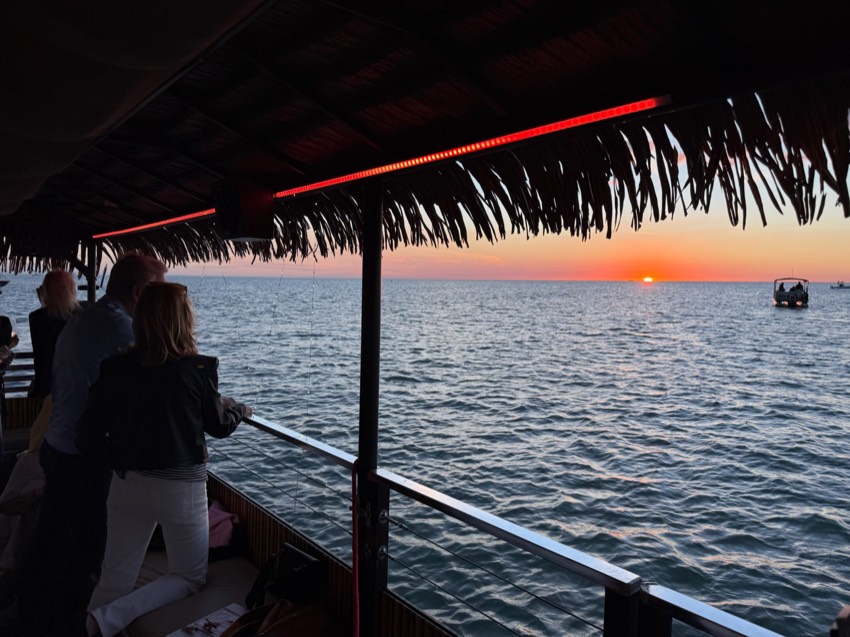
| Sunset cruise | Clear skies, longer evenings | ~6:20pm — bring a layer |
February stays busy with snowbirds and Presidents' Day visitors, so reserve early off our tours page — the calm post-front mornings are the first to go.
From the Helm: February's Dollar Bay oyster bar: working the post-front clarity
Somewhere past Dollar Bay, a guest usually leans over the rail and asks why the water suddenly looks like it belongs somewhere in the Caribbean instead of the Ten Thousand Islands. That’s a fair question in February. A cold front will pass through, drop the humidity, and settle the water column enough that a shallow oyster bar tucked inside Dollar Bay turns almost gin-clear on the tide right behind it. Our captains watch for that window specifically — it never lasts, since the next front or a stretch of wind can cloud it right back up within a day or two.
When that clarity shows up, we’ll idle the boat closer to the oyster bar than we might on a murkier day, since you can actually see structure and movement below the surface instead of guessing at it. It’s a different kind of slow-down than the one we do for wildlife — less about not spooking anything, more about giving everyone time to actually look. Guests who’ve been on the water plenty of times elsewhere tend to react to this part of a February trip more than almost anything else on the schedule, simply because visibility this good isn’t something most coastlines offer.
Because the water column stays this clear only for a short stretch each winter, our captains try to string more than one visual stop into the same run — the oyster bar, then a nearby creek mouth, cutting the engine at each rather than powering straight through toward the next. It’s less a fixed stop-by-stop itinerary than a habit built from running this same water for years: you learn which creek mouths are worth the slow approach and which ones rarely have anything going on, and you adjust the morning accordingly.
Air can still bite in February more than visitors expect, especially in the first hour before the sun gets any real height to it, so our captains keep the throttle a touch gentler on the run out than we would by April, mostly so the wind chill off the bow doesn’t catch first-timers off guard. It’s a small adjustment in throttle and route timing rather than anything guests would notice as a change — just part of reading a February morning correctly before the boat ever leaves the dock.
That combination of clear water and calm dry-season air is exactly why February books up almost as fast as the holidays. If you want that oyster-bar clarity worked into your morning, our dolphin tours are built around this stretch of the calendar, and our shelling tours tend to benefit from the same clear, calm conditions out on the boat-only islands.