
🏝️ At a glance
- Sanibel's treasure
- Seashells — whelks, tulips, scallops, junonia
- Venice's treasure
- Fossil shark teeth, black & ancient
- Distance apart
- Roughly 2 hours by car along the Gulf
- Sheller's secret
- Boat-only islands near Marco rival Sanibel, fewer people
- Rule
- Empty shells only in Collier & Lee; teeth are fossils, fair game
Which collector are you?
This one's easy to sort once you know what's on the sand. If you picture yourself doing the “Sanibel stoop” — bent over a wrack line plucking out glossy, sculpted shells — you want the southern Gulf around Sanibel and Marco. If you'd rather kneel in the surf with a sifter scooping up little black fossil shark teeth, you want Venice. They scratch different itches: shells are about color and form; shark teeth are about deep time and the thrill of the hunt.
You can't really do both well in one beach day, because they're a couple hours apart. So pick your treasure, then pick your town.
Sanibel: the shell trip
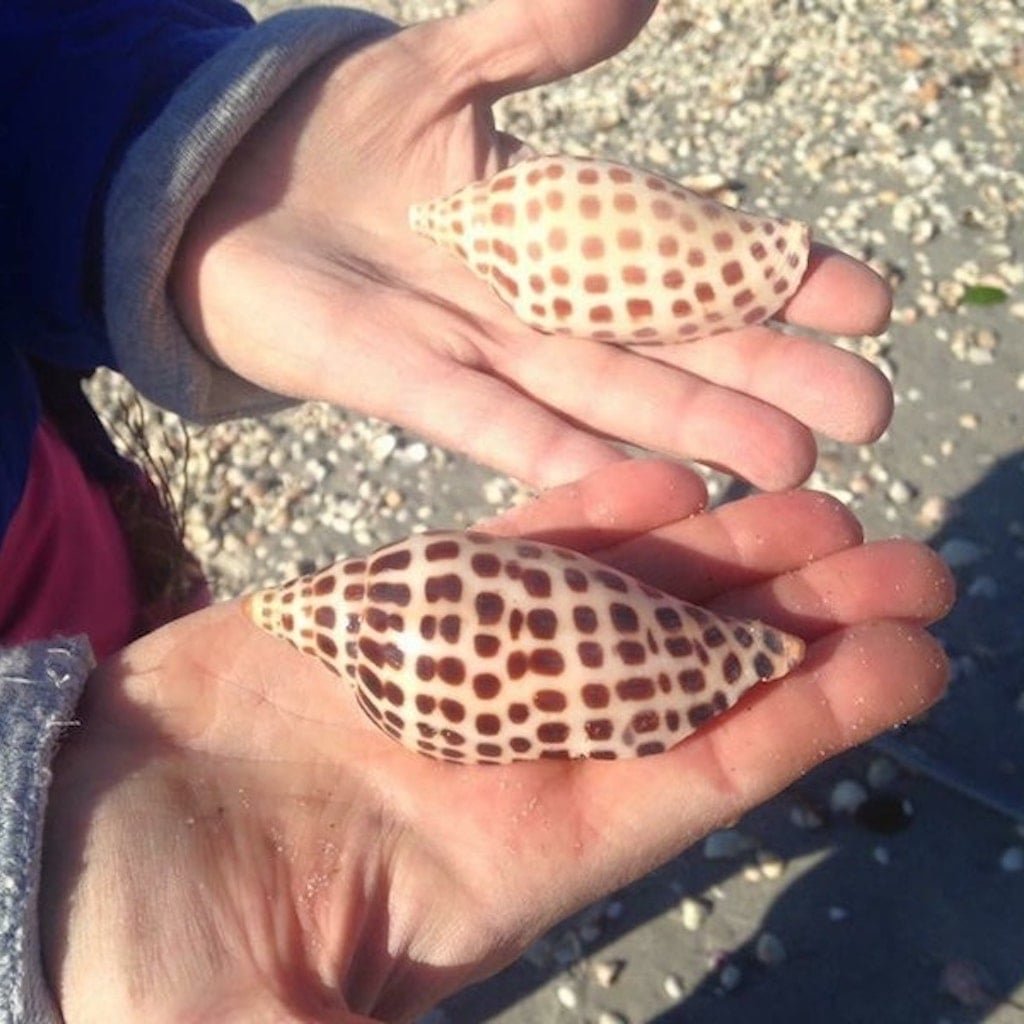
Sanibel is a shelling icon for a reason — that east-west curve at the island's foot scoops up shells the rest of the coast never sees. You'll turn up tulips, lightning whelks, scallops and cones, and after a storm the dreamers hunt the deep-water junonia. The same shells fill the boat-only barrier islands just south near Marco — Keewaydin and Kice — which our shelling tours reach when Sanibel's beaches feel crowded.
| Sanibel (shells) | Venice (shark teeth) | |
|---|---|---|
| What you find | Whelks, tulips, scallops, junonia | Black fossil shark teeth |
| How you hunt | Walk & stoop the wrack line | Sift the surf with a scoop |
| Best beaches | Sanibel, Captiva, boat-only islands | Caspersen & Venice Beach |
| Best after | Winter cold fronts & storms | Any tide; storms stir up more |
Venice: the shark-tooth trip
Venice calls itself the Shark Tooth Capital of the World, and it earns it — the seafloor offshore is layered with fossil deposits that constantly shed teeth onto Caspersen Beach and Venice Beach. Most are small and black, polished by eons in the sediment, and a cheap mesh sifter (a “Florida snow shovel”) is all you need. It's a totally different kind of treasure hunt, and a fantastic one — just know it's a separate drive from the shelling beaches down south.
Our honest steer: if your heart's set on shells, base yourself near Marco or Sanibel and let us run you to the un-picked islands. If you want shark teeth, point the car at Venice. Either way, remember Collier and Lee Counties are empty-shells-only — though fossil teeth are fair game.
From the Helm: Sanibel vs. Venice: a shell rake in one hand, a sifting scoop in the other
When guests ask us to help them decide between a shelling trip near Sanibel and a shark-tooth hunt up around Venice, the honest answer starts with the gear, not the destination. A shelling day means a mesh bag and maybe a hand rake for working a wrack line at the tide’s edge; a tooth hunt means a long-handled sifting scoop and often a snorkel, because most of Venice’s black teeth turn up in the surf trough itself, not sitting on dry sand waiting to be spotted.
Our captains work the wrack-line technique daily on the boat-only islands near our own dock — walking the fresh line a falling tide just exposed, eyes down, moving slow enough to catch a shell before the next small wave buries it again. Tooth hunting works the opposite way: guests stand in moving water and let the surf do the sorting, scooping sand and shaking it through a mesh screen instead of searching a line that holds still. Neither technique really transfers to the other beach.
We don’t run tooth-hunting charters ourselves — that’s Caspersen and Venice Beach’s specialty, well north of our home water — but we hear from guests who’ve tried both trips and come away with a clear favorite. Shellers tend to like the quiet of an island wrack line and the chance at something like a whelk or a fighting conch; tooth hunters like the found-it-in-your-hand thrill of the surf itself, even on a day the shells wash up thin.
Hold a fresh shark tooth up against a fresh-dead shell and the difference is obvious right away — one is glossy black and needs no cleaning at all, the other still wants a rinse and a little patience before it’s ready to keep. That’s part of why we point undecided guests toward the shell side of that choice: less prep at the sink, more time actually out looking.
Both pursuits share one instinct even though the technique differs: a fresh disturbance offshore reshuffles what’s sitting on the bottom, so timing matters either way. Our captains look for a falling tide and a recent blow before working a wrack line; tooth hunters up around Venice watch for the same kind of stirred-up surf, since a churned trough turns over material that’s been buried who knows how long. The tools differ. The underlying logic really doesn’t.
If shells are the trip you’re after, our shelling tours work the boat-only islands where that wrack-line technique pays off fastest, and our seashell guide will help you identify whatever ends up in your bag by the time you’re back at the dock.