
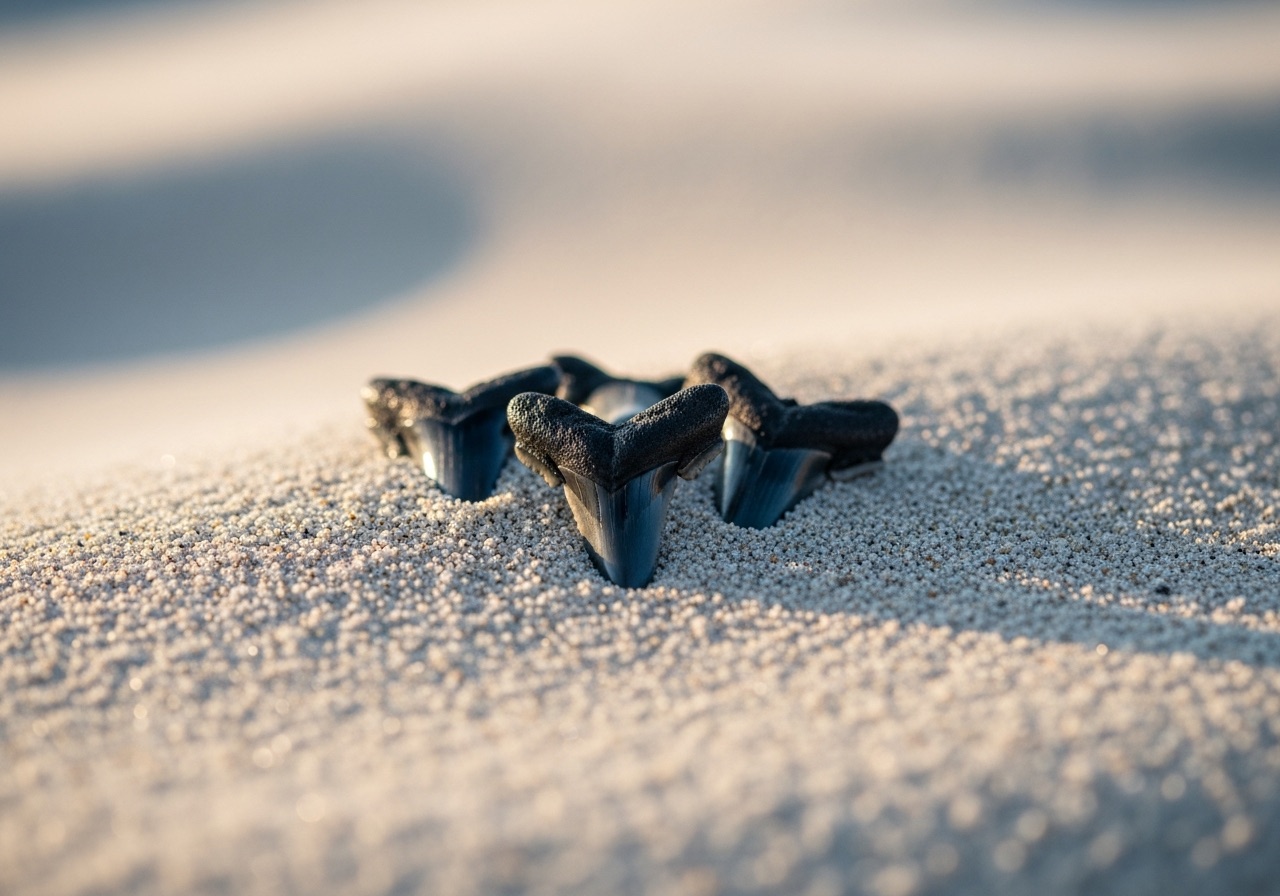
🦈 At a glance
- What they are
- Fossilized teeth, mineralized to shiny black/gray
- Tell-tale
- Glassy black triangle with a root, often serrated edges
- Common species
- Lemon, bull & sand tiger; prized megalodon fragments
- Where & when
- Coarse shell-gravel pockets at low tide, best after a blow
- Rule
- Fossils aren’t live shells — collecting them is fine
How to identify a fossil shark tooth
Color is the first giveaway. A modern, fresh shark tooth is white; a fossil one has spent ages buried in dark, mineral-rich sediment and comes out shiny black, gray or brown, often with a glassy sheen. Look for the classic triangular blade and, at its base, the root — the chunkier mounting part that anchored it in the shark’s jaw. Many have fine serrations along the edges. They range from tiny (a few millimeters) to impressive, and even a chipped one is a thrill.
Which species you’ll find
You’re reading a slice of ancient Florida. Most everyday finds are smaller teeth from lemon, bull, sand tiger and other sharks — the same kinds of predators that still cruise these waters today. The headline find, of course, is a piece of megalodon, the giant prehistoric shark; whole megalodon teeth are rare and usually come from offshore or down south near Venice, but serrated black fragments do turn up in the coarse gravel here.
| Find | Look | How common |
|---|---|---|
| Lemon / bull / sand tiger | Small to medium black triangles, fine serrations | Most common |
| Tiger / mako | Curved or smooth-edged blades | Occasional |
| Megalodon fragment | Thick black piece with coarse serrations | Prized, uncommon |
| Whole megalodon | Big triangular tooth + root | Rare — the trophy |
How to read the gravel
Teeth are heavier than sand, so they sort out into the same places heavy stuff collects: pockets of coarse shell hash and gravel, the base of small shell piles, and the lowest exposed gravel at low tide. The trick is to stop walking and start staring — pick a gravel patch, get low, and let your eyes hunt for the black triangles among the gray shell bits. A small scoop and a sifting screen help. The hauls jump after a storm or winter cold front stirs the bottom and lays down fresh gravel. You’ll often spot bits of sea glass in the very same pockets.
The wild, less-trampled gravel beaches reachable by boat — around Cape Romano and the Ten Thousand Islands — give you first crack before the crowds. That’s exactly where our shelling tours run. And good news: fossils aren’t living shells, so unlike a live sand dollar, you’re free to take every tooth you find.
From the Helm: Fossil Shark Teeth: working the gravel benches inside Coon Key Pass
The gravel bench tucked inside Coon Key Pass is where our captains go first for fossil shark teeth, not the open beach most visitors picture. Current funnels through the pass twice a day and drops the heavier, denser material — the fossil teeth among it — into a narrow band of coarse gravel a boat can nose right up to. Guests are usually surprised the hunt happens on a bank barely wider than a driveway rather than a long stretch of sand. We cut the engine, ease in on the last of a falling tide, and let people fan out along that one narrow band.
We don’t scan for teeth so much as scan for gravel size — a patch of pea-sized shell hash and gravel holds teeth the way a patch of fine sand never will. Our captains walk guests to where the material coarsens underfoot, then crouch and run fingers through a handful at a time rather than eyeballing the surface. A genuine fossil tooth feels heavier than a shell chip its size and has a glassy, almost slick surface even when everything around it is rough and dry. That weight-in-the-hand test catches finds a glance would miss entirely.
If the Coon Key bank is picked thin, which happens after a run of calm weather with no fresh material turning over, we’ll swing to a second gravel patch instead of lingering on a dead spot. A recent cold front or a blow out of the west churns bottom material and restocks these benches, so our captains keep a mental list of two or three gravel pockets and simply move to whichever one the last weather event favored. That backup plan matters more than any single best spot, since the gravel itself shifts week to week.
Color is the last check, and it’s a real one — a true fossil tooth reads glossy black, dark gray or occasionally a deep root-beer brown, never the chalky tan of the shell hash surrounding it. We ask guests to hold a candidate up against a plain patch of shell for contrast before calling it a keeper. It’s a small habit that saves a lot of false excitement over a dark pebble. For the shells sharing this same gravel, the Seashell Guide covers what else turns up alongside the teeth.
A handful of these teeth is a nice souvenir, but we’re always honest that this isn’t a guaranteed haul — some trips turn up plenty of fragments, others barely a couple of good ones, and that’s the honest rhythm of gravel that shifts with every tide. We fold this stop into a longer run toward Panther Key and the deeper Ten Thousand Islands water when guests want more time on the gravel, or keep the stop short as one leg of a longer shelling tour. Either way, the gravel bench earns its spot on the route because it rewards patience over speed.