
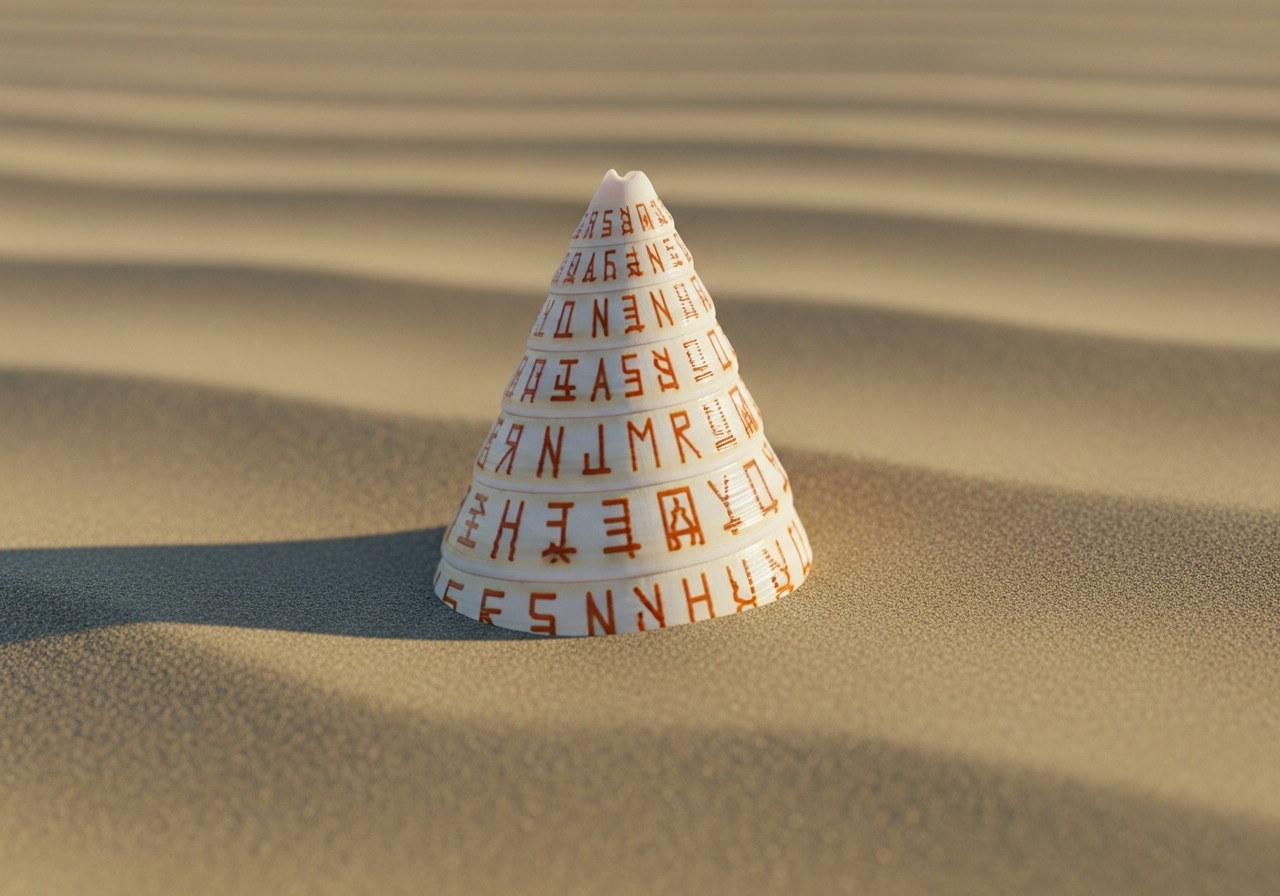
🐚 At a glance
- Scientific name
- Conus spurius
- Size
- Commonly 1.5–3 in
- Tell-tale
- Cream shell with rows of orange-brown letter-like spots
- Where & when
- Sandy Gulf-facing beaches of the boat-only islands
- Rule & safety
- Empty shells only — live cones can sting
How to identify an alphabet cone
The shape names itself: a clean, geometric cone, broad at the shoulder and tapering to a point, with a low spire on top and a long narrow opening down one side. The base is creamy white, and across it run spiral rows of orange-brown to chestnut spots, dashes and squiggles — jumbled enough that early collectors swore they looked like letters of the alphabet. A fresh one is smooth and lightly glossy; beach-worn ones fade paler but keep that distinctive spotting.
It's the largest and most striking of the cones you'll regularly see here. Its smaller, plainer cousin the Florida cone is more mottled and far less boldly spotted — an easy split once you've held both.
A real word on cone-shell stings
This matters, so we'll be straight about it. Cone snails are venomous predators — a living cone can fire a tiny harpoon and deliver a sting that ranges from a bee-sting jab to genuinely serious, depending on the species. The alphabet cone is on the milder end, but the rule is simple and safe: never pick up a cone that has an animal inside. If the shell is occupied, leave it. An empty, washed-up cone is completely harmless and a lovely keeper. This is one more reason Collier County is empty-shells-only — good for the snail and good for you.
Where we find them
Alphabet cones like sandy bottoms, and the empties wash onto the Gulf-facing beaches of the barrier islands. On our shelling tours we work the wrack lines of boat-only sand near Cape Romano and through the Ten Thousand Islands, where fresh shells arrive faster than crowds can pick them. The hauls jump after a storm or winter front churns the bottom — the same timing we lean on for every good shell. Spot the rows of letters, confirm it's empty, and it's yours.
From the Helm: Working the swash at Keewaydin’s south pass mouth for alphabet cones
Before we ever point the bow at Keewaydin, we’re watching two things: how far the tide has fallen and which way the wind sits. A falling tide with a couple hours left before dead low and a light easterly breeze is the window our captains favor for cone hunting — that wind holds the swash flat and glassy instead of churning it opaque, so a cream shell sitting an inch under the surface still throws a shadow you can pick out from a few feet off. On a hard onshore blow we’ll skip that stretch entirely and run somewhere the wind is working for us instead.
Once we’re anchored off the south end, the hunt is a slow ankle-deep walk right where dry sand gives way to wet, letting each retreating wave thin the top layer enough to show shape underneath. We watch for the smooth, tapered cone silhouette before we ever register color, since glare washes color out fast but that neat taper never disappears. Most mornings we’re working a stretch no longer than a football field, because covering ground slowly beats covering more of it fast and missing what’s right there.
A fresh find still carries a faint sheen and a little give right at the lip, where soft tissue hasn’t fully let go yet — that’s the cue to leave it exactly where it sits and let the tide finish its work before anything goes in a bag. A shell that’s been tumbling the wrack for months is chalky and matte, its lip worn round instead of sharp. We put that difference in a guest’s hand within the first few minutes, since it’s the fastest way to teach an empty-shell-only rule without turning it into a lecture.
Polarized lenses do more for this hunt than most gear people bring — cutting the glare off the swash matters more than sharp eyesight does, and we hand a spare pair over the rail more often than any other single item. We clip a mesh bag to a belt loop instead of a bucket, since a bucket bangs a leg with every step while mesh drains sand and water on the walk back. If the wind swings onshore mid-morning and stirs the shallows to milk, we don’t force the wade; we shift the group up onto the dry wrack under the sea oats, where cones tumble in with the rest of the shell hash and the hunt turns from a wade into more of a slow scan.
Early light matters here almost as much as tide does. The first hour after sunrise throws a long, low shadow off anything sitting proud of the sand — often the difference between spotting a cone from six feet and stepping right past it. By midday overhead sun flattens that same shell nearly invisible, so we bias an early departure whenever the tide window lines up with first light.
It’s a hunt built on patience over ground covered, which is why we work it into our shelling tours rather than rushing past it toward the next stop. Back aboard, sorting what came up against the rest of our seashell guide is half the fun of the ride home.