
🐚 At a glance
- Species
- Deer cowrie (M. cervus) & measled cowrie (M. zebra)
- Look
- Glossy, domed, spotted; long toothed slit underneath
- Decisive tell
- Measled has dark dots inside its white spots; deer is the larger
- Odds
- Prized & uncommon — a real SW FL trophy, never guaranteed
- Rule
- Empty shells only in Collier & Lee
How to identify a cowrie
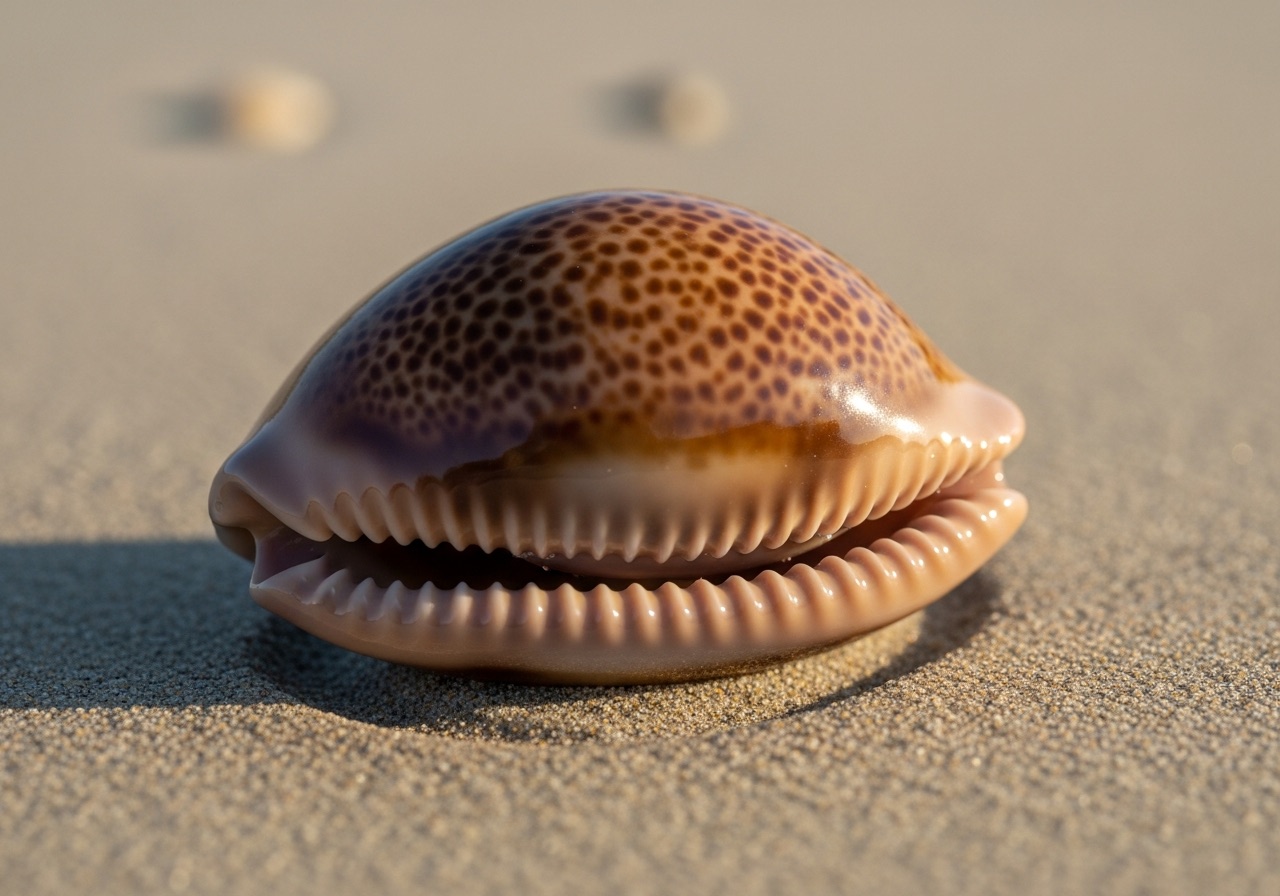
Cowries are easy to recognize as a group and a thrill to hold. The shell is a smooth, glossy dome with no visible spire — the spiral is rolled up inside — and the underside is flattened with a long narrow opening lined by little teeth on both sides. The polish is natural; the living animal wraps a fleshy mantle over the shell, which is why a fresh cowrie gleams like it's been waxed. Tan-to-brown with pale spots is the classic Gulf coloring. Nothing else on the beach has that egg-smooth top and toothed slit, so the genus is rarely in doubt — it's telling our two species apart that takes a second look.
Deer cowrie vs. measled cowrie
Two clues do it. First, size: the Atlantic deer cowrie is the giant of the pair — one of the largest cowries in the world, often three to four-plus inches — while the measled cowrie is noticeably smaller, usually under two inches. Second, look hard at the spots: the measled cowrie earns its name with small dark dots set inside its pale spots, like a faint case of measles, while the deer cowrie's spots stay clean and pale. Big and clean-spotted means deer; smaller with dotted spots means measled.
| Feature | Deer cowrie | Measled cowrie |
|---|---|---|
| Scientific name | Macrocypraea cervus | Macrocypraea zebra |
| Size | Large, often 3–5 in | Smaller, usually under 2 in |
| The spots | Clean pale spots | Dark dots inside white spots |
Where we find them — and the honest odds
We'll be straight with you: cowries are an uncommon prize here, not an everyday pickup like a fighting conch. They turn up on the wilder, less-trafficked Gulf beaches, so your best shot is on the boat-only barrier islands and around Cape Romano after a front has freshened the wrack line. On our shelling tours we put you on those least-picked beaches at the right tide, which is the only honest way to improve the odds — you'll find more about the trophy tier in our rarest shells of SW Florida guide. And as always in Collier County, it's empty shells only.
From the Helm: Checking the Cape Romano shoal edge after a north wind for cowries
A cowrie find starts well before the boat leaves the dock, with a look at the wind history from the last few days rather than the forecast for today. A stretch of north or northwest wind pushing against the outside edge of the Cape Romano shoals is what we’re after — it’s the kind of weather that stirs deeper water and occasionally delivers something that doesn’t normally sit in the swash. Without that setup, we’ll still run the shoals for other species, but we won’t build up anyone’s hopes for a cowrie specifically.
Once we’re there, we work the shoal edge itself rather than the flat sand behind it, walking the seam where the bottom drops and current has clearly been moving material rather than just resting it. That transition line — loose shell hash on one side, packed sand on the other — is where anything unusual tends to collect, and it’s a much narrower strip to search than the whole exposed shoal, which is part of why we don’t rush it. We’ll walk that same seam twice from opposite directions before moving on, since the low afternoon sun catches shape differently coming back the other way.
In the hand, a cowrie you find yourself feels almost unreal the first time — that glassy, domed shine isn’t something the sand usually produces, and guests often ask if it’s been polished before we explain that’s just how the animal built it. A shell that’s tumbled a long while loses some of that gloss and picks up a faint frosting instead, which is still a fine find, just an older one than a shell straight off the shoal that morning. Either way, we’ll have a guest run a thumb along that toothed slit on the underside, since that alone tells you it’s a cowrie before you’ve even flipped it over to check the spots.
We’re honest with every group before we even step off the boat here: this is a low-odds stop by design, not a guaranteed one, and we’d rather set that expectation upfront than let anyone walk the shoal disappointed. Most days here reward us with plenty of the Gulf’s more common shells anyway, which keeps the walk worth it on its own even without a cowrie in the mix. We’d rather guests leave pleasantly surprised than let a build-up we can’t control set them up to leave let down.
If the wind hasn’t cooperated and the shoal edge looks picked-over calm, we’ll shift the stop toward a different stretch of shell hash nearby and treat the cowrie search as a bonus rather than the plan, folding it into a broader shelling tour run instead of building a whole trip around one uncommon shell. It’s a good excuse to browse our seashell guide on the ride back regardless of what came up.