
🐚 At a glance
- The trophies
- Junonia, scotch bonnet, lion’s paw, cowries
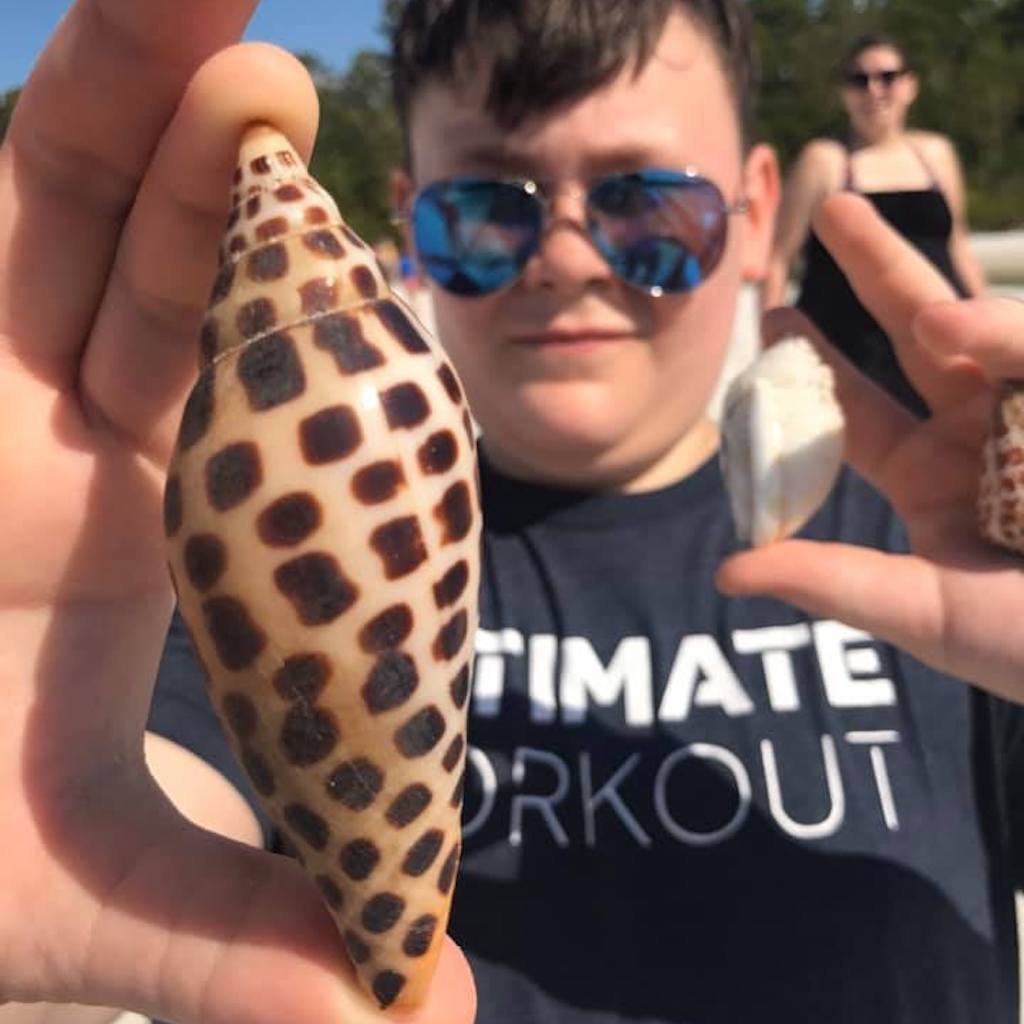
- Junonia
- Lives ~100–425 ft deep; storm-driven only
- Lion’s paw
- Deep water (~30–160 ft); almost never found whole on the beach
- Best odds
- Wild, boat-only beaches right after a storm or front
- Rule
- Empty shells only — honest framing, no guarantees
The trophy finds, ranked honestly
At the very top is the junonia — cream-colored and freckled with chocolate spots, the universally agreed holy grail of Gulf shelling. Close behind for difficulty is the lion’s paw, a gorgeous deep-ribbed orange-red scallop that lives well offshore and almost never reaches the sand intact. The scotch bonnet — a handsome checkered, ribbed shell — is genuinely uncommon this far down the coast. And the glossy Atlantic cowrie is small but scarce, a real find when one turns up whole.
| Shell | Why it's rare | When it shows |
|---|---|---|
| Junonia | Lives ~100–425 ft deep | After big storms / strong fronts |
| Lion’s paw | Deep water (~30–160 ft); fragile | Rarely whole; post-storm |
| Scotch bonnet | Uncommon this far south | Hit-or-miss; fresh sand |
| Atlantic cowrie | Small and scarce | Whole ones are luck |
Why they're actually rare
Notice the pattern: these shells aren’t rare because the animals are nearly gone. They’re rare because they live where you can’t walk. The junonia and lion’s paw spend their lives in deep Gulf water far offshore, so an empty shell only reaches the beach when a powerful storm or strong winter front churns the bottom and carries it in. That’s why finds come in clusters after rough weather and why a slow, sunny week can pass without a single one. It’s luck stacked on timing — the same reason a junonia makes the local news.
How to give yourself a shot
You can’t guarantee a trophy, but you can stack the deck. Get to the wildest, least-walked beaches right after rough weather, when fresh material is still arriving and few footprints beat you to it — the boat-only outer islands and sandbars of the Ten Thousand Islands and around Cape Romano, not the crowded mainland. Time it to low tide after a front, and read up on how to find a junonia specifically. Our shelling tours run to exactly those spots at exactly those moments. Bring patience — and remember, empty shells only.
From the Helm: hunting Southwest Florida’s rare shells along the fresh wrack line past Tigertail
The morning after a cold front pushes through is when we make the run out past Tigertail to check the outer stretch of beach most walkers never reach on foot. The wind swings around to the north overnight, and by the second low tide the wrack line sitting right at the last high mark is fresh — still damp, still tangled with sea grass, not yet picked through by anyone else. That’s the window we’re chasing for the trophy-class finds, and it closes fast once the sun dries everything out and the next set of beachcombers works the same stretch.
We teach guests to work the freshest line first, not the widest one. A wrack line has layers — older material sits higher and drier from a previous tide, while the damp, loosely tangled edge closest to the water is what the last few hours actually delivered. That thin damp band is where a scotch bonnet or a broken lion’s paw is far more likely to turn up than anywhere in the dry drift above it. Polarized sunglasses earn their keep here, cutting the glare enough to catch a shape half-buried in wet sand that you’d otherwise walk straight past.
Most mornings, even a good fresh-front morning, you’ll come back with common shells and maybe one genuine surprise, not a haul of trophies. We’d rather tell you that upfront than let you walk off the boat disappointed. A junonia washing up in front of you is the kind of thing that might happen once in a long while, not something any honest captain schedules a trip around. What a strong front does is shift the odds a little in your favor for that morning — it doesn’t promise anything specific waiting in the sand.
If the wind’s been blowing onshore for days before your trip, we’ll usually skip the exposed outer beaches altogether — a churned, over-worked wrack line rarely holds anything worth the walk. Instead we’ll run somewhere calmer in the Ten Thousand Islands and focus guests on volume and the common families instead of trophy hunting that day. Knowing when to call off the trophy chase is as much a part of this as knowing where to look when conditions actually line up in your favor.
For an easier target than a junonia, the scotch bonnet is the trophy we chase most often out of this whole group, since a fresh front at least gives it a real chance of showing. A cowrie, by comparison, is the one most likely to turn up on an ordinary morning with no front involved at all, which is why we mention it first to guests who want a realistic shot rather than a long-shot chase. Either way, empty shells only applies to anything you find in Collier or Lee County, trophy or not. If cold-front timing matters to your trip, ask us before booking — we’re glad to talk through the forecast honestly on any of our shelling tours.