
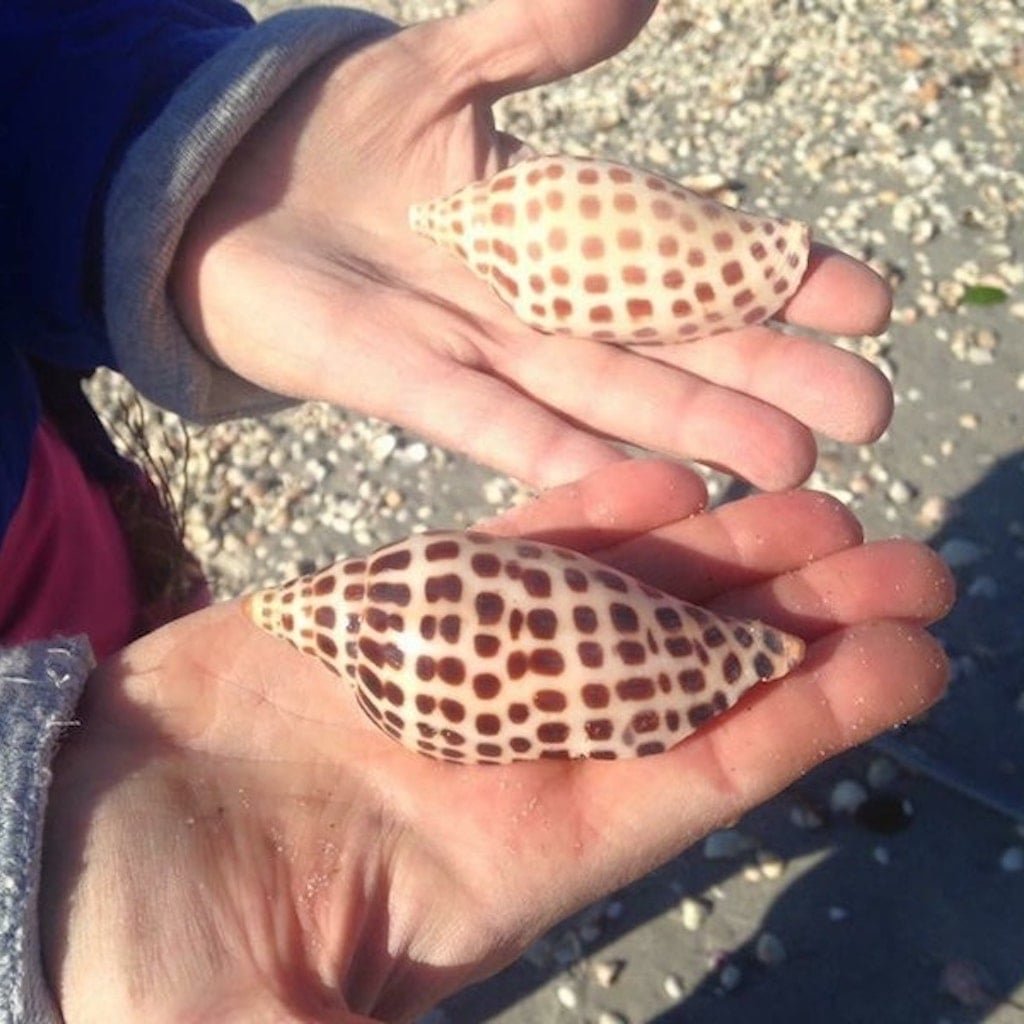
🐚 At a glance
- The scale
- Gem, then Fine, Good and Poor — often split further into Fine+ and Good+
- Gem grade
- Flawless adult: full color, intact lip and spire, no chips or wear
- What lowers a grade
- Chips, cracks, surf-sanded wear, faded color, growth scars, drill holes
- Reality check
- Most beach-collected shells grade Good to Fine — true Gems are rare
- Best odds
- Fresh-dead shells on a tide-refilled, boat-only bar beat pretty-but-worn walk-up finds
- Collecting rule
- Empty shells only in Collier & Lee County
What Gem, Fine and Good Actually Mean
Serious shell collectors and dealers do not just eyeball a find and call it “nice.” They grade it, using a shorthand that goes back decades in conchology circles and shell clubs — the same scale you will see on a dealer’s price tag or a shell-show judging card. The core ladder runs Gem, Fine, Good and Poor, and most graders slot a shell that sits between two tiers into a plus category, so you will also see Fine+ or Good+ on a careful label. It sounds fussy until you realize it is really just a fast way to answer one question: how close is this shell to the animal that made it, before the surf, the sun and time got to work on it?
A Gem-grade shell is as close to flawless as that species gets in the wild: an adult specimen, not a juvenile that never finished growing, full original color and pattern, an unchipped outer lip, an intact spire tip, and a surface with its natural gloss or sculpture still sharp to the touch. Fine grade allows small, honest imperfections — a hint of surf-dulling, a faint growth line, color that has faded a shade — but nothing that changes the shell’s overall shape or story. Good grade is a legitimate, identifiable, display-worthy shell that shows real wear: a chipped lip edge, a sanded-smooth surface, noticeable fading, or a healed break. Poor grade still has scientific or sentimental value — it is complete enough to identify — but it will not go in anyone’s display case front row.
What Knocks a Shell Down a Grade
Every grade drop traces back to a specific, visible flaw, and once you know what to look for you will spot it in seconds. Chips and cracks are the most obvious — a nicked outer lip, a broken spire tip, a hairline crack running through a whorl. Surf wear is subtler: constant tumbling against sand and shell hash sands down fine sculpture, dulls natural gloss, and rounds off sharp ridges until a shell that was once crisp feels soft and worn under your thumb. Faded color is its own category. Sun and salt water bleach pigment fast, so a shell that has been sitting on an exposed beach for weeks — even one with no physical damage — can drop a full grade just from lost color.
Growth scars and rest marks show up as ridges or color breaks where the animal paused growing and started again — natural, but graders still note them because they interrupt an otherwise smooth surface. Drill holes are a different story: a small, round, beveled hole, usually near the shell’s widest point, means a moon snail or another predatory sea snail bored through and ate the animal inside. It is a completely natural part of Gulf reef and sand-flat life, but a drilled shell almost never grades above Good no matter how pretty the rest of it looks. Barnacle scars, worm tubes cemented to the surface, and a missing operculum on species that carry one all chip away at the grade the same way — each one is honest and often interesting, just not what a Gem-grade shell shows.
Why Beach-Collected Shells Rarely Hit Gem — and Why That’s Fine
Here is the honest math: nearly every shell that reaches a walk-up beach has already spent days, weeks or months getting tumbled through the surf zone before anyone picks it up. Wave action grinds shells against sand, shell hash and each other the entire way in, which is exactly the wear that pulls a shell down from Fine to Good. A shell can be a rare species, a gorgeous color morph, and still land at Good grade purely because of how long it rode the surf before it reached the tideline. That is not a flaw in your eye — it is just physics.
Your best odds at a genuinely high grade come from fresh-dead shells — ones the animal only recently vacated, found on a bar the tide just refilled rather than one that has been picked over and tumbled for a season. That is the whole case for shelling from a boat instead of a parking lot: our captains run to boat-only barrier islands like Keewaydin, Kice and Cape Romano specifically because a bar that only saw water an hour ago has not had time to sand a shell’s edges down. If you want the deeper read on spotting that difference before you even flip a shell over, our beach-worn versus fresh-dead guide walks through the gloss, lip and color tells that decide condition — and condition is most of what decides a grade. None of this means a Good-grade shell is not worth keeping. A well-worn alphabet cone with its markings still legible is still a great souvenir; it is just not a Gem, and honest collectors say so.
How to Grade a Shell, Step by Step
Grading your own finds is mostly about working through the same checklist a dealer would, in the same order, every time. Start with the lip and spire, since that is where damage is easiest to miss and most costly to the grade: run a fingertip along the outer edge and check the tip for any chip, however small. Next, check color and pattern against what that species should look like at its brightest — a lettered olive should show crisp, ink-dark markings, a banded tulip should show real contrast between its stripes, and any noticeable fading costs you a full step.
Then look for cracks, drill holes and growth scars under good light, turning the shell slowly so nothing hides in a shadow. Finally, weigh the whole picture: a shell only grades as high as its worst flaw allows, so one bad chip on an otherwise perfect specimen still caps it at Good. It sounds like a lot of steps, but with a little practice most shellers can size up a find in the time it takes to rinse the sand off, and it turns a bucket of “nice shells” into a shelf of shells you can actually rank against each other.
Grading Five Common Marco Island Finds
Numbers help more than adjectives, so here is how five shells our captains see constantly on shelling tours typically grade out, and what usually caps each one. These are field tendencies built on how each species is built and how it behaves in the surf, not promises about what you personally will find on any given trip — sightings and finds are never guaranteed, and every collecting decision still follows the empty-shells-only rule for Collier and Lee County.
| Shell | Typical field grade | What usually caps it |
|---|---|---|
| Alphabet cone | Fine to Fine+ | Spire-tip chips or surf-sanding that blurs the “alphabet” markings |
| Lightning whelk | Good to Fine | Lip chipping and growth-scar ridging from tumbling; a flawless adult lip is uncommon on a walk-up beach |
| Lettered olive | Fine to Gem | Natural high gloss holds up well; a chipped spire or faded color line is what drops it |
| Florida fighting conch | Good | Thin, flared outer lip chips easily even fresh-dead, capping most finds below Fine |
| Banded tulip | Fine | Vivid banding fades quickly in sun and surf, so color retention decides the grade |
Notice the pattern: species with a flared, thin outer lip, like fighting conchs and whelks, cap out lower because that lip is the first thing to chip, while glossy, thick-walled species like olives and cones hold a higher grade longer if the color has not faded. Knowing that ahead of time changes how you handle a shell in the field — cradle the lip, do not toss it in a bucket with a dozen others, and rinse it gently rather than scrubbing. Browse the full Seashell Guide for species-by-species ID pages, and when you are ready to go looking for a Gem yourself, a boat is still the fastest way to reach shells the surf has not had time to wear down.