
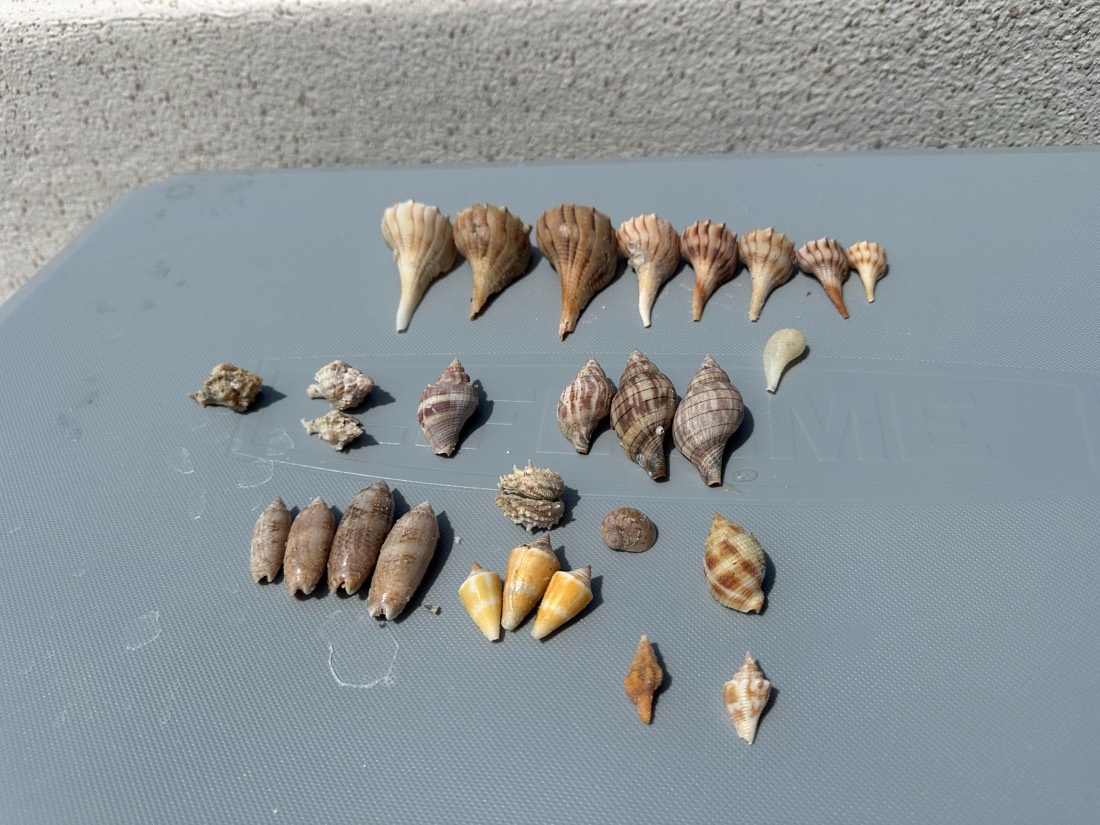
🐚 At a glance
- Fresh-dead tells
- Glossy surface, full saturated color, sharp unchipped lip, crisp ribs and sculpture
- Beach-worn tells
- Chalky matte surface, faded or bleached color, rounded or chipped lip, sculpture sanded smooth
- What causes it
- Time tumbling in the surf zone plus sun-bleaching — not the age of the animal that once lived inside
- Not the same as
- Live vs. empty is a legal question; fresh vs. worn is a condition question
- Best fresh-shell ground
- Boat-only bars on Keewaydin, Kice and Cape Romano the tide just refilled
- Rule
- Empty shells only — Collier & Lee County prohibit taking live shells, sand dollars or starfish
What Fresh-Dead and Beach-Worn Actually Mean
Every shell you pick up on a Ten Thousand Islands beach is sitting somewhere on the same timeline. On one end is fresh-dead: an animal vacated the shell recently — days, maybe a couple of weeks — and it hasn't had time to lose what made it look alive. The surface still has its glossy shine or enamel-like polish, the color pattern is fully saturated instead of washed out, and the lip or aperture edge is thin, sharp and unchipped because nothing has knocked it around yet. On the other end is beach-worn: a shell that's spent months or years rolling through the surf zone, sitting in a hot wrack line, or tumbling across a sandbar every time the tide moves it. Sun bleaches the pigment toward chalky white or pastel, sand acts like slow-motion sandpaper grinding the ribs and spines down to nubs, and the once-sharp lip gets chipped, rounded and worn thin from thousands of small impacts against rock, coral rubble and other shells. Most shells you'll ever find sit somewhere between those two extremes, and learning to read where is the whole game.
The Five Tells of Any Shell's Condition
You don't need a lab to place a shell on the fresh-to-worn spectrum — your eyes and fingertips do the job. Start with gloss: run a thumb over the surface. A fresh-dead shell still carries its natural sheen or a thin, waxy periostracum (the organic skin some species wear like a raincoat); a worn one feels dry and matte, almost like unglazed pottery. Next, check the lip or aperture edge, the single best tell in the business. Fresh edges are thin, sharp and complete. Worn edges are rounded over, chipped, or feel sanded down to a soft curve — the surf has been using that edge as a chisel for a long time. Then look at color: fresh shells hold their full pattern, whether that's a whelk's warm caramel bands or a scallop's rays of purple and orange; beach-worn shells fade toward chalky white, pale tan or a washed-out ghost of the original pattern. Fourth, read the sculpture — the ribs, spines, knobs and grooves formed into the shell as it grew. Fresh shells show that texture crisply; worn shells have it sanded down toward smooth, sometimes almost featureless. Last, flip it over and check the interior. A fresh shell's inner surface usually still shows bright color or a glossy polish; a heavily worn one often shows chalky, pitted or bored patches, sometimes from boring sponges or predatory snails that had time to work on it before you ever saw it.
| Trait | Fresh-Dead | Beach-Worn |
|---|---|---|
| Surface | Glossy, waxy periostracum or natural sheen | Chalky, matte, feels dry and sanded |
| Color | Full, saturated pattern | Faded, bleached toward white or pastel |
| Lip / aperture edge | Thin, sharp, unchipped | Rounded, chipped or worn smooth |
| Sculpture (ribs, spines) | Crisp and well-defined | Sanded down, sometimes nearly smooth |
| Interior | Bright color or glossy polish | Chalky, pitted, sometimes bored |
| Typical origin | Bars the tide just refilled; boat-only islands | High-tide wrack lines; heavily walked beaches |
Why the Freshest Shells Turn Up on Boat-Only Islands
Condition isn't random — it's mostly a function of exposure time, and exposure time is exactly what changes when you shell from a boat instead of a parking lot. On drive-up beaches, whatever fresh-dead material the tide brings in gets picked over within hours of low tide, and what's left behind sits baking in the sun and rolling in the surf for days or weeks before the next collector notices it, which is why so many town-beach hauls skew heavily beach-worn. The boat-only barrier islands we run to — Keewaydin, Kice, and the shifting spits around Cape Romano and Caxambas — don't get that daily foot traffic, so a bar the tide just refilled can turn up shells that are still glossy and sharp-lipped because almost nobody has had the chance to grind them down or pick the good ones off first. Our captains read the tide tables and run to whichever bar just came up, which is the entire case for boat-only shelling: less competition, less exposure time, and a real shot at fresh-dead material instead of the tumbled leftovers everyone else already sorted through. It's the same water and the same species you'd find walking a public beach — the difference is timing and access, and that's what a shelling tour buys you.
Beach-Worn Isn't the Same Question as Live vs. Empty
It's easy to mix these up, but condition and occupancy are answering two completely different questions. Fresh vs. beach-worn tells you how long a shell has been dead and exposed to the elements — it's a quality and collectability question. Live vs. empty tells you whether an animal is currently inside — it's a legal and ethical question, and in Collier & Lee County the rule is simple: empty shells only, full stop, whether you're looking at a sand dollar, a starfish or any other shell with a living animal still inside. The two axes don't track each other at all. A shell can be fresh-dead and empty, which is the best possible combination for a collector — recently vacated, still glossy, still legal to keep. A shell can also be heavily beach-worn and empty, which is still a perfectly legal keeper, just a duller, less showy specimen of the same species. What you'll never legally keep is a live shell regardless of how fresh or worn its surface looks, so always check for an occupant before it goes in your bag. If you're still working out how to spot the difference between an occupied shell and an empty one, the live vs. empty guide walks through the actual tell-tales — this page is strictly about what condition tells you once you already know a shell is empty.
From Condition to Collector Grade
Once you can read gloss, lip and color at a glance, you're already doing most of the work serious shell collectors use to grade a specimen. Formal grading scales — the kind used at shell shows and by dealers — run from Gem (essentially flawless, fresh-dead, full color, zero chips) down through Fine, Good and Beach grade (heavily worn, faded, chipped, still a legitimate shell but not a display piece). Condition is one of the two or three biggest inputs into that scale, right alongside size and completeness, which is exactly why the five tells above matter beyond just satisfying curiosity on the boat ride home. A worn shell isn't a failure — plenty of collectors want beach-worn specimens specifically for their weathered character, and a chalky, sanded whelk can be just as interesting a find as a glossy one. But if you're building a real collection, or just want to know why one shell looks so much better than the one sitting next to it in your bucket, understanding fresh-dead versus beach-worn is the foundation everything else gets built on. For the full breakdown of how collectors actually score a shell once you've assessed its condition, see our shell grading guide — and if you'd rather skip straight to finding fresh material yourself, the Seashell Guide hub has species-by-species detail on where and when to look.