
🐚 At a glance
- What it is
- Sorting fine shell hash for tiny species instead of walking for one big shell
- Gear
- Mesh scoop or kitchen colander, tweezers, pill bottles or a film canister
- Best ground
- Accreting spits & drift-line windrows off Caxambas Pass, Keewaydin & Kice
- Starter species
- Marginellas, dwarf olives, ceriths, baby wentletraps & tusk shells
- Rule
- Empty shells only — Collier & Lee County prohibit live takes
What Is Micro Shelling, Exactly?
Most first-time shellers walk the tideline scanning for one big trophy — a horse conch, a whelk, something they can hold up for a photo. Micro shelling flips that instinct on its head. Instead of scanning for the one showpiece, you crouch down at the swash line or a drift-line windrow, scoop up a double handful of the fine, gritty shell hash that’s piled up there, and go through it slowly. What looks like plain sand and broken bits from standing height turns out, up close, to be a whole miniature reef’s worth of whole, perfect little shells — marginellas, dwarf olives, tiny wentletraps, ceriths — each one smaller than a fingernail and easy to miss if you’re not looking for it.
Shell hash builds fastest on accreting spits — the low, freshly building sandbars where currents are actively depositing material instead of eroding it away. The boat-only bars off Caxambas Pass are a textbook example: every tide resupplies them with fresh grit swept in from the pass, and because so few feet ever cross that sand, the drift lines pile up thick instead of getting picked over by the time you get there. It’s exactly the kind of ground our shelling tours are built to reach, and it’s the same fine material covered species by species across the broader Seashell Guide.
The Gear That Actually Works
You don’t need much to get serious about mini shells, and most of what works best costs next to nothing. A mesh shell scoop or bag — the kind sold for aquarium gravel or bait — lets you dip a scoop of wet hash and let the water and fine sand drain straight through, leaving the shell fraction behind. A kitchen colander does the same job in a pinch, and most families already own one. From there, a pair of tweezers makes picking out anything smaller than a grain of rice a lot easier on your fingers, and small containers — pill bottles, a film canister if you can still find one, or a compartmented tackle box — keep each day’s finds from turning into one jumbled pile.
Spread your scoop out on something pale — a beach towel or the bottom of a white bucket works — before you start sorting; dark, wet sand hides the smaller, paler shells almost completely. A cheap magnifying loupe, or even your phone’s camera zoom, helps you catch the tell-tale ridges and teeth that separate one tiny species from another, details we cover species by species over in the common marginella and dwarf olive guides. And always give the pile one more slow pass before you bag anything — it’s the easiest way to catch a shell that’s still occupied before it comes home with you.
Where Mini-Shell Hash Piles Up Near Marco Island
The best mini-shell ground shares almost nothing with the best big-shell ground, which is part of why so few people work it. You’re not looking for a wide, gently sloping beach face; you want the tight, textured edges — the swash line right where each wave dies out, and the ragged little windrow of grit a few feet above it that marks the last high tide. On Marco Island’s boat-only barrier islands, that’s usually a narrow band, but it’s a band that’s constantly getting resupplied rather than picked clean by the next family that walks by.
Caxambas Pass is the standout for this kind of hunting — the accreting sandbars there catch a steady feed of fine hash off the pass current, and because the spot is boat-only, most of what washes in stays put until the next tide turns it over again. Keewaydin and Kice fill in the rest of the rotation, especially along their more sheltered, grass-flat-adjacent stretches where marginellas and ceriths tend to concentrate. Shelling here runs year-round rather than on any single calendar window — winter brings the lowest tides in the early morning, summer pushes the best low water into the evening — so there’s almost always a workable window if you check the tide chart before you go. It’s exactly the ground our captains run past the mainland crowds to reach; see the full lineup of islands on the shelling beaches hub.
Ten Mini Shells to Learn First
Once you actually start looking, the same handful of mini shells turn up again and again in Marco Island shell hash. Here’s a starter list of ten worth learning to recognize on sight — not a complete catalog of everything hiding in a scoop of grit, but the regulars a patient sheller finds on nearly every good drift line. Learn these ten first and you’ll be sorting faster than people who’ve been at this for years.
| Mini Shell | Typical Size | Tell-Tale |
|---|---|---|
| Common marginella | Under ½ in | Glossy egg shape, thick toothed lip |
| Dwarf olive (rice shell) | ¼–½ in | Glossy bullet shape, no ribs |
| Ceriths | ½–1 in | Slim, fine-ribbed turret spire |
| Baby wentletraps | Under ½ in | Tight ribbed spiral, staircase look |
| Tusk shells | 1–2 in | Curved, open-ended ivory tube |
| Nassa mud snails | ¼–½ in | Small conical spire, rougher texture |
| Coffee bean trivia | ¼–0.4 in | Humped back, fine cross-ribs |
| Bubble shells | ½–1 in | Paper-thin, translucent, no spire |
| Coquina clams | Under 1 in | Tiny wedge shape, rainbow color variation |
| Chiton plates | ¼–½ in | Small curved armor-plate segment |
Why Kids Crush the Micro-Shelling Game
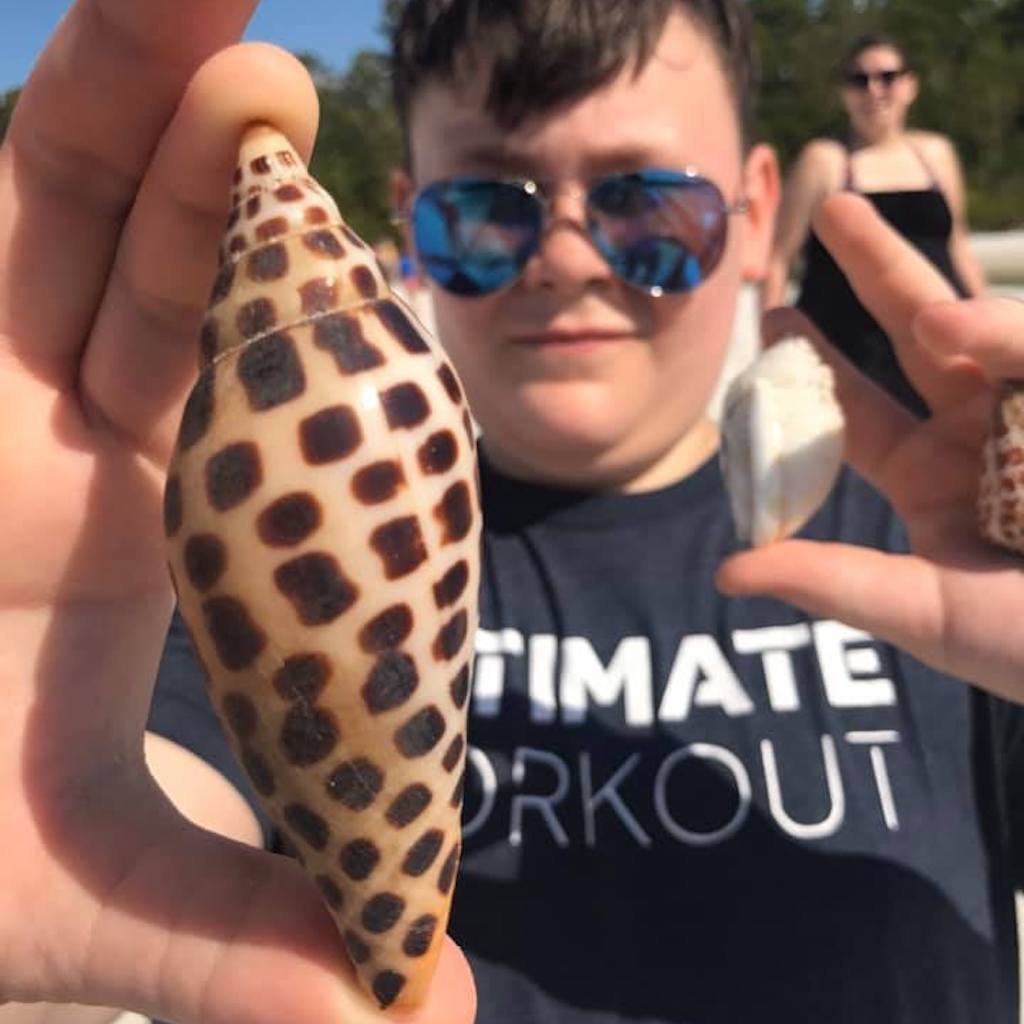
Micro shelling might be the single most kid-friendly thing we run on the water. A double handful of shell hash is basically a sensory bin that never runs out, and kids don’t carry the same size bias adults do — a pile of forty perfect little marginellas beats one big whelk every time when you’re seven years old. Being close to the ground is a real advantage too; kids are already down at eye level with the swash line where the smallest shells hide, and most of them have the patience for slow, repetitive sorting that grown-ups tend to burn out on after five minutes.
It also turns into a genuine skill fast. Give a kid the ten-shell starter list above and a cheap magnifier, and by the end of one trip they’re usually the one calling out IDs before the adults spot anything. It’s a natural fit for a family day on the water — a quiet, absorbing activity between the bigger moments of a trip, and one more reason a boat that can reach the untouched, boat-only spits beats a crowded mainland beach every time. Our full Seashell Guide has the rest of the species worth knowing before your next trip out.