
🐚 At a glance
- Scientific name
- Fasciolaria tulipa
- Size
- Commonly 3–6 in; can exceed 7 in
- Tell-tale
- Broken, smudged color streaks; mottled reddish-brown
- Where & when
- Seagrass flats & sandy bottoms of the islands; low tide is best
- Rule
- Empty shells only in Collier & Lee
How to identify a true tulip
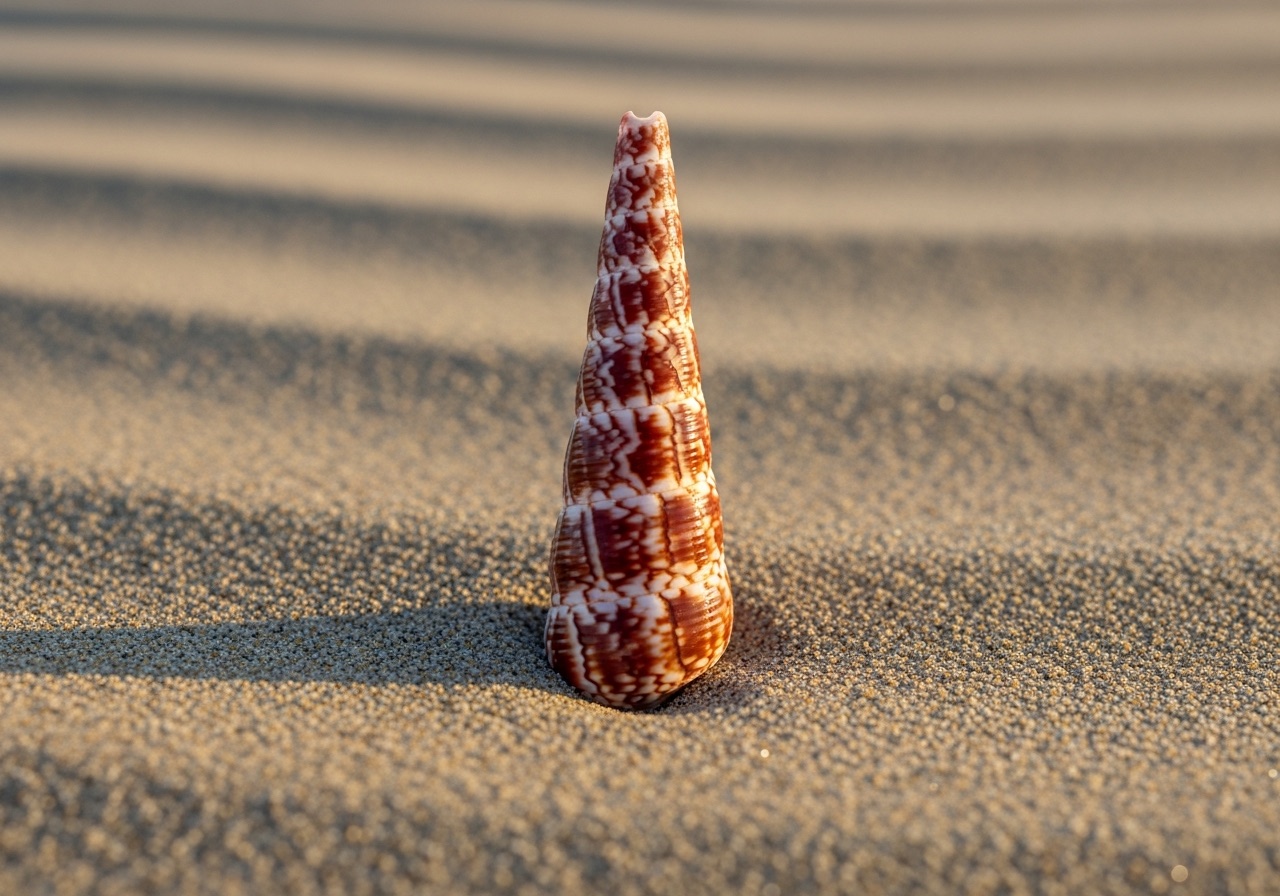
Picture a smooth, glossy spindle that tapers to a point at both ends — that's the tulip silhouette. The true tulip carries a base color of mottled reddish-brown, orange-tan or gray, brushed over with darker color streaks that look smudged and broken, like watercolor that ran. Run a finger over it and you'll feel fine, low spiral threads circling the body, but the surface stays sleek and shiny. Mature shells get genuinely big for our flats, which is half the giveaway.
It's a predatory snail, by the way — true tulips hunt other shells across the grass, including fighting conchs and even smaller tulips.
True tulip vs. banded tulip (the split shellers want)
This is the comparison everyone asks about, and the good news is it's an easy call once you know the trick. The true tulip is larger and its color streaks are broken and messy; the banded tulip is smaller, smoother, and wears clean, thin, evenly spaced dark spiral lines instead of smudges.
| Feature | True tulip | Banded tulip |
|---|---|---|
| Size | Larger (3–6+ in) | Smaller (usually under 3 in) |
| Markings | Broken, smudged streaks | Clean thin dark spiral lines |
| Surface | Glossy, faint spiral threads | Smoother, more polished |
Want it laid out side by side? We keep a full true vs. banded tulip breakdown that settles every borderline shell.
Where we find them
True tulips live on the seagrass flats and sandy bottoms around the islands, and the empties wash up on the Gulf-facing beaches you reach by boat. On our shelling tours we work the wrack lines of the boat-only barrier islands like Keewaydin at low tide, when the most beach is bare and the freshest shells are still sitting where the water left them. A whole, unbroken tulip with its color still glowing is a genuine keeper — just confirm it's empty, because Collier County is empty-shells-only.
From the Helm: Working Round Key’s back-creek grass flats for true tulip at dead low
A dead-low, glass-calm morning is what we look for before working the grass flats tucked behind Round Key for true tulips — not for the shell itself, but because that’s when you can actually see the snail’s trail crossing bare sand between blades of turtle grass. Any chop on the surface and that faint furrow disappears; any current running through the creek and the trail smears before we can follow it back to whatever it’s hunting that particular morning.
Every so often we’ll idle up on a true tulip mid-hunt, its foot wrapped around a smaller clam or another snail, patient as anything out there, and it’s one of the few moments on a shelling stop where a guest realizes these aren’t just pretty things to pick up off the sand — they’re working predators doing an actual job. We don’t disturb one caught in the act; we point it out quietly, watch a minute, then move on and let it finish its meal.
For the empty shells guests actually take home, we work the sand pockets between grass clumps rather than the grass itself, since a true tulip’s smooth, glossy shell tends to wash into open patches and snag less than it would tangled up in blades. A fresh one out of the sand still smells faintly of low tide and the glaze is slick, almost like wet glass under a fingertip; a few seasons up on a beach and that gloss goes matte, chalky at the lip first.
We ask guests to keep wading shoes on for this particular stop, since the flat’s shell hash and the occasional resting stingray make bare feet a genuinely bad idea out there. We run the shuffle-step briefing at the rail before anyone steps off the ladder: slide, don’t stomp, so anything resting flat in the sand gets a chance to move off before a foot ever comes down on it.
On the right flat we’ll also point out egg cases stacked in tight, papery towers wedged upright in the sand nearby, a true tulip’s own doing, though empty stacks are easy to mistake for something else entirely on a first look. We leave those alone too, occupied or not, since the shellers who ask the most careful questions tend to get the most useful answers back from us in return.
This stop tends to run long whenever the flat’s producing well, so we’ll trim time somewhere else in the day to protect it — usually the open-water run between stops rather than the flat itself. It’s one of the reasons a private shelling tour gives us more room to let a good flat breathe than a tighter shared schedule ever allows for.