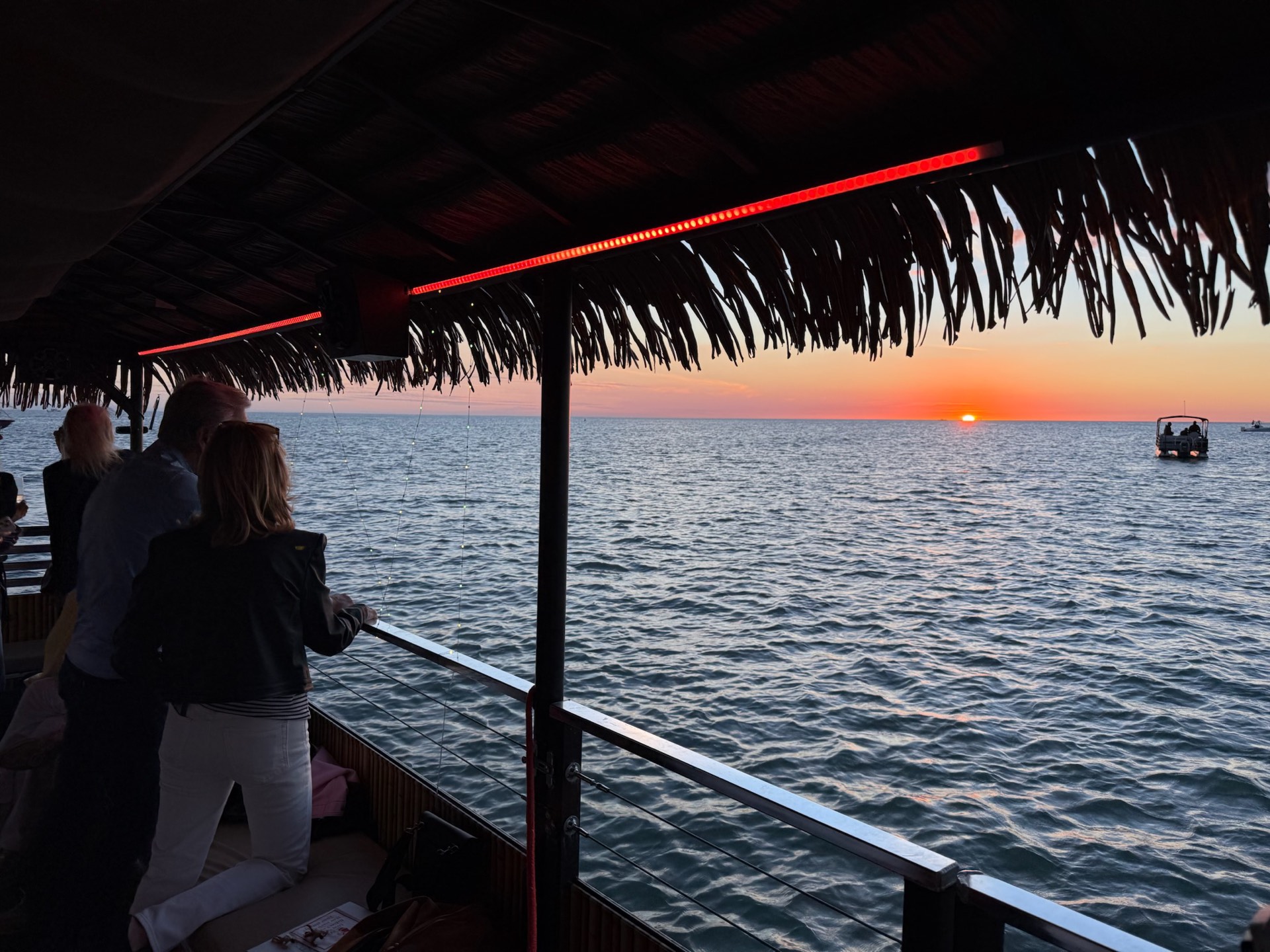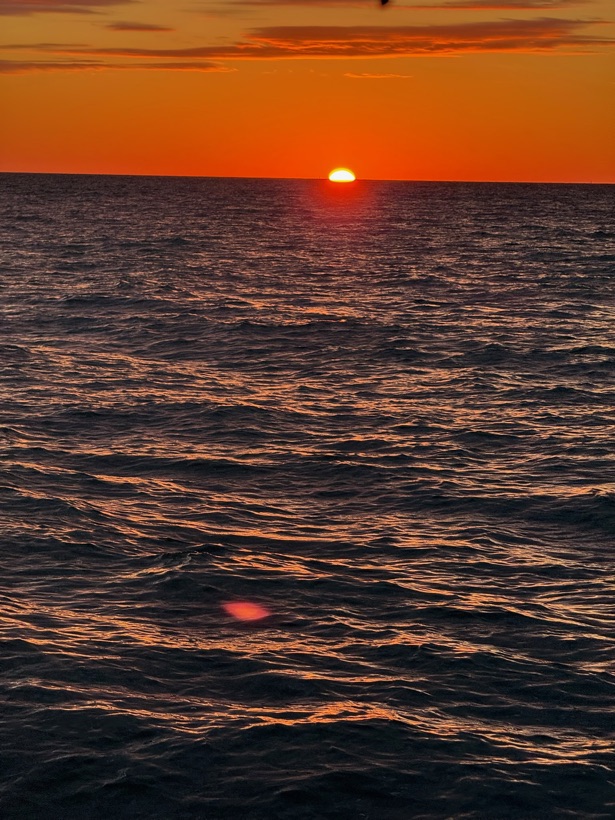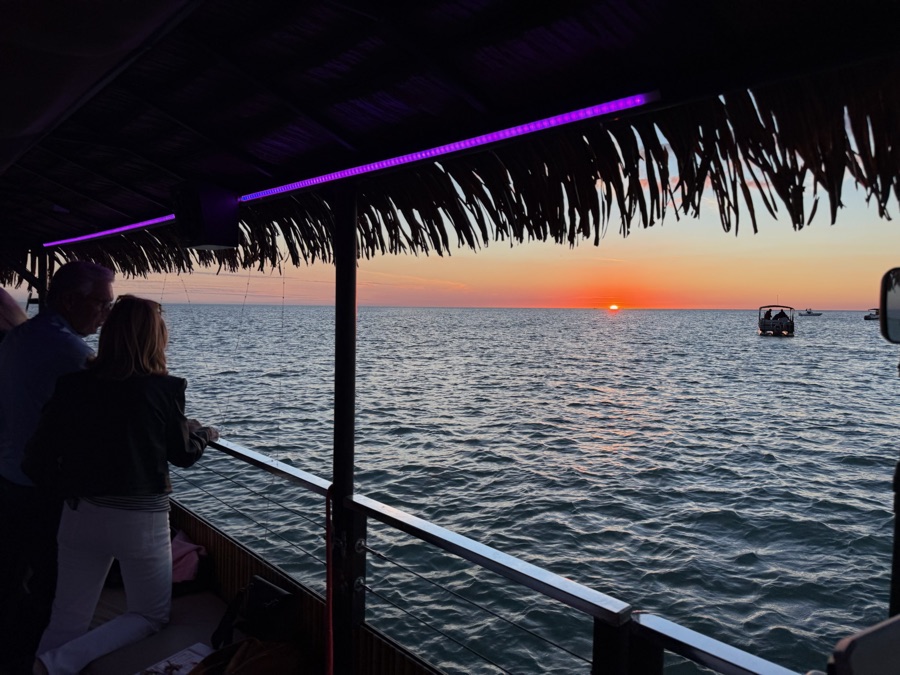
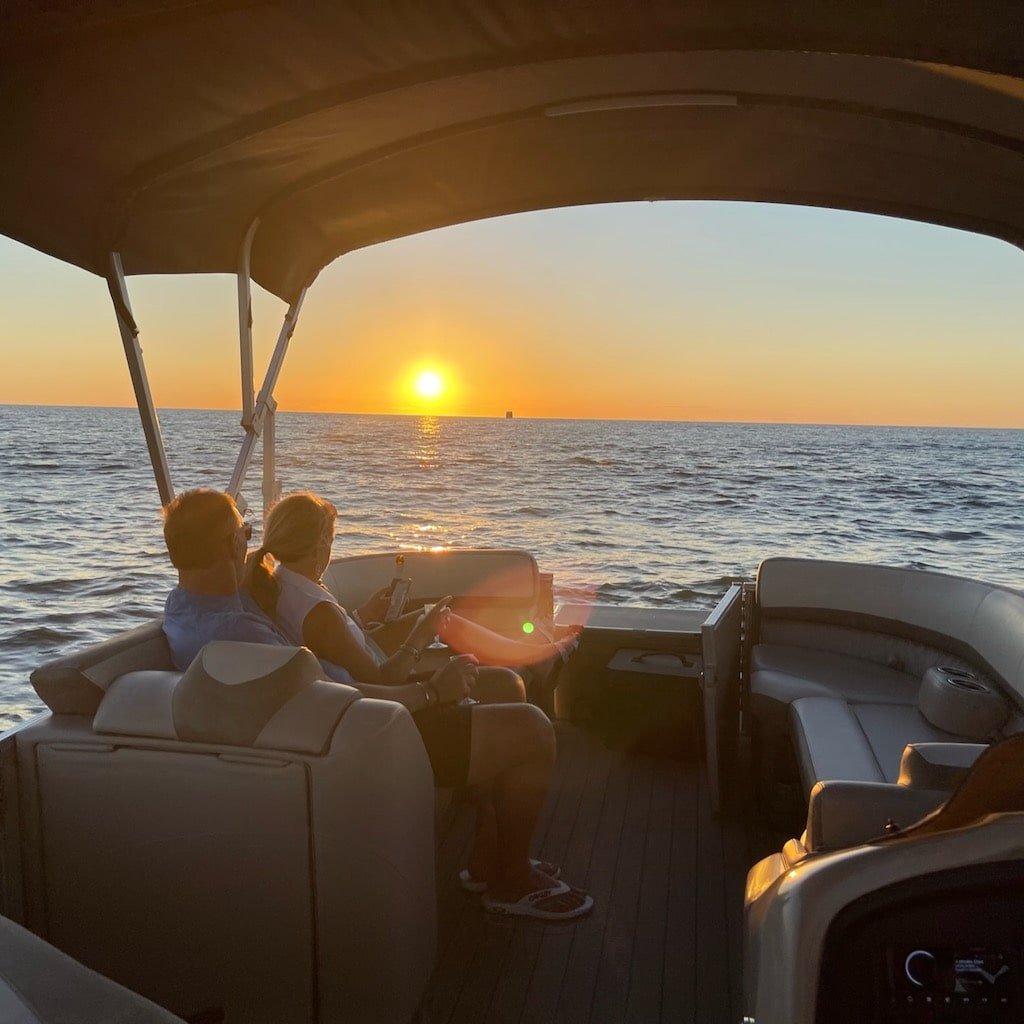
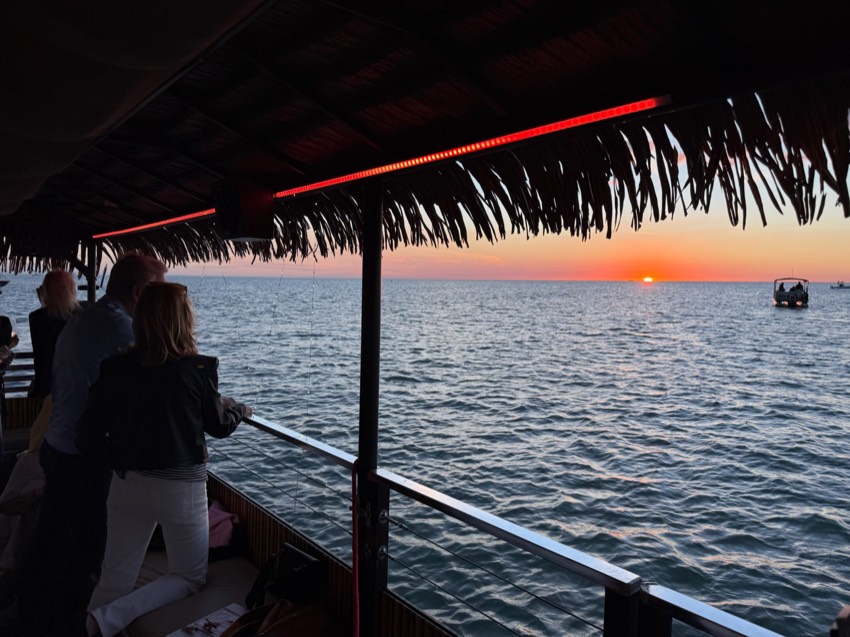
Most guests find their spot at the rail within the first five minutes out of the Goodland dock and don’t move much after that, which tells our captains the run out matters almost as much as where we finally stop. On a typical evening we head out through Caxambas Pass on a falling tide, when the outgoing current keeps moving the same direction as any breeze instead of stacking wind against tide into a choppier ride. As we come up on our stop, we bring the boat around broadside to the west rather than idling in nose-first, so every seat along the rail gets the same clear look at the horizon instead of half the boat squinting past the bow to see it.
If the wind swings around out of the west and starts pushing straight up the pass against that outgoing water, we shift our stopping point to the lee side of the Cape Romano shoals instead, where the shallow sandbars break up the swell before it reaches us. You still get the full width of sky and color out there — the shoals just give the boat a calmer platform to sit on, which matters more once people start standing up for photos. On busier evenings, when Caxambas Pass fills up with other boats riding the same falling tide toward the Gulf, we’ll sometimes swing north through Hurricane Pass instead just to put more open water between us and the rest of the fleet.
Our captains start slowing well before the sun actually touches the water, feathering back the power over the last stretch so the wake dies out ahead of the show instead of during it. That early pullback means nobody’s photo has a wake line slicing through the reflection, and the final few minutes of color play out without any hum underneath them.
| Wind | Where we run |
|---|---|
| Light or offshore (east) | Straight out Caxambas Pass to open Gulf water |
| Onshore (west/southwest) | Lee side of the Cape Romano shoals |
| Building afternoon breeze | Inside edge near Hurricane Pass for flatter water |
We also read the sky well before the color starts, since a hazy horizon can flatten a sunset that looked promising an hour earlier, and a low band of clouds sitting out over the Gulf sometimes throws more color than a clear sky does. That read shapes small things — how far out we run, how long we linger once we get there — more than it changes the basic plan for the evening.
A Marco Island sunset run pairs naturally with a proposal or an anniversary toast, since the same calm water and timing work for either occasion. If you’re comparing this against our Naples sunset cruise, the biggest difference is the water itself — open Ten Thousand Islands out here versus a closer bay-and-pass run up there.