
🐚 At a glance
- What it is
- A soft-bodied decapod crustacean (not a true crab) that lives inside borrowed shells
- Common local species
- Striped hermit crab (Clibanarius vittatus), found on Gulf tidal flats and oyster bars
- Favorite shells
- Lightning whelk, knobbed whelk, moon snail and periwinkle shells
- The tell
- The shell moves on its own, legs peek from the opening, or it feels oddly heavy
- The rule
- Occupied shells count as live shells — empty shells only in Collier & Lee
- Best places to spot one
- Tigertail Beach flats, Keewaydin’s swash zone, Ten Thousand Islands oyster bars
What exactly is a hermit crab?
Despite the name, a hermit crab isn’t really a crab in the way a blue crab or stone crab is. It belongs to a group of crustaceans called Anomura, and unlike a true crab, its long, soft, coiled abdomen has no hard shell of its own. That soft tail end is exactly what makes a borrowed shell non-negotiable — without one, a hermit crab is defenseless against fish, birds and the sun. So it moves into the cast-off home of a sea snail, usually a whelk, moon snail or periwinkle that died and left its shell behind, and carries that shell everywhere it goes as one of the more entertaining characters in our Wildlife Guide to the Ten Thousand Islands.
The striped hermit crab (Clibanarius vittatus) is the one you’re most likely to meet locally. Look for the mismatched claws — one oversized front claw it uses like a trapdoor to seal the shell’s opening when threatened, and a smaller one for feeding — plus banded legs that give the species its name. You’ll find them scuttling across oyster bars, tidal flats and grass beds from Goodland to Rookery Bay, scavenging algae, detritus and the odd bit of carrion. It molts its own exoskeleton periodically as it grows, but the borrowed shell never grows with it — eventually the crab has to evict itself and find, or fight for, a bigger one.
Is that shell occupied? The weight-and-wiggle test
Before any shell goes in your bucket, our captains run a quick three-part check — and you can do it too. First, pick the shell up gently and feel the weight. An empty shell that size should feel light and hollow; if it feels surprisingly heavy or dense for its size, something’s likely living inside. Second, look at the opening. A hermit crab often keeps a claw or a leg tucked just inside the aperture, ready to snap the door shut, so peer in before assuming it’s vacant. Third, if you’re still not sure, set the shell down on the sand and wait a few quiet seconds — an occupied shell has a way of suddenly beginning to walk.
If you get a yes on any of those three, the shell isn’t a keepsake — it’s someone’s home. Set it back down exactly where you found it, ideally right in the wet sand near the tide line rather than up on the dry beach, so the crab isn’t stranded and exposed. Never try to shake, pry or coax a hermit crab out to keep the shell for yourself — that’ll injure or kill it, and it defeats the entire point of the check. For the full rundown on telling any live shell from an empty one, our live shell vs. empty shell guide covers barnacles, byssal threads and the other signs worth watching for beyond hermit crabs.
| Sign | Likely empty | Likely occupied by a hermit crab |
|---|---|---|
| Weight | Light and hollow for its size | Surprisingly heavy or dense |
| The opening | Clear, empty aperture | A claw or leg tucked just inside |
| Set it down | Stays still | Starts walking within seconds |
| Smell | Clean, sun-bleached | Faint marine odor, may still be damp inside |
| What to do | Safe to keep | Return to the wet sand where found |
Which shells do they borrow?
Hermit crabs aren’t picky about species, only about fit — they’ll move into whatever empty spiral shell matches their current size, then trade up as they grow. Locally, that means you’ll most often find them tucked into lightning whelk, knobbed whelk and moon snail shells, with smaller species using periwinkles, nutmegs and olives. The shark eye moon snail shell is a particular favorite — its smooth, rounded shape and wide opening make it easy for a crab to seal up tight when it pulls inside.
That overlap is exactly the problem for shellers: the same wide-mouthed whelks and moon snails that collectors prize as showpiece finds are the same shells hermit crabs are competing for. When a bigger shell becomes available — say, a large whelk a crab has just outgrown, or one that’s newly empty on the flat — you’ll sometimes see several hermit crabs of ascending size lined up nearby, each waiting its turn to trade into a larger shell in what biologists call a vacancy chain. It’s a reminder that an empty-looking whelk shell on the sand might not stay empty for long, and it might not be empty right now either.
Why it counts as a live shell here
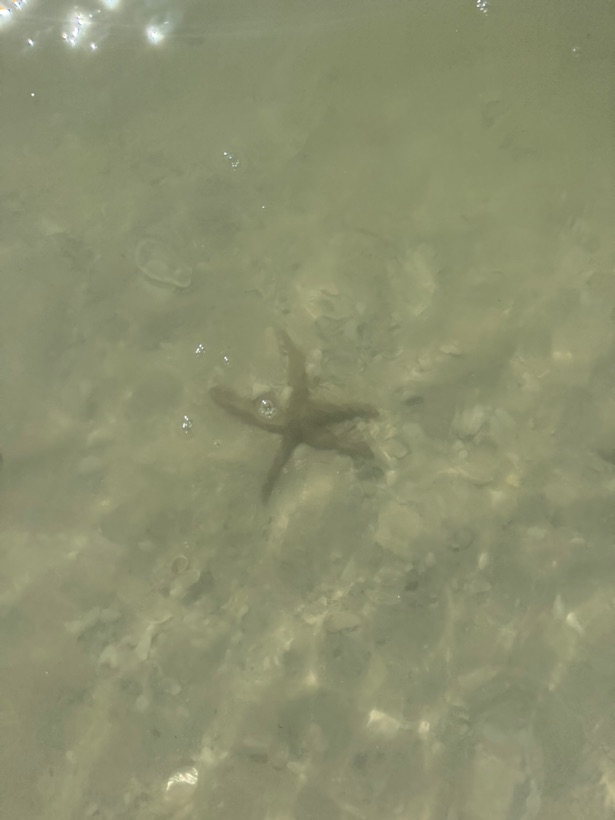
Collier and Lee Counties allow shelling, but only of empty shells — taking live shells, sand dollars or starfish off the beach is prohibited. A hermit crab living inside a whelk or moon snail shell makes that shell occupied by a living animal, even though the crab didn’t build the shell itself. The rule isn’t about who made the shell; it’s about whether something’s alive inside it right now. Pocket an occupied shell and you’ve taken a live animal off the beach, whether you meant to or not.
It’s also just bad for the crab. A hermit crab out of its shell dries out fast in the Florida sun, has no defense against gulls and other predators, and can’t retreat from the heat of a beach bag or a car dashboard. On every trip aboard our shelling tours, the captains walk guests through this exact check before anything goes in the bucket — it takes about five seconds and it’s the difference between a great souvenir and an accidental violation. Most mornings, it’s one of the more popular parts of the trip: kids especially light up when a shell they assumed was empty suddenly sprouts legs and starts walking.
Where to spot them on a trip
Hermit crabs show up wherever there’s exposed sand or hard bottom at low tide. The flats off Tigertail Beach and the swash zone along Keewaydin Island are reliable spots, along with the oyster bars and mangrove edges tucked into the Ten Thousand Islands backwaters near Goodland and the margins of Rookery Bay. Shelling here runs year-round — morning negative low tides in winter, evening lows in summer — so there’s no single window to plan a hermit crab sighting around; keep an eye on the tide flats any time you’re out.
They’re far from the only shell-free creature you’ll spot along the mangrove shoreline. Keep watching the prop roots and you might catch a mangrove tree crab clinging well above the waterline, or the tide dragging soft-bodied drifters like moon jellies past the boat. Our captains point out whatever’s active that day — sightings are never guaranteed, but on a slow shelling flat, a hermit crab tugging a too-big whelk shell across the sand is one of the more reliable little dramas out there, and a fun one to show kids before the shell goes back down exactly where it was found.