
🐬 At a glance
- Scientific name
- Egretta rufescens
- Claim to fame
- Rarest heron in North America
- Field marks
- Shaggy rusty neck, slate-gray body, pink-and-black bill (dark morph)
- Signature move
- “Canopy” dance: runs, lurches & wing-shades the water
- Where & when
- Open flats & lagoons (e.g. Tigertail); year-round, more in cooler months
The dance you can't miss
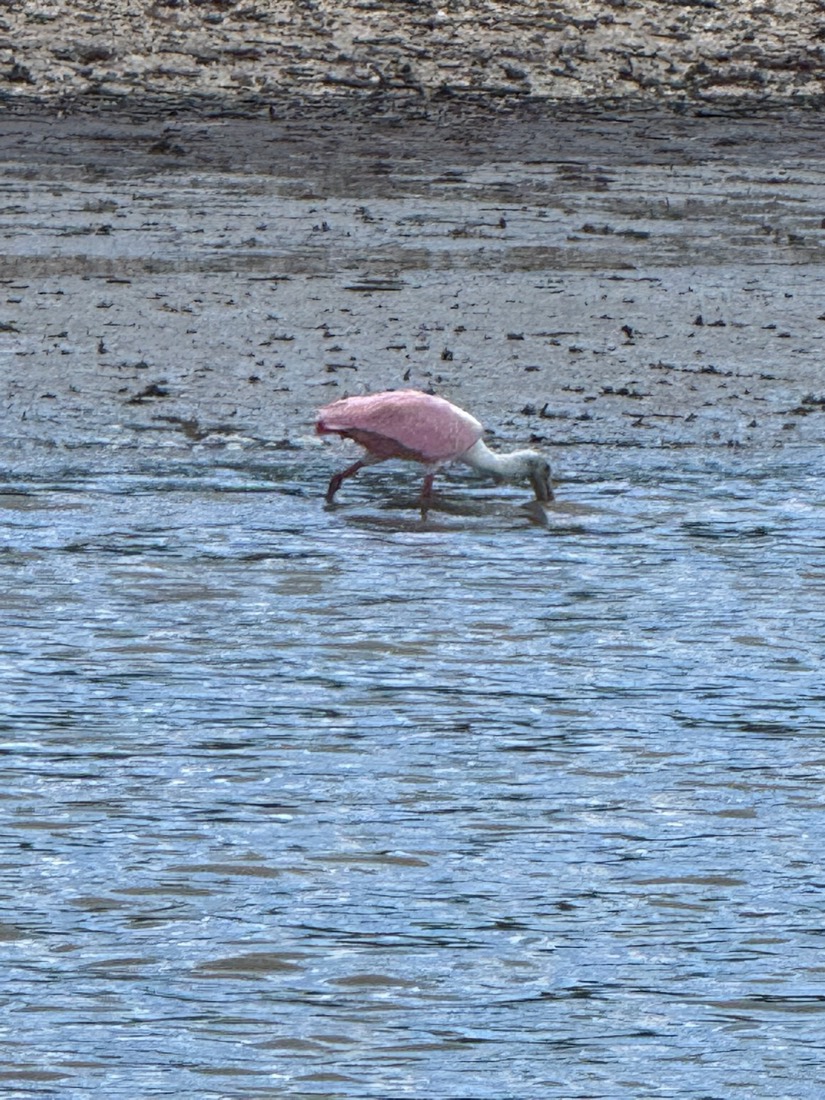
You'll identify a reddish egret by its behavior before you ever nail the field marks, because nothing else hunts like it. While the patient great blue heron stands frozen for minutes, the reddish egret bursts into action — sprinting across the shallows, jerking sideways, pirouetting, then suddenly snapping its wings up over its head to throw a canopy of shade on the water. Small fish, fooled into thinking they've found shelter or simply spooked into the open, dart right under the bird's bill, and it stabs. It looks chaotic and frankly a little drunk, but every lurch is calculated. Spot a heron throwing a tantrum on an open flat and you've found your reddish egret.
How to identify a reddish egret
Once it pauses, look at the details. The common dark morph has a slate-gray body and a shaggy, rusty-cinnamon neck that looks deliberately unkempt, like bedhead. In breeding season the bill turns bubblegum-pink at the base with a black tip — a great confirming mark. There's also a less-common all-white morph that can fool you into thinking great egret, but the dance and the two-tone bill give it away. It's bigger than a snowy egret, leggier and looser in its movements than almost anything else on the flat.
Why it's the rarest heron
The reddish egret is genuinely scarce — its North American population is small, and it's tied tightly to undisturbed coastal flats and lagoons for both feeding and nesting. It needs open, shallow saltwater where it has room to run and hunt, exactly the kind of habitat that gets squeezed by development. That's part of why protected places like Tigertail Lagoon and the flats of Rookery Bay matter so much: they're some of the most reliable spots in the country to find this bird. Seeing one is a real notch on any birder's belt.
| Bird | How it hunts | Tell-tale |
|---|---|---|
| Reddish egret (dark) | Runs, lurches, wing-shades | Shaggy rusty neck, gray body, pink-black bill |
| Reddish egret (white) | Same wild dance | All white but with the two-tone bill |
| Snowy egret | Shuffles, stirs with golden feet | Smaller, black bill, yellow feet |
| Great blue heron | Stands stock-still | Large, blue-gray, slow |
Where to see the dancing hunter
Open, shallow, sandy lagoons are the place — and right at the top of the list near Marco Island is Tigertail Lagoon and the flats around Keewaydin Island. Low tide is showtime, when the flats drain to ankle-deep water full of trapped baitfish. Reddish egrets are here year-round, with sightings often picking up in the cooler months. They're a special sighting, not a guarantee, but our captains know which flats they favor. Bring it onto your day-list with a dolphin & wildlife tour, and check the wildlife-by-season guide to time the rest of your trip.
From the Helm: Working the tide line off Rabbit Key for the reddish egret’s dance
Long before anyone on deck can pick out a bird, we’re watching for a break in rhythm along the tide line — a smear of motion that doesn’t match the wind pushing through the cordgrass at the edge of the flat. That erratic, off-tempo flicker off Rabbit Key is usually our first tip that a reddish egret is working the shallows, and it’s a different cue than the patient, statue-still posture most herons give us. We idle the engine down early, well before the flat comes into full view, because the outboard’s drone carries flat across open water and can shut a bird down before we ever get close.
Where exactly we park the boat depends on the wind that morning. A stiff onshore breeze chops the surface along that tide line and buries the bird’s motion in glare and ripple, so we’ll slide instead into the lee, working the calmer mangrove-fringed edge where the water lies flat enough to make out. If that stretch is quiet, our plan B is to drift the next flat down, letting the current carry us rather than running the motor between spots. Guests notice we’re barely moving — that’s deliberate, not indecision.
Once we’re set up, the bird usually just keeps working, entirely unbothered by a boat that’s drifting instead of motoring past. What we’re really watching for is whether it holds its rhythm or breaks it the second the bird clocks us — one that keeps going close in tells us we’ve read the distance right, while one that suddenly freezes stiff is telling us to back off another few yards. Compared to the more composed snowy egret working the same flat a few yards off, this bird never settles into anything you’d call a resting posture.
That’s usually the point where someone at the rail laughs out loud, because the whole display looks less like hunting and more like the bird’s having a moment. We’ll hand over the binoculars so guests can catch the shaggy rust-colored neck feathers ruffling with every step, and more than one has asked if the bird’s hurt before realizing it’s just fully committed to the bit. It’s one of the few sightings out here where the behavior sells itself before anyone needs an explanation.
We tend to find the most activity on a dropping tide, when baitfish get pinned into skinnier water and the egret’s odds go up along with ours. It’s a year-round bird here, not a seasonal visitor, so we don’t chase a calendar for it the way we might for nesting turtles or winter manatees. If you want more of these tidal-flat moments strung together into a full afternoon, our wildlife pages cover the cast of characters we watch for on every run out of Marco.