
🗺️ At a glance
- What it is
- A tidal lagoon behind Sand Dollar Island at Tigertail Beach, Marco Island
- The crossing
- Wade across knee- to thigh-deep water at low tide to reach the Gulf beach
- Wildlife
- A shorebird rookery & feeding flat — plovers, skimmers, herons, roseate spoonbills
- For paddlers
- A sheltered kayak & SUP flat, calm and shallow
- For boats
- We access the outer Gulf sandbar side, not the lagoon itself
The lagoon that makes Tigertail famous
Here's the geography that trips people up. When you park at Tigertail Beach County Park, the water you see first isn't the open Gulf — it's a calm, shallow lagoon. Beyond it lies a long sand spit called Sand Dollar Island, and the real surf beach is on the far side of that. The lagoon fills and empties with the tide, so at high water it's a proper little bay and at low water it shrinks to braided channels and exposed flats you can pick your way across.
That tidal rhythm is the whole character of the place. Time it right at low tide and the crossing is an easy, shin-deep wade with little fish darting around your ankles. Time it wrong at high tide and you'll be wading deeper, or waiting. Either way it keeps the outer beach quiet, because the lagoon filters out anyone not willing to get their feet wet.
A shorebird rookery you walk through
The lagoon and its flats are one of the best shorebird grounds in Southwest Florida. Because it's protected and shallow, it concentrates birds at low tide when the mud and sand come alive with food. You'll see snowy plovers and Wilson's plovers working the sand, black skimmers cutting the surface with their lower bills, herons and egrets stalking the edges, and on a lucky morning the flash of a roseate spoonbill. Sections are roped off seasonally as a nesting bird rookery, so the rule of thumb is simple: give the birds room and never walk into a posted area.
That's the trade Tigertail offers — you get a genuinely wild, bird-rich flat, but it comes with the responsibility to tread lightly. Bring binoculars; the show is constant.
How boats reach the beach side
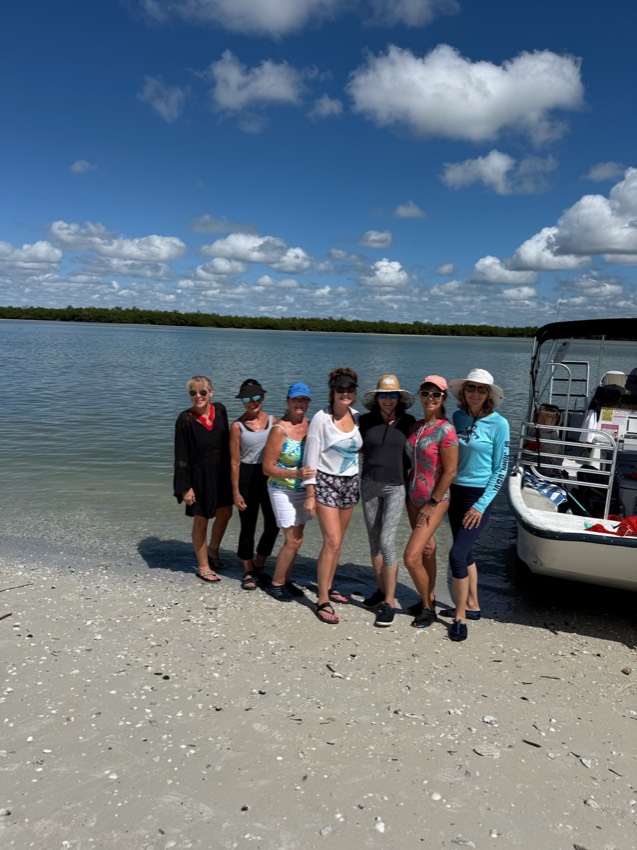
This is where a boat changes the day entirely. The lagoon is too shallow and too protected for tour boats, so we don't run it. Instead, our captains approach the outer Gulf side of Sand Dollar Island from the water — the same wild sandbar beach you'd otherwise have to wade across the lagoon to reach. You skip the crossing, skip the parking, and step out onto open Gulf sand.
| Wade across the lagoon | By boat (outer side) | |
|---|---|---|
| Access | Park, then wade at low tide | Step onto the Gulf sandbar directly |
| Tide dependence | High — need low water to cross | Low — we work the Gulf side |
| Best for | Birders, paddlers, a slow morning | Shelling & uncrowded beach time |
For pure shells, the Gulf-facing flats out there are excellent, and we cover the collecting side in detail on the Tigertail Beach shelling guide. The Gulf inlet just north, Big Marco Pass, is what keeps refilling that sand. Come find it from the water on a shelling tour and the lagoon becomes something you admire from the beach instead of something you have to cross.
From the Helm: Reading the Gulf sandbar off Tigertail near Big Marco Pass before we drop the ladder
The call on a Tigertail run happens before we ever leave the dock: which side of the sandbar we can actually sit on that day. A light southwest breeze lays the Gulf-side edge down flat and lets us nose right up to the beach across from Sand Dollar Island, but anything with real weight out of the west or northwest turns that same stretch into a washing machine, and we’ll shift our approach angle or hold off the beach a little farther out instead. That call gets made fresh every trip, based on what the wind is actually doing that morning, not what the forecast said the night before.
Big Marco Pass sits close enough to this stretch of beach that its current pulls at the sandbar even when the pass itself looks calm from a distance, so we’re watching the color of the water as much as the wave height on the approach. Lighter, sandier water tells us the bar is shallow and shifting; a darker green edge usually means a channel worth respecting. That bar moves season to season, which is why our captains keep a bow lookout on the final approach instead of running a fixed line off a chartplotter track from last month.
The hand-off itself is simple but it’s the moment guests remember: engine down to an idle, anchor set, ladder down, and that first step off the swim platform onto firm, packed sand instead of soft mud. You feel the sandbar underfoot before you see it clearly from the boat, firmer near the swash line and softer as you move toward the dry beach. From there it’s a short walk to the wide Gulf beach that the lagoon crossing on foot would have taken you twenty minutes to reach.
If the wind’s wrong and the outer sandbar isn’t sitting comfortably, we don’t force guests off onto a bouncing platform — we’ll reposition down-current to a calmer pocket of the same beach, or fold the stop into a broader beach and island run and give the Gulf side more time on a friendlier day. Sand Dollar Island shifts its shape year to year, so part of picking today’s spot is looking at what’s actually there instead of where we anchored last time out.
We treat this stop as one piece of a longer sandbar run rather than the whole afternoon, so if you love this stretch, our shelling beaches guide covers where else nearby lies calm on the same tide. Either way, the sandbar rewards patience — we’d rather idle offshore an extra five minutes reading it right than rush the anchor and regret the angle.