
🐬 At a glance
- What to look for
- Pink body, bald greenish head, flat spoon bill
- How it feeds
- Sweeps the spatula bill side-to-side in the shallows
- Where
- Rookery Bay mudflats & mangrove shallows
- Best time
- Low tide, when the flats are exposed
- Not a…
- Flamingo — totally different bird
How to identify a spoonbill
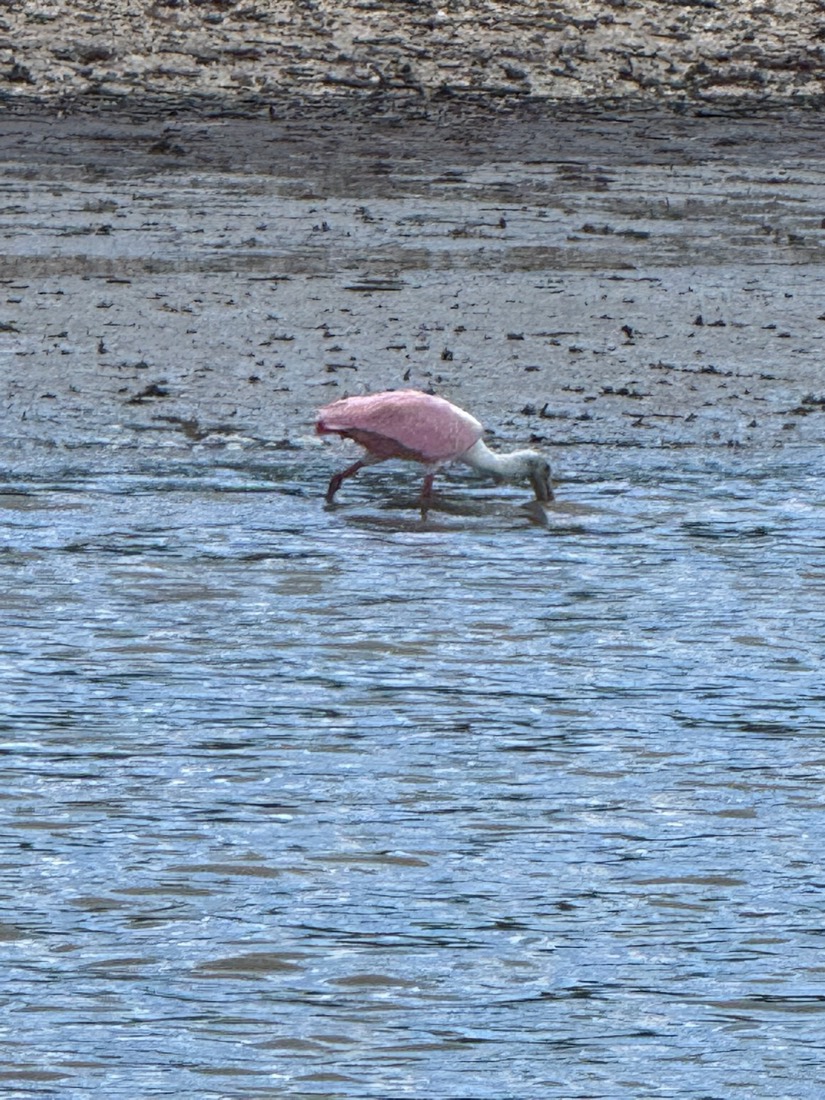
There's nothing else like it out here. The body glows pink — pale rose on younger birds, deep coral with red wing-shoulders on the brightest adults — and the head of a mature bird goes bald and greenish-gray. But the dead giveaway, even at a distance, is the bill: long, flat, and rounded into a spoon at the tip. When you see a pink bird with its head down, swinging that spoon through the water like a metal detector, you've nailed it. In flight they fly with the neck out straight, glowing like a flying flower against the mangroves.
Why it's not a flamingo
We get the flamingo question on basically every tour, so here's the honest answer: spoonbills and flamingos are both pink, and that's where it ends. A flamingo has a downward-kinked bill it holds upside-down to filter-feed, stands much taller on stilt legs, and is genuinely rare in Southwest Florida. The spoonbill has that flat spatula bill, a shorter build, and is a regular resident of our mudflats. Both birds get their pink from the same place — the carotenoid pigments in the crustaceans they eat — which is why a healthy, well-fed spoonbill is so vivid. So next time someone on the bow yells "flamingo!", you'll be the one who knows better.
| Feature | Roseate spoonbill | Flamingo |
|---|---|---|
| Bill | Flat, spoon-shaped tip | Down-kinked, held upside-down |
| Build | Medium, shorter legs | Very tall, stilt legs |
| Here? | Regular on the mudflats | Rare in SW Florida |
| How it feeds | Sweeps bill side-to-side | Filters head-down |
Where and when to see them
Spoonbills follow the food, and the food is on the mudflats. As the tide drops and the flats and mangrove edges of Rookery Bay drain, they wade in to sweep up shrimp and small fish, often alongside egrets and other wading birds. Low tide is the magic window — that's when the buffet opens. We watch the flats on every dolphin and wildlife tour, and while we never promise a particular bird, a clutch of pink working the shallows on a falling tide is one of the most reliable showstoppers in the estuary. They're here all year, brightest in the warmer months.
To stack the odds, time your trip to a low tide and warmer season — our wildlife-by-season guide helps you plan it.
From the Helm: Catching the pink flash over Johnson Bay’s mangrove line
The first sign is almost never the bird standing still — it’s a slash of pink low over the mangrove line at Johnson Bay, moving with slow, deliberate wingbeats between a roost tree and a feeding flat. We’ve learned to watch that treeline height more than the water itself, because a spoonbill in flight throws color you can pick up from a few hundred yards out, well before anyone would spot one working the mud on foot. There’s a soft, unhurried whoosh to each wingbeat that carries surprisingly far over calm water, which is often how we notice one’s coming before it’s even in clear view. That flash is usually our cue to slow down and see where it lands.
Johnson Bay’s creek mouths only really open up as mud on a dropping tide, so we time our pass through there to catch the last couple hours before low, when the exposed flat is skinny enough to pin bait shallow but still wet enough for the bird to work comfortably. Too early and the water’s still too deep to interest one; too late and the mud’s baked dry and empty. We’ll idle in slow and let the falling water do the work of concentrating everything into a smaller stretch.
Color varies more than most people expect — a bird that’s been eating well through the season can run a deeper coral-pink, while a younger or leaner one shows pale, almost blush-colored feathers, and the light itself shifts the shade depending on whether it’s backlit against the mangroves or catching full sun. We’ll point that variation out at the rail because it’s the kind of detail that makes a second or third sighting feel like a different bird, even when it’s probably the same handful working that stretch of bay.
We don’t get a spoonbill on every pass through Johnson Bay — if the tide’s wrong or the bird’s roosting deeper in the mangroves that morning, we’ll come up empty and keep moving rather than idle and wait it out. When that happens we’ll often swing toward the reserve’s open mudflats instead, where a mixed group of waders tends to be working regardless of whether the spoonbill’s showing that day.
What sticks with most guests isn’t the color so much as the flight — that unhurried, almost lazy wingbeat carrying a genuinely odd-looking bird low over the water on its way somewhere specific. It’s a good reminder that half of what we’re doing out here is timing our own route around somebody else’s commute. If you’re building a full afternoon around moments like this, our wildlife hub rounds up the rest of the birds and rays we watch for along the same stretches of coast.