
🐬 At a glance
- What to look for
- Tall, slim, all-white; long S-curved neck
- The tell
- Heavy YELLOW bill, all-BLACK legs & feet
- Behavior
- Slow, patient stalk, then a quick stab
- vs. snowy egret
- Bigger; snowy has black bill & yellow feet
- When
- Year-round on flats & mangrove edges
How to identify a great egret
The great egret reads as pure elegance: a big white bird, around three feet tall, with a long neck it holds in a graceful S and a wingspan that turns it into a slow white kite when it flies. The bill is heavy and yellow-orange, the legs and feet are all black, and in breeding season it grows long, lacy plumes off its back — the famous “aigrettes” that the plume trade nearly wiped the species out for, and the bird that helped launch the conservation movement. It hunts patiently, freezing and stalking like a smaller great blue heron, then stabbing.
Great egret vs. the look-alikes
This is the bird that gets blamed for two mix-ups, so here's how to win both. Against the snowy egret: the great egret is bigger, with a yellow bill and black feet — the snowy is smaller with a black bill and bright yellow feet, the exact reverse. Against the rare great white form of the great blue heron: the egret is slimmer with a more delicate yellow bill and black legs, while the great white heron is bulkier with dull yellowish legs. Remember it as “great egret = yellow up top, black down low” and you'll never miss it.
| Bird | Size | Bill | Legs & feet |
|---|---|---|---|
| Great egret | Large | Yellow, heavy | Black legs, black feet |
| Snowy egret | Small | Black, slim | Black legs, yellow feet |
| Great white heron | Very large | Yellowish, heavy | Dull yellow (rare stray here) |
Where and when to see them
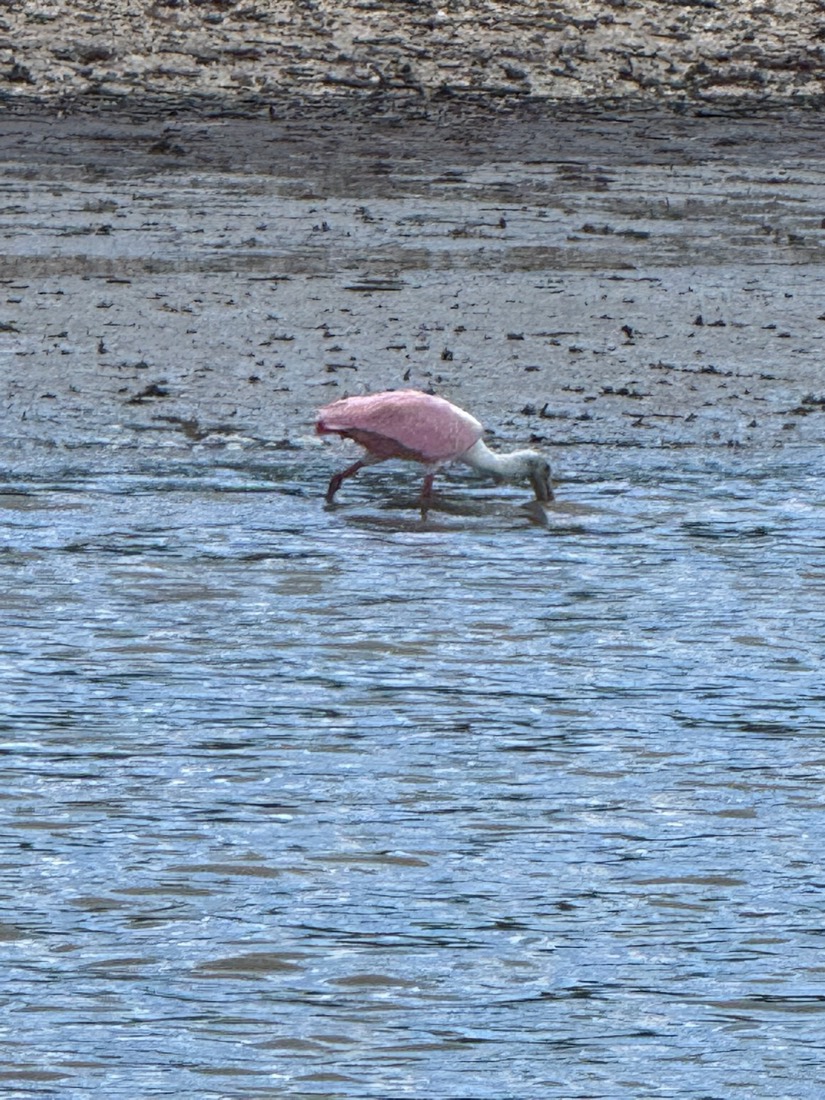
Great egrets are everywhere our boats go and easy to find — they stalk the tidal flats, oyster bars and mangrove edges of Rookery Bay and the Ten Thousand Islands all year round. A falling tide that drains the flats is the best hunting window, when fish and shrimp get pinned in the shrinking shallows. You'll see them solo and in loose gatherings, often near spoonbills and herons working the same buffet. We point them out on every dolphin and wildlife tour — they make the perfect first bird for learning to read the rest of the flats. Plan around the tides with our wildlife-by-season guide.
From the Helm: Spotting a great egret on the falling-tide flat off Round Key at first light
The best flats work for a great egret in the back half of the ebb, when the water off Round Key drops shallow enough to strand small fish in skinny pools but hasn’t fully drained out yet. Our captains watch that window specifically — too deep hides the fish an egret needs to see, too dry sends the bird off looking elsewhere. Wind matters too: past ten or twelve knots out of the southwest, the flat’s surface chops enough to blur a bird’s reflection and push it toward the mangrove fringe, so we check that reading before pointing the bow toward Round Key.
When that wind reading is wrong, or Round Key’s already picked over, we make the shorter run into Rookery Bay and work the oyster bar edges along the mangrove shoreline instead. Those bars hold water a little longer through the swing, buying us a workable stop even outside the tight falling-tide window Round Key demands. The choice mostly comes down to wind direction — Round Key sits exposed to a southwest breeze, while the Rookery Bay edges tuck in behind enough shoreline to stay glassy when the open flat’s already chopped and empty.
What guests notice first from the rail is how slow the bird actually moves — one deliberate step, a long pause, sometimes a full minute of stillness before the next. We hand out our 8x42 binoculars for this rather than anything higher-powered, since a wider field of view is what actually keeps a slow-moving white bird framed against a rocking boat; a narrower 10x or 12x pair just makes the whole flat harder to hold steady. Guests brace against the rail and go quiet — the patience turns out to be contagious once the bird sets the pace.
Early light does more work here than people expect — low sun throws the white plumage into sharp contrast against dark mud, and a bird that’d be a hazy blur at midday turns into a lit-up marker on the flat well before you’d otherwise pick it out. Through the glass its neck folds into a tight S until the moment it strikes, then unfurls faster than the rest of the bird ever moved. We keep the sun mostly behind us rather than fight the glare, a small positioning call guests rarely ask about but notice the second a photo comes out sharp.
If both flats come up quiet, we shift further down the shoreline rather than sit and wait on one stretch of mud — great egrets space themselves across several flats instead of crowding one, so a quiet first stop usually just means the next one down the line is working. We’ll never promise a sighting on a specific stop; birds move for reasons that aren’t always obvious from the boat, and a hunting egret is a genuine highlight, not a guarantee. If the two whites still trip you up, our great blue heron page sorts out the difference, and both turn up regularly on our beach and island tours.