
🐬 At a glance
- Family
- Aplysiidae — locally Bursatella leachii & Aplysia dactylomela
- Size
- Often fist- to loaf-sized, occasionally over a foot
- Tell-tale
- Two rabbit-ear rhinophores, no visible shell, purple-red ink when startled
- Where & when
- Shallow seagrass like Tigertail Beach's lagoon; most visible in warm months
- Diet
- Grazes algae and seagrass epiphytes — a harmless plant-eater
- Rule
- Look, don't handle much — return it to the water where you found it
What Is a Sea Hare, Exactly?
Despite the name, a sea hare isn’t a rabbit and it isn’t a jellyfish — it’s a sea slug, a soft-bodied marine snail in the family Aplysiidae that traded its shell in for a life of slow, unbothered grazing. Two long sensory tentacles called rhinophores rise off its head like a pair of floppy ears, which is exactly where the “hare” in the name comes from. The body underneath is fleshy, ruffled at the edges, and usually somewhere between a fist and a loaf of bread, mottled brown, olive or reddish to disappear into a bed of turtle grass. Two species turn up most often in our part of the Gulf: the ragged sea hare (Bursatella leachii), covered in soft warty projections that make it look like a chunk of drifting algae, and the spotted or ringed sea hare (Aplysia dactylomela), patterned with dark rings and blotches and capable of growing considerably larger. Neither one bites, stings, or has any interest in you — a sea hare’s entire day is spent inching across the seagrass, mouth down, mowing algae.
Why It Squirts Purple Ink
Pick one up or startle it in the shallows and a sea hare’s go-to move is a cloud of deep purple-red ink, sometimes paired with a second, thicker white secretion called opaline. It looks dramatic — genuinely startling the first time a kid sees it happen — but it’s a pure defense reflex, not a bite or a sting, and it can’t hurt you. The color actually comes from what the animal eats: sea hares graze on red algae along with the turtle grass, and the pigment from that algae gets stored and released as ink when they feel threatened. The idea is to confuse a predator’s sense of smell and taste long enough for the sea hare to make its slow escape, which, admittedly, is not a fast getaway plan — it’s a Gulf sea slug, not a squid. The ink can temporarily stain your hands or a swimsuit, so it’s worth keeping handling brief, but there’s no toxin here that affects people. It’s the same basic strategy an octopus uses, just slower and a whole lot less mobile.
Where to Find Sea Hares Near Marco Island
The single best spot to meet one is the shallow, sun-warmed lagoon tucked behind the sand spit at Tigertail Beach, where thick seagrass, gentle currents and knee-deep water give sea hares exactly the calm grazing ground they want. Wade slowly along the grass edges at low tide and you’re looking for a slow-drifting, football-to-loaf-sized blob that doesn’t quite match the color of the grass around it — that hesitation is usually the tell. Beyond Tigertail, the quiet seagrass flats and sandbar edges around Keewaydin Island, the backwaters near Sand Dollar Island, and the calmer flats toward Rookery Bay all hold sea hares in the right conditions, though the protected Tigertail lagoon stays the most consistent because it warms up faster and holds still, grassy water even when the open Gulf is churned up. This is the same low-tide, shallow-water world covered in our broader low-tide wildlife guide — sea hares are one of the stranger residents you’ll cross paths with, alongside crabs, small rays and the occasional sea star.
When You’re Most Likely to See Them
Sea hares are around in the Ten Thousand Islands year-round, but they’re easiest to spot once the water really warms up in spring and summer, when the seagrass is thick and growing fast and the shallows hold heat instead of shedding it. In the warmest stretches of the year it’s not unusual for a lagoon like Tigertail’s to seem to be full of them — a grass flat that had a couple here and there in April can look like it’s crawling with sea hares by July. Cooler winter water tends to thin the numbers out and push the ones that remain deeper into the grass, so a January wade is more of a hunt than a sure thing. Either way, timing your visit to a low tide gives you the shallowest, clearest water to look through, which is exactly the kind of window our captains build into wade-and-look stops on shelling tours — more than a few kids have met their first sea hare standing calf-deep next to the boat, shell bag forgotten for a minute in favor of the weird purple-squirting blob at their feet.
Sea Hare vs. Other Grass-Flat Critters
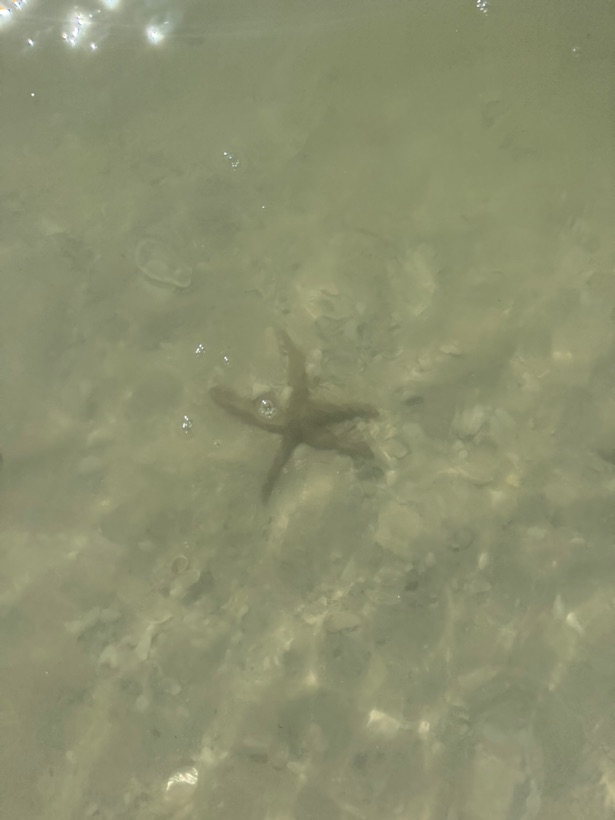
A sea hare gets mistaken for a lot of things before someone gets a close look. It’s not a jellyfish (no tentacles, no sting), it’s not a slug you’d find in a garden, and it’s a different animal entirely from the smaller, brighter nine-armed sea stars and seahorses that share the same grass flats. The closest look-alike is a true nudibranch, another shell-less sea slug, but nudibranchs run much smaller and usually far more colorful, while sea hares are bigger, drabber and built more like a soft, ruffled loaf than a tiny jeweled ribbon. The other common mix-up is the upside-down jellyfish, which does live in these same shallow grass flats but pulses gently in place on the bottom rather than crawling, and does carry a mild sting unlike the harmless sea hare. Here’s the quick side-by-side:
| Animal | Size & look | Moves how | Safe to touch? |
|---|---|---|---|
| Sea hare | Fist- to loaf-sized, soft, ruffled, mottled brown or green | Slow crawl through grass | Yes — harmless, just handle gently |
| Nudibranch | Small (often under 2 in.), bright and patterned | Slow crawl on grass or rubble | Yes, generally |
| Upside-down jellyfish | Saucer-shaped, sits bell-up on the bottom | Pulses in place, rarely swims far | Best avoided — can deliver a mild sting |
Is It Safe to Touch?
Yes — a sea hare has no bite, no sting, and no interest in defending itself unless it’s startled or repeatedly handled. That said, the same empty-shells-only ethic that governs shelling on Marco Island applies here in spirit: look closely, let kids get eye-level with it, snap a photo, and then leave it exactly where the grass hid it. Picking one up and carrying it around, or setting it on dry sand for a better look, stresses the animal and is the surest way to trigger that purple ink you were hoping to avoid getting on your swimsuit. If you do lift one for a quick look, do it with wet hands, keep it low over the water, and set it back down gently in the same patch of grass. Treat the whole encounter the way our captains treat every wildlife sighting out here — get close, look hard, leave it undisturbed — and a sea hare turns into one of the more memorable five minutes of a trip to the Ten Thousand Islands.