
🪶 At a glance
- Trigger
- A falling tide exposes flats and oyster bars
- The buffet
- Stranded baitfish, shrimp and crabs in shrinking pools
- Who feeds
- Herons, egrets, ibis, willets, skimmers; dolphins on bar edges
- Where & when
- Estuary flats near Marco; best on the falling tide
- Tip
- Tour timing around the tide changes your sightings
Why low tide is feeding time
Think of the flats as a giant bathtub that drains twice a day. At high tide the whole estuary is flooded and the fish, shrimp and crabs are spread out and hard to find. Then the tide turns and the water starts pulling off the flats. Now everything that was scattered across acres gets funneled into shrinking channels and pools — baitfish trapped in a tide pool, crabs scuttling across exposed mud, shrimp pinned against a draining edge. For a hungry bird, that's the difference between hunting and grabbing. The falling tide doesn't create more food; it concentrates it and serves it on a plate, which is exactly why the flats explode with activity right as the water drops.
Who shows up to the buffet
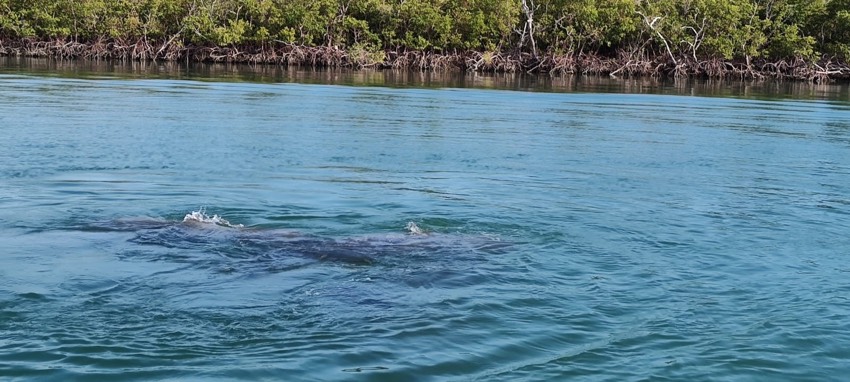
Watch a draining flat for ten minutes and you'll meet half the estuary's birds. Long-legged waders — great blue herons, snowy and great egrets, the occasional reddish egret doing its drunken dance — stalk the edges for fish. Flocks of white ibis probe the soft mud with curved bills for crabs and worms. Black skimmers drag their lower bills through the shallows. Willets, plovers and yellowlegs pick the exposed bars, and pelicans crash the deeper edges. Below the birds, bottlenose dolphins work the rims of the oyster bars where fish get pinned. It's a genuine frenzy, and it happens on the same falling-tide schedule every day.
Why tour timing matters
Here's the honest, useful part: the tide runs on its own clock, not the tour schedule, so the best wildlife windows shift day to day. A trip that lines up with a falling or low tide will usually put you over exposed flats and working birds; a dead-high tide hides the buffet underwater. Our captains read the tide tables before every run and route accordingly — we can't move the moon, but we can point the boat where the water's doing the right thing. If wildlife is your priority, it's worth asking about tide timing when you book.
| Tide stage | The flats | Wildlife activity |
|---|---|---|
| High tide | Flooded, food scattered | Quieter; birds rest, fish spread out |
| Falling tide | Draining, food funneling | Frenzy building — birds move in |
| Low tide | Flats & bars exposed | Peak feeding; waders, ibis, dolphins on edges |
| Rising tide | Reflooding | Activity eases as cover returns |
Catching the show on a tour
This is where local knowledge pays off. Our dolphin and wildlife tours out of Goodland idle the mangrove edges and oyster bars of the Ten Thousand Islands, and on a falling tide those edges come alive. Bring binoculars and a long lens if you've got one; the birds are close but they spook, so we keep a respectful distance and let the buffet come to us. Wildlife is never guaranteed in the wild, but a low-tide flat is about the surest bet there is for putting a lot of it in front of you at once.
From the Helm: Timing the falling tide over Gullivan Bay’s oyster bars, bar by bar
We start watching the tide clock long before the flats show, because the real show doesn’t open the moment the water starts falling — it opens once a specific oyster bar in Gullivan Bay has enough exposed shell to trap bait against it. On a strong outgoing tide with a stiff south wind pushing extra water off the flats early, that moment can arrive twenty minutes ahead of the printed tide table, so we treat the chart as a starting point, not a schedule to run by.
Once we’re close, we like to idle up-current of a bar rather than down, letting the boat hang in the deeper channel while the falling water does the work of stranding shrimp and small baitfish against the exposed shell. That upstream position also puts the sun and wind at our backs more often than not, which matters more than people expect — a wader silhouetted against glare is a wader nobody at the rail can actually see. We’ll hold that spot for several minutes at a stretch rather than idling around hunting for a better angle.
| Time to low | What we watch for | Where we hold |
|---|---|---|
| About two hours out | First bait showers over the deeper grass | Channel edge, engine idling |
| About one hour out | Mud boils and wader stacks building on the bar | Upstream of the exposed shell |
| Near dead low | Skimmers and egrets crowding the shrinking pools | Anchored off, engine cut |
The signs come in an order once you know to look for it — a nervous showering of bait first, low slicks smoothing out patches of otherwise rippled water, then the mud boils where something bigger has pushed off the bottom underneath. We call out the boils to each other before we call out any animal, because a boil almost always means a dolphin or a big fish is already working that exact spot, well before a dorsal fin ever breaks the surface.
When the wind swings hard out of the north and flattens the bay, we’ll sometimes bypass Gullivan altogether and run a bar on the lee side of the islands instead, since a choppy bar just scatters the bait and thins out the whole show. We rotate through three or four bars across a season rather than parking on one every trip, partly to spread the pressure and partly because a bar that produced yesterday can sit quiet today for no reason we can point to.
None of this is a guarantee — a falling tide sets the stage, but what actually shows up on a given morning is still genuinely out of our hands. What we can promise is that we’ll put the boat in position early and hold it there, rather than motoring around chasing a sighting after the fact. If tide-driven wildlife is what you’re after, our dolphin tours are built around exactly this kind of falling-water timing, and the itineraries page can help you match a departure time to the tide you want to catch.