
🐬 At a glance
- Near-locks
- Bottlenose dolphins, brown pelicans, herons & egrets
- Common
- Ospreys, bald eagles, roseate spoonbills, rays, ibis
- Seasonal
- Manatees (cool season), sea turtles (occasional)
- Best variety
- Dry season, Dec–Apr, on a falling tide
- Guarantees?
- None — it's wild, but the odds are excellent
The near-locks — what you'll almost always see
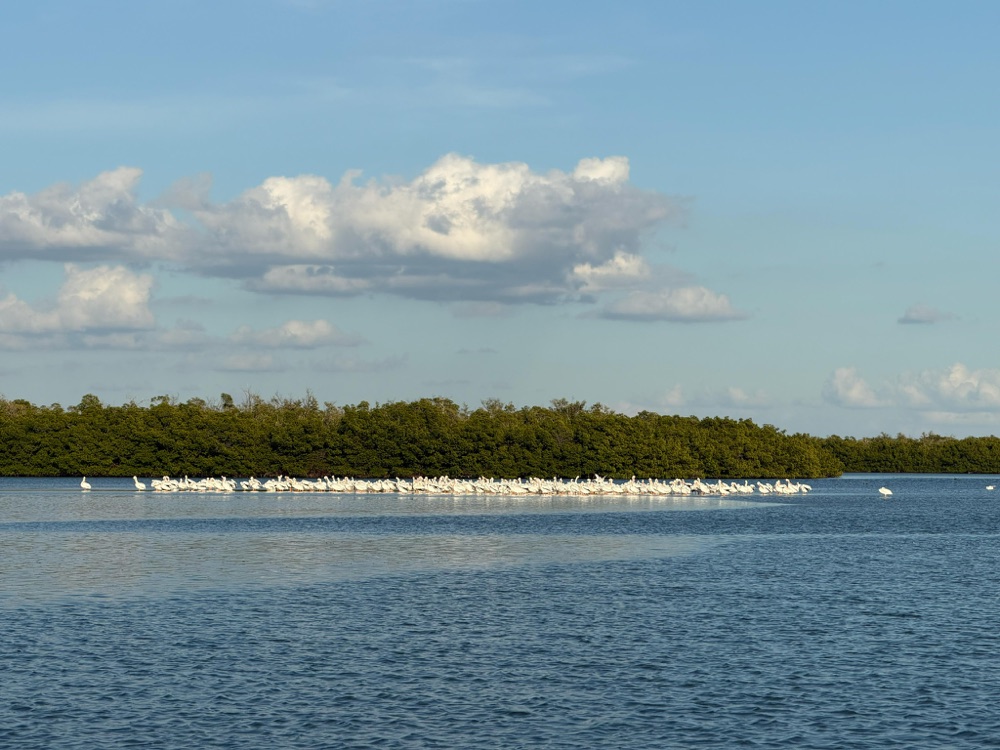
Three things show up on the great majority of our trips. First, bottlenose dolphins — they live in these waters year-round, and the passes and bays around Marco Island are some of the most dependable dolphin water on the Gulf coast. We don't claim a named, counted "resident pod," but wild dolphins are out here every day of the year. Second, brown pelicans, dive-bombing bait and loafing on every channel marker. Third, the mangrove wading birds — herons, egrets and ibis lining the shorelines, especially on a falling tide.
Seasonal and lucky finds
Now the ones worth watching for. Ospreys nest right on the channel markers and are common most of the year; bald eagles are around too, especially nesting in the cooler months. The pink roseate spoonbill is a frequent crowd-pleaser, and rays glide across the flats and even leap clear of the water in spring. West Indian manatees are the big cool-season draw — they gather in the warmer estuary water below about 68°F from roughly November through March, dispersed through the back bays rather than herded like the springs up north. Sea turtles, mainly the loggerhead, nest on our beaches May through October and occasionally pop up to breathe where we can see them — a genuine lucky moment.
Realistic odds by season
We won't promise any single animal — it's wild, and that's the fun of it — but here's how the likelihoods shake out across the year. For the full month-by-month breakdown, see our wildlife-by-season calendar.
| Animal | Cool season (Nov–Mar) | Warm season (Apr–Oct) |
|---|---|---|
| Bottlenose dolphin | Very likely | Very likely |
| Brown pelican | Very likely | Very likely |
| Wading birds | Very likely | Likely |
| Osprey / bald eagle | Likely | Possible |
| Manatee | Best chance | Uncommon |
| Sea turtle | Rare | Possible (nesting season) |
However the day plays out, you'll spend it idling through the Rookery Bay backwaters with a captain who's reading the water for you. Book a dolphin & wildlife tour and bring your camera.
From the Helm: the order we run the list: Tigertail’s lagoon first, the outside bar off Kice last
Most mornings we start close to home, easing into Tigertail Beach’s lagoon where the water is skinny and calm enough to spot wading birds and the occasional ray tail before we’ve even cleared the no-wake zone. It’s a low-effort, high-odds stop, which is exactly why it opens the run rather than closes it — we’d rather bank an easy sighting early than save it for last and risk running out of time. From there the route pushes farther out, trading calm water for better odds on the bigger, less predictable finds.
Dolphins and pelicans tend to show up anywhere along the way, so we keep the throttle light and eyes up between stops rather than treating the run as a straight commute from point A to point B. A working bird stack or a sudden lull in the wake usually means something’s happening just below the surface, and we’ll peel off the direct line to check it even if it costs a few minutes elsewhere. Most of what ends up as the highlight of the day happens in that in-between water, not at a marked stop on the chart.
We save the outside bar off Kice for the back half of the run, because it takes longer to reach and rewards patience more than the inshore stops do — sea turtles and spotted eagle rays show up there on their own schedule, often as a quick surface roll rather than a lingering look. We’ll idle along the drop-off where the bar falls into deeper Gulf water, since that edge is where we most often catch a shape moving that isn’t just current or shadow.
When wind kicks up out of the west and the outside bar at Kice turns into an uncomfortable, churned-up slog to reach, we’ll swap that leg for a longer look at the oyster bars closer to Goodland instead, trading turtle and ray odds for a better shot at herons, ospreys and the occasional bald eagle working the tree line. It’s not a downgrade so much as a different bet, and we’d rather make that call early than push out to rough water for a long shot that likely isn’t showing itself that day anyway.
Not every stop delivers, and we say so before you ever step aboard — a slow morning at Kice can mean nothing more than empty blue water, same as a quiet pass at Tigertail. What we can promise is the order and the effort: we work the easy water first, chase the moving signs in between, and give the long-shot spots the time they need at the end rather than rushing past them on the way home to the dock.
If you want the fullest possible run at this list, our dolphin tours and the wildlife by season guide will tell you roughly which months tend to stack the odds most in your favor, so you can time a visit around them.