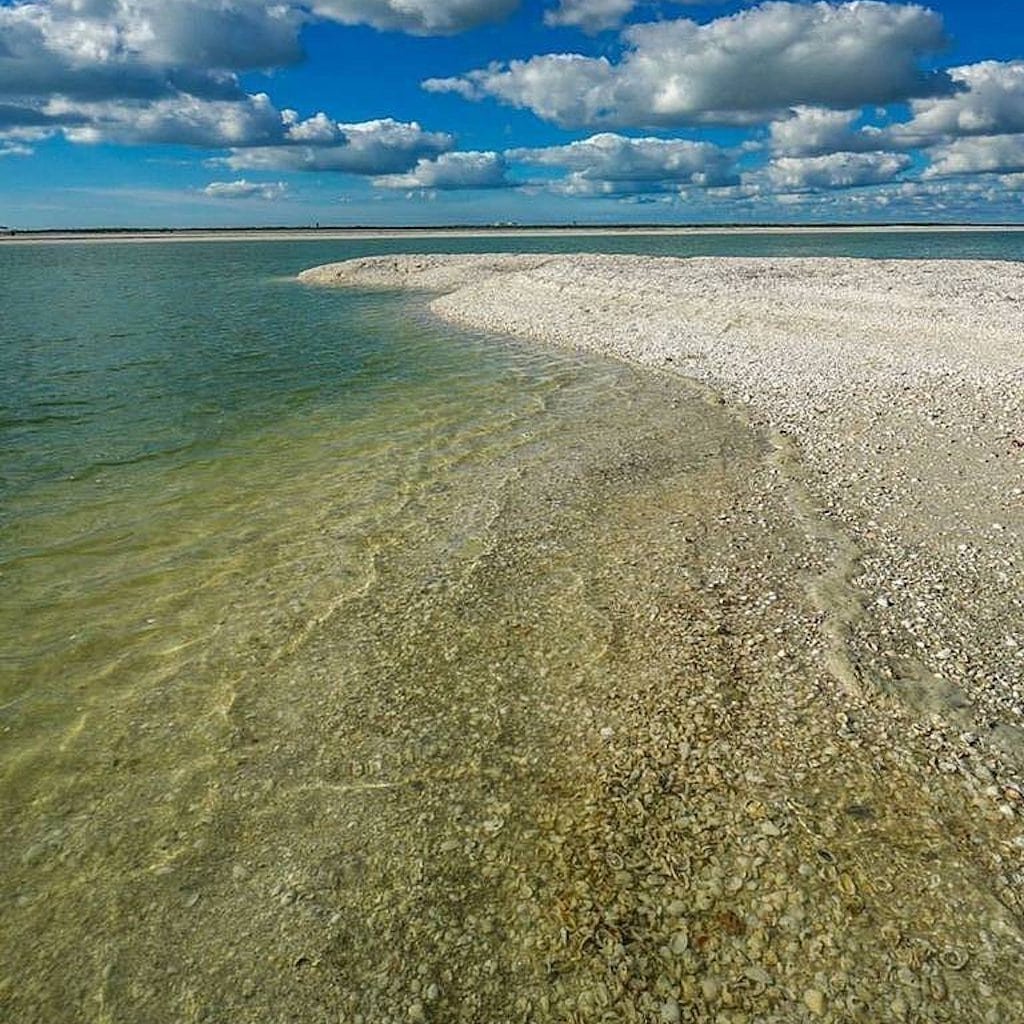
Out of Goodland, we’ve got more than one way into the islands, and the choice usually comes down to what the tide’s doing at Caxambas Pass that morning. A clean, moving tide through the pass sends us straight out toward the Cape Romano shoals, where an oyster bar holds shell along its edge that the open Gulf side rarely offers in the same volume. A sluggish or dead-slack tide there, though, and we’ll hold back and work the closer islands first while we wait for the pass to start moving again.
That oyster bar edge is sharp underfoot, so we hand out water shoes before anyone climbs down the ladder, rather than let people go in barefoot the way a lot of guests expect on a Florida sandbar. We walk the group along the sandy seam beside the oysters rather than across the bar itself, which keeps feet safe and, honestly, is usually where the better shells collect anyway — the oysters break the current just enough to drop whatever’s moving through it right along that soft edge.
Working that stretch also means running close past the toppled Cape Romano dome ruins, and we’ll often idle a minute for photos before pushing on, since the half-submerged structures catch the light best in the early morning with the water still glassy. It’s usually a quiet pass — few other boats bother running this far out, just your group and whatever birds are working the shoal that morning.
If the wind’s wrong for that outside run — typically a stiff southwesterly stacking swell right across the pass mouth — we’ll swap the whole plan and work the calmer creeks behind Round Key instead. It’s a shorter run and a different kind of hunting, more about working a soft mud-and-sand mix than a hard-packed bar, but it keeps everyone comfortable and the shelling still holds up well enough to be worth the detour instead of pushing through rough water just to reach the outside bar as planned.
We also keep half an eye on the swell forecast a day ahead, since a fresh cold front can rearrange that Cape Romano shoal overnight — sand that held a thick shell line one trip can be scoured clean the next, while a different stretch fifty yards down suddenly loads up instead. It’s part of why we scout the shoal from the boat before committing the group to a landing spot, rather than running straight to wherever we anchored last time.
Whichever way the morning breaks, the rule at the rail stays the same: empty shells only, always, no exceptions for a live sand dollar or starfish no matter how good the photo would be. If you’d rather have the whole boat to plan this run around your own group’s pace, our private Marco Island charter gives you that option, or check the destinations guide for what else sits along this stretch of the Ten Thousand Islands.