
🐬 At a glance
- Manatee season
- Nov–Mar, once Gulf water dips below about 68°F
- Manatee pattern
- Scattered individuals in Rookery Bay's backwaters, not concentrated herds
- Dolphin season
- Year-round; bottlenose dolphins work these waters daily
- More reliable pick
- Dolphin tour, any month of the year
- Overlap
- Many winter routes spot both on the same run
- Departs from
- Marco Island, Goodland & Naples
When to Book a Manatee Tour
If a manatee tour is the trip you're picturing, watch the thermometer more than the calendar. Manatees are cold-blooded refugees from the open Gulf — once the water drops below about 68°F, which typically happens somewhere between November and March here in Southwest Florida, they leave open water and tuck into warm, mangrove-lined backwaters. Rookery Bay is the big one: a sprawling, protected estuary just off our Goodland and Marco Island runs, full of the shallow, wind-sheltered creeks a cold-stressed manatee looks for. You'll notice the difference in the ride itself — slower, quieter, more idling than open-throttle running, because a startled manatee isn't the goal, and rushing the water tends to push them deeper into the mangroves instead.
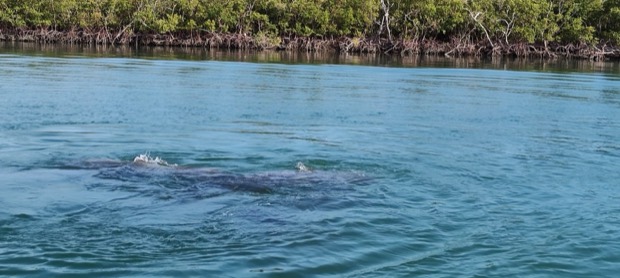
Here's the honest part, because it matters: this isn't Crystal River, and we'd rather tell you that up front than let you show up expecting a spring full of manatees stacked nose to tail. Southwest Florida's manatees are scattered, not herded — a cow and calf tucked under one dock, a lone bull working a different creek entirely, and which pocket of Rookery Bay holds them changes with the week's weather. Book a cool-season manatee tour because a genuine, unhurried wildlife sighting is worth chasing, not because anyone can promise you'll find one. Our captains watch the water temperature closely all winter for exactly this reason, and a manatee's paddle-shaped tail and the trail of circular ripples it leaves at the surface — sometimes called a footprint — are often the first clue your captain spots, long before you see the animal itself.
When to Book a Dolphin Tour
Bottlenose dolphins don't retreat from the Ten Thousand Islands the way manatees pull back into the backwaters — they work these passes and open bays every month of the year. A dolphin tour booked in the middle of a July afternoon has just as good a shot as one booked on a chilly January morning, because our captains are reading the same bait pods and tide lines year-round, learning over the seasons which stretches of water dolphins tend to favor on any given tide. Watch for a tight arc of fins breaking the surface together, sometimes pushing a bait ball toward the shallows — that's usually the moment your captain is already easing off the throttle, because a fast approach scatters a working pod fast.
That year-round consistency is exactly why a dolphin tour is the smarter pick if your travel dates are already locked in for spring, summer or fall — the months when a manatee sighting gets a lot less likely. Dolphins ride the bow wake, work a pass hard on a falling tide, and turn up often enough that most mornings out feel genuinely lively. Calm early mornings tend to be the best window, before the afternoon sea breeze kicks up chop and dolphins push out toward deeper water to work. Same rule applies here as with manatees, though: we'll never claim a sighting is guaranteed, because no honest captain can. What we can tell you is that the odds tilt heavily in your favor, in any season, on almost any route we run.
Where You'll Find Each on the Water
Manatee routes stay close, slow and calm. Our captains idle through the shallow, warm creeks around Goodland and along the fringes of Rookery Bay, letting mangrove roots break the wind and hold the day's heat — exactly the water a cold-stressed manatee seeks out. It's patient running, more about quiet than horsepower, and a different pace than most of our other trips. Those interior creeks and protected canals run a few degrees warmer than the open Gulf even on a cold morning, which is often exactly the margin a manatee needs to stick around instead of pushing further back into the mangroves.
Dolphin routes range a lot wider. We'll work Gordon Pass, Big Marco Pass, and the open bays where the Ten Thousand Islands start to break apart into channels near boat-only barrier islands like Keewaydin — the same water where bait fish stack up and dolphins show up to feed. It's a livelier run that covers more ground, because dolphins don't hold to one backwater the way a winter manatee does; they follow the bait, and the bait moves, sometimes putting a route within sight of wading birds working the same shallows or a sea turtle surfacing for air between passes.
Manatee Tour vs Dolphin Tour at a Glance
Side by side, the decision mostly comes down to season and how much certainty you want going in. Here's how a manatee tour and a dolphin tour actually compare on a typical departure from Marco Island, Goodland or Naples.
| Manatee Tour | Dolphin Tour | |
|---|---|---|
| Best season | Nov–Mar cold snaps | Year-round |
| Where we look | Rookery Bay & Goodland backwaters | Gordon Pass, Big Marco Pass & open bays |
| Typical pattern | Scattered individuals, weather-dependent | Active pods most mornings, any month |
| Sightings | Never guaranteed — a cold-front bonus | Frequent, though never guaranteed |
| Best for | Winter visitors hoping for a rare, gentle sighting | Anyone wanting a lively, reliable wildlife trip |
Can You See Both on One Trip?
Often, yes — especially in the cool months. A good number of our winter routes swing past the same Rookery Bay backwaters where manatees are holed up on the way to or from open-water dolphin grounds, so a single morning can turn into two wildlife sightings instead of one. If a manatee sighting is genuinely your main goal, though, ask about our dedicated manatee tour departures, which spend more time idling the backwaters and less time running the passes.
Want full control over the route instead? A private charter lets you tell the captain exactly what you're hoping to see, and we'll build the morning around it — more backwater time if it's winter and manatees are the goal, more pass-and-bay running the rest of the year for dolphins. It's also the easiest way to work around a group with mixed priorities, since the captain can shift the plan mid-morning if word comes in that manatees are holding tight to a particular creek that day. Either way, it helps to know the difference between the two animals before you go; our manatee vs dolphin identification guide covers exactly how to tell them apart at a glance, right down to tail shape and how each one surfaces to breathe. For everything else we run out of Marco Island, Goodland and Naples, browse the rest of our travel guide.