
⚓ At a glance
- Approach speed
- Idle / no-wake as you close in — no throwing a wake over anchored boats or swimmers
- Anchoring
- Leave real room; current and wind swing every boat differently through the day
- Noise
- Keep music low-key and family-friendly — sound carries a long way over open water
- Trash
- Pack out every can, wrapper and cigarette butt — nothing stays behind
- Wildlife
- Give posted bird-nesting zones like Sand Dollar Island a wide, quiet berth
- Busiest times
- Weekends at Capri Pass & the Marco sandbars — arrive early for space
How to Approach a Sandbar the Right Way
The first ten seconds of pulling up to a sandbar tell everyone else on the water who you are. Come in on plane at throttle and you’ll roll a wake through boats that are already anchored, kids standing on swim platforms, and coolers balanced on gunwales — not a great first impression, and genuinely dangerous if someone’s mid-step off a ladder. Drop to idle well before you’re in the anchoring zone, and keep scanning the water in front of you the whole way in. Sandbars off Marco Island and through Capri Pass shelve up fast, and swimmers wade out farther than you’d expect on a falling tide, sometimes standing in water that barely covers their knees a hundred yards from shore. Our captains ease in slow specifically because the sandbar itself is invisible until you’re basically on top of it — the same rule applies whether you’re running a center console or easing a bowrider in for the first time. Give kids on paddleboards and anyone snorkeling a wide, obvious path around your bow, not a quick swerve at the last second. If you’re not sure how shallow it gets, idle in slower than feels necessary and watch your depth finder. A crowded weekend sandbar with a dozen boats anchored is not the place to find out the hard way where the bar actually starts.
Anchor With Room to Breathe
Once you’re in position, resist the urge to squeeze in tight next to the first boat you see. Tide and wind swing every anchored boat differently depending on hull shape and anchor scope, so what looks like six feet of clearance at 10 a.m. can close to nothing by noon when the current shifts. Leave enough room that your boat and your neighbor’s can both swing a full circle without touching — if you have to ask yourself whether there’s enough space, there isn’t. This matters even more on a busy weekend, when Capri Pass and the sandbars off Marco fill in fast and everyone’s competing for the same stretch of firm bottom. It also matters for the people already in the water: shell hunters wading the sandbar’s edge and kids playing in the shallows need room too, so don’t anchor bow-to right on top of where people are already collecting. If you’re planning a full day of hopping between spots — a sandbar for lunch, a quieter island for shelling — our shelling tours run this exact pattern, and our captains pick anchorages with that same buffer built in, both for comfort and so nobody’s fighting for swing room when the tide turns.
| Sandbar | Known For | Etiquette Note |
|---|---|---|
| Sand Dollar Island (Tigertail, Marco) | A shifting sandbar built by Gulf currents, walkable from Tigertail Beach | Seasonal posted bird-nesting zones — stay outside roped areas, dogs leashed |
| Capri Pass | Popular weekend anchorage with real tidal current | Anchor upcurrent with extra scope; idle speed through the pass, it’s busy |
| Keewaydin Island | Boat-access-only barrier island, quieter mid-week | More room to spread out, but still give shell hunters wading the shoreline space |
| Remote Ten Thousand Islands sandbars | Farther out, lightly trafficked, no facilities anywhere | Isolation doesn’t change the rules — pack out every piece of trash |
Keep the Vibe Low-Key
Sound travels strangely well over open water — a speaker that seems reasonable on your own boat can carry clean across fifty yards of flat calm and land square in the middle of someone else’s afternoon. Keep the volume down to what your own group can hear comfortably, and read the crowd: a sandbar full of families with toddlers napping under bimini tops calls for a different volume than an empty stretch of beach. These are shared, family-friendly spots, not a stage, and that goes for language and behavior too — there are kids on every boat around you more often than not. Generators are the same story; if you’re running one for a cooler or blender, keep it modest and be mindful of how long it runs. None of this means quiet or boring. Sandbar days are some of the best afternoons on the water, and a little consideration just means everyone gets to enjoy them — including the next group that pulls up looking for a spot.
Pack Out Every Piece of Trash
There’s no trash can on a sandbar. Everything you bring in — cans, wrappers, cigarette butts, the twist-tie off a bag of chips — leaves with you, full stop. It’s an easy rule to forget when you’re juggling coolers and towels and kids back onto the boat, which is exactly why it’s worth a deliberate walk of your spot before you pull anchor: check under seats, around the anchor line, and in the sand where a cup might have tipped over. Micro-trash is the real problem — a bottle cap or a piece of fishing line looks small to you and can be a serious hazard to the birds, crabs and fish that call these flats home. If you packed it in full, it should leave empty, or at least a lot lighter. Our wildlife viewing etiquette guide covers this same leave-no-trace thinking for the dolphins and birds you’ll spot on the way out, and the principle is the same here: these sandbars stay beautiful because the people who use them treat them that way, trip after trip.
Respect Bird Zones & Posted Areas
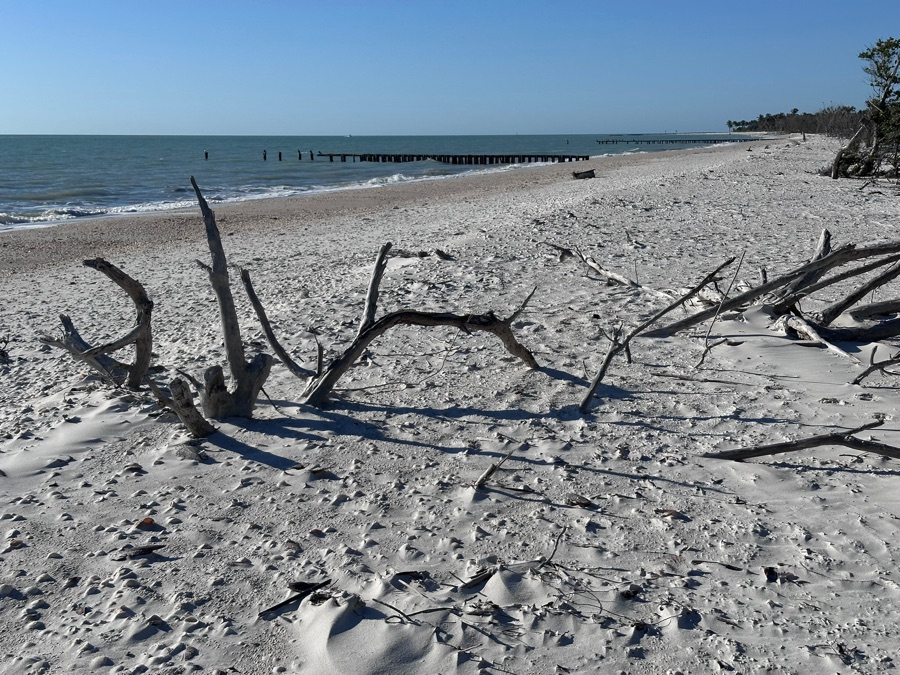
Sand Dollar Island, the shifting sandbar built by Gulf currents off Tigertail Beach on Marco Island, is also nesting habitat for shorebirds — species like terns, skimmers and plovers that lay their eggs directly in open sand rather than in a nest you’d recognize. That means the county posts and ropes off sections during nesting months, and those lines aren’t a suggestion. A single spooked flock that abandons a nest site can lose an entire season’s chicks, and it usually happens from people (and dogs) walking too close, not from malice — just not knowing the ropes are there for a reason. Keep dogs leashed anywhere near posted signage, give roped-off sections a wide loop rather than skirting the edge, and if a bird is doing a broken-wing display or dive-bombing your group, that’s your cue to back away, not get closer for a photo. The same courtesy applies at any posted area you’ll pass through the Ten Thousand Islands, from quiet rookeries to the mangrove edges off Keewaydin. It costs you almost nothing to walk the long way around, and it’s a big part of why these islands still look the way they do.
None of this is complicated, and it’s not meant to make sandbar days feel like a rulebook — it’s just the handful of habits that keep these spots open, clean and pleasant for the next boat that pulls up. If you’d rather let someone who runs this water every day handle the anchorage, the crowds and the timing, our sandbar tours are built around exactly that, and you’ll find plenty more of this kind of practical, honest guidance across our On the Water hub.