
🗺️ At a glance
- What it is
- Tidal pass at the north end of Marco Island
- Builds
- The shifting Sand Dollar Island / Tigertail sandbar
- Best for
- Low-tide wading & shelling on a premier flat
- Also
- Critical nesting-bird habitat — keep to wet sand
- Rule
- Empty shells only in Collier; never disturb posted bird areas
How the pass builds the bar
Big Marco Pass is a working inlet — every tide, a huge volume of water moves between the Gulf and the back bays through this gap. That moving water carries sand, and where the current slows it drops its load. Over months and years that dropped sand builds into Sand Dollar Island, a long, low bar off Tigertail Beach. It’s never the same shape twice. Some years it’s welded to the beach and you can walk out across the famous Tigertail lagoon; other years it’s a true island you can only reach by boat. That restlessness is the whole point — fresh, churned sand is exactly what makes the shelling so good.
The pass also feeds the Marco River and the rest of the island’s waterways, so it’s a doorway as much as a barrier — the way most boats slip from the back bays out to the open Gulf.
Wading the premier flat
Time it for a strong low tide and the bar around Big Marco Pass turns into acres of ankle-deep flat to comb. Because tidal current is constantly reworking the sand, shells don’t get buried and forgotten here the way they do on a static beach — the pass keeps serving up fresh finds. You’ll turn up fighting conchs, whelks, olives, cockles and the keyhole urchins everyone calls sand dollars. Approaching from the water on a boat lets you reach the outer bar that beach walkers can’t, and it’s the heart of the Sand Dollar Island shelling our tours run. One firm reminder: in Collier County you keep empty shells only — live animals, sand dollars and starfish go back.
| Tide | What happens | Sheller move |
|---|---|---|
| Low / falling | Bar exposed, flats walkable | Best window — comb the wet sand & tide line |
| High | Bar mostly covered | Cruise & spot wildlife; wait for the drop |
| After a winter front | Big push of fresh shell | Go early before the crowd |
Sharing it with the birds
Here’s the part that matters most. Sand Dollar Island is one of the most important nesting and resting sites for shorebirds on this coast — black skimmers, least terns, plovers and others lay their eggs right on the open sand, where they’re nearly invisible and crushed in a single careless step. Big stretches of the dry upper bar get posted and roped off during nesting season for exactly that reason. The rule is simple and it keeps the magic alive: stay on the wet sand below the high-tide line, give the posted areas a wide berth, and never let kids or dogs charge a flock. You’ll still get all the shelling and twice the wildlife. If birds are your thing, our bird-watching trips linger here on purpose.
Do it right and Big Marco Pass gives you the best of both: a flat full of shells and a front-row seat to one of Florida’s great bird shows. The easiest way to reach the outer bar — and learn where you can and can’t walk — is on a Marco Island shelling tour with a captain who knows the current line by line.
From the Helm: Running Big Marco Pass on the last of a falling tide
Before we ever point the bow into Big Marco Pass, we’re watching the current line at the Gulf mouth — how hard it’s ripping past the outer green marker and which way the tide is pushing sand off Tigertail. A strong ebb against an onshore breeze can stand up a short, sloppy chop right where the channel narrows, and that’s the tell that changes our whole run. On a clean falling tide with light wind we’ll cut close to the markers and ride the deep water in; on a stacked-up day we hang wide and let the pass settle before we commit the boat to it.
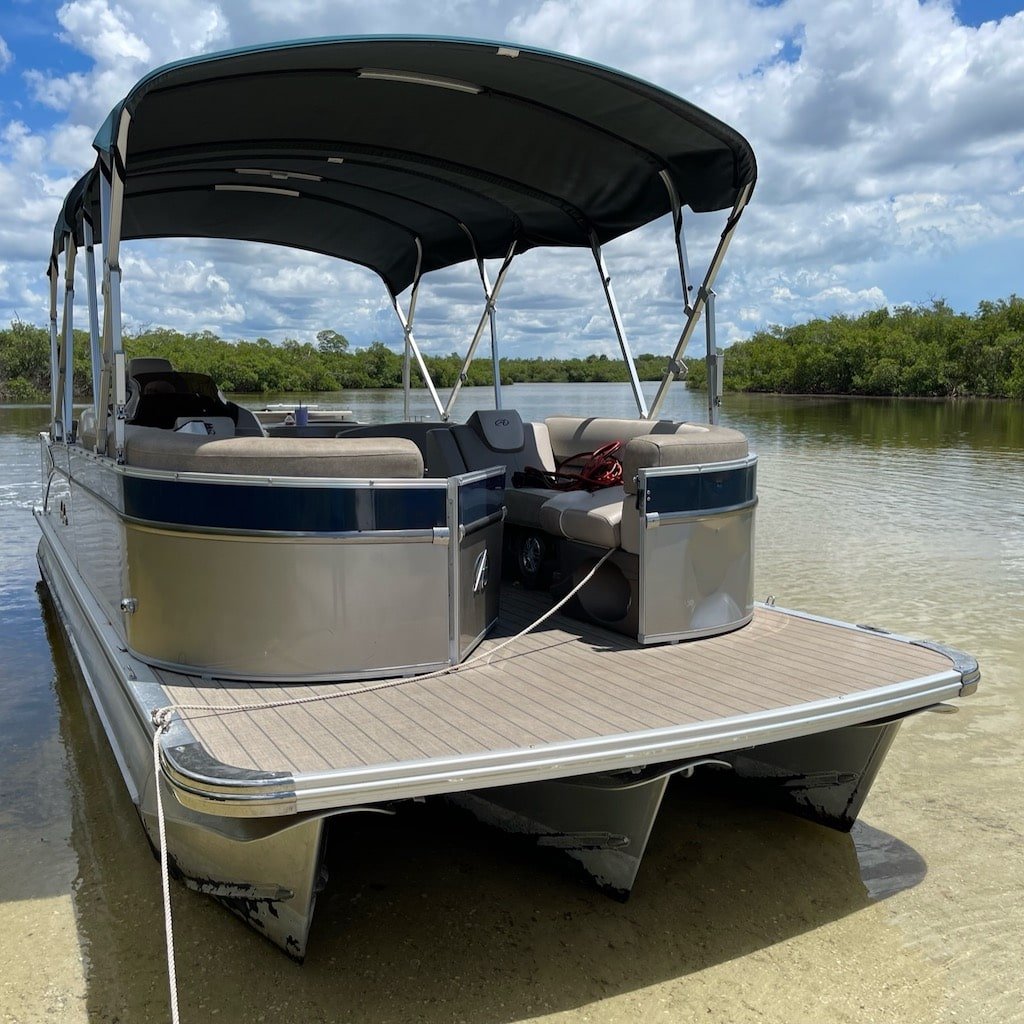
We don’t drop guests at the first sandy edge we see, either. Our favorite put-in sits a few boat-lengths off the Tigertail side, where the flat holds firmer underfoot than the softer bar closer to open Gulf — the kind of thing you only learn by grounding out on the wrong spot a few times over the years. From there it’s a short wade in ankle-deep water to reach the shelling ground, which keeps the boat in water deep enough that a shifting tide doesn’t strand us while you’re out combing the flat.
When we idle up onto the flat itself, we trim the outboard up and finish the last stretch on a push-pole rather than run the prop through skinny water — it keeps the sandbar from getting chewed up and doesn’t spook whatever’s feeding along the edge. That last quiet glide is usually when guests spot their first flock lifting off the bar, wings flashing white against the green backdrop of Tigertail’s beach. We’d rather spend the extra thirty seconds finishing on the pole than come in sounding like we own the place.
If the wind swings out of the southwest and starts pushing chop straight into the pass mouth, we won’t fight it. We’ll run you to the bay side of Sand Dollar Island instead, tucked out of the fetch, and let the flat build behind the shelter of the bar. You still get the shelling, just from the calmer side, and honestly some of our favorite mornings have come off that overlooked stretch, simply because far fewer people ever bother wading it.
Once everyone’s feet are on the sand, we keep the rule simple: follow the waterline, not the dry ridge above it. It’s a habit worth keeping even on a quiet morning when nothing’s roped off and the flat looks empty, because this bar rebuilds itself season to season — this year’s open stretch can be next spring’s nesting ground, and we’d rather hold the habit than have to relearn it.
That willingness to read conditions in real time, rather than run the same track regardless of what the Gulf is doing that morning, is really what a trip with us buys you. Big Marco Pass is a regular stop on our shelling tours, and depending on the day’s wind it often pairs with a longer look at the undeveloped barrier beaches further down the chain.