
🏝️ At a glance
- What it is
- A shifting tidal spit/sandbar off Tigertail Beach, Marco
- The sand dollar
- Keyhole urchin (Mellita quinquiesperforata)
- Access
- On foot at low tide (wade the lagoon) or by boat landing
- Best window
- Low tide, when the spit and flats are exposed
- Rule
- Live sand dollars protected — empty/bleached tests only
The spit and how to reach it
Sand Dollar Island isn't really an island so much as a long, restless spit of sand that the Gulf is forever rearranging off the north end of Marco. To reach it the classic way, you park at Tigertail Beach, wade across the shallow tidal lagoon, and walk north along the spit at low tide. It's a bit of an adventure — the lagoon's warm and shin-to-knee deep at low water — and that small effort is exactly why the far end of the spit shells better than the main beach. The other way is by boat, idling up to the sandbar's Gulf side and stepping right onto the shell line. On a Marco shelling run we love landing here because the flats go on forever at low tide.
About those sand dollars
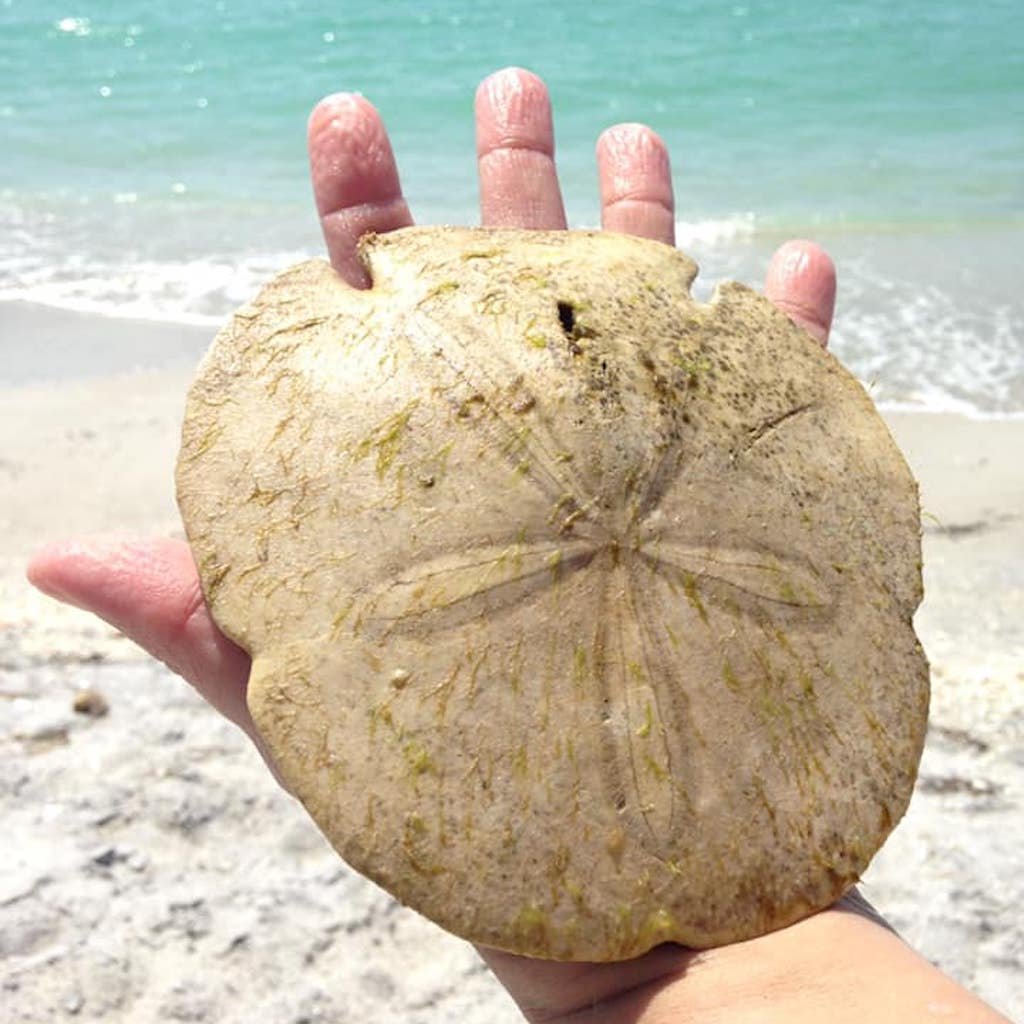
The star of the show is the keyhole sand dollar — technically a keyhole urchin, Mellita quinquiesperforata, with the little slots punched through it. Here's the part that trips people up: a brown, fuzzy, faintly moving sand dollar is alive, and live sand dollars are protected — you have to leave it. A flat, hard, bleached-white one is an empty test, and that one's a keeper. If you're unsure whether a sand dollar is alive, the rule of thumb is simple: color and fuzz mean alive, chalk-white and hard means empty. When the spit is producing, you can find beautiful intact white tests scattered along the high line. Handle them gently — they're fragile as a communion wafer.
Other shells on the line
It's not all sand dollars. The Tigertail spit catches a nice mix of Marco's everyday shells: fighting conchs, lettered olives, cockles, kitten's paws, and the occasional lightning whelk on a good tide. Because the sand here shifts so much, what's on the line changes week to week — one trip it's all olives, the next it's whelk central. After a winter front, expect a heavier, more varied drift. It's a friendly, family-easy place to fill a mesh bag, which is part of why it's such a popular spot.
| Find | Keep it? |
|---|---|
| Bleached white sand dollar (empty test) | Yes — handle gently |
| Brown / fuzzy sand dollar (alive) | No — protected, leave it |
| Empty whelks, conchs, olives | Yes — empty only |
| Any shell with an animal inside | No — return to water |
Best tide and season
Low tide is non-negotiable here — the spit and its flats only emerge as the water drops, and that's when the shell line is widest and the sand dollars are easiest to spot. Check the chart and aim for the hour or two on either side of dead low. December through March brings the richest, most varied drifts thanks to the winter fronts, though the spit produces year-round. If you'd rather skip the lagoon wade and the tide-timing guesswork, our captains land you on the Gulf side of the bar at the perfect moment on a shelling tour, and we'll point you straight to the keeper tests.
From the Helm: Sand Dollar Island: timing the Tigertail lagoon crossing on a falling tide
Before we point the bow toward the lagoon, our captains check two things: which way the wind is pushing, and how far the tide has actually fallen, not just what the printed table says. A falling tide with a north or east wind behind it clears the spit fast and keeps the channel edge honest. A stiff westerly stacks extra water into the pass and can leave that same falling tide running twenty minutes behind schedule, still burying sand that should already be dry. That read decides whether we run straight for Sand Dollar Island or hold off first.
When the crossing isn’t ready, we don’t idle on open water — we run north instead, toward the bar off Hideaway Beach where Big Marco Pass empties out. It holds deeper water than the lagoon flat and keeps a boat steadier while we wait, and the swash there turns up its own mix of shell even as the tide keeps dropping behind us. We’ll start a group on that bar when the crossing is slow, since it keeps hands busy without ruling anything out; once the spit shows itself, we finish the run with good light still ahead.
Guests who wade over from the beach side carry almost nothing; the ones we run out by boat step off the swim platform with a mesh bag and a flat-bottomed sand scoop instead of a rake. We hand it over at the rail with one line: skim, don’t dig. A rake catches on the shell hash and flips half of it right back under the sand before anyone spots it; the flat scoop rides on top of the wet grain and lifts whatever’s already loose and empty, which by then is nearly everything sitting exposed on the spit.
A fresh-uncovered urchin test here still carries a faint chalky bloom and feels almost soft-edged in your palm, nothing like the bleached, paper-thin ones that have tumbled around the lagoon for a season already. From the helm you can usually spot the difference before guests bend down — the fresh ones sit flat and pale against darker wet sand, while the older ones catch a duller, grayer shine. We steer people toward that fresher, wetter patch first, since it’s where the morning’s newest finds are still sitting untouched by other hands.
The other tell we lean on is the birds. Egrets and willets start working the freshly exposed sand well before it looks dry enough to walk, and once they move in ahead of the group, we know the bar has firmed up enough to cross without sinking to your ankles. That’s our cue to nose the bow in and drop the ladder on the driest, highest stretch of the spit, rather than the mucky edges still holding water from the last hour of tide.
If timing a sandbar that’s still being uncovered by the Gulf sounds like your kind of morning, it’s one of the easiest boat-only stops we build into a Marco-based shelling tour. Pair it with a slower pass through the beach and island route and you’ve got a half-day built around when the tide decides to hand the spit back.