
🗺️ At a glance
- What it is
- Wild, eroding barrier island, boat-access only
- Where
- Southern edge of the developed coast, south of Marco Island
- Significance
- Gateway to the Ten Thousand Islands
- Protection
- Within an aquatic preserve
- Wildlife
- Bottlenose dolphins year-round; manatees in cool months
The island and where it sits
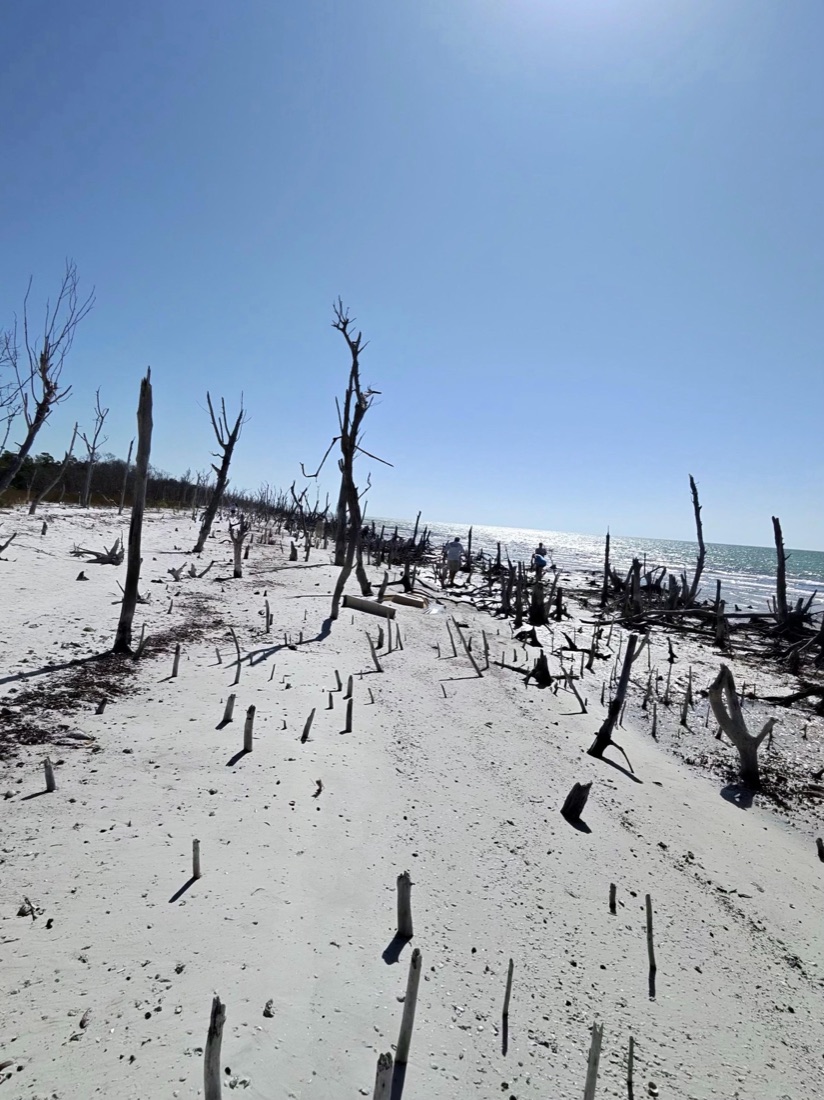
Geography makes Cape Romano matter. It’s the southernmost reach of the built-up SW Florida coast — come around its tip and the high-rises of Kice and Marco fall behind you, and the wild mangrove labyrinth of the Ten Thousand Islands opens ahead. The island is actively eroding, its sand on the move, and it sits inside a protected aquatic preserve. This is also the cape that gave its name to the famous dome houses, now toppled into ruins offshore, and the restless shoals that surround it. Put simply, it’s a threshold — the last of the postcard coast and the first of the real wilderness.
Wildlife around Cape Romano
Wild edges are where the animals are, and Cape Romano delivers. The passes and current lines around the cape are reliable dolphin water — bottlenose dolphins live here year-round and love working the moving tides for fish. In the cooler months, roughly November through March, manatees drift into the warmer, sheltered back waters; we cover their habits on our cold-season manatee page. The flats and shorelines host the full cast of wading birds, ospreys overhead, and rays gliding the shallows. Because so little disturbs this place, the wildlife behaves naturally instead of skittishly, which makes for some of our best sightings.
Visiting Cape Romano
You reach Cape Romano by boat — there’s no other way — usually running south from Marco through Caxambas Pass or down the inside bays. It rewards an unhurried half-day: idle the passes for dolphins, ease past the eerie dome ruins, and land on the quiet beach to walk and shell where almost no one does. Remember this is Collier County, so collecting is empty shells only, nothing alive. It pairs beautifully with our dolphin tours for the wildlife angle or our shelling tours for the beach time. Either way, you’re standing at the doorway to the wildest water on the coast.
| Where | What to look for |
|---|---|
| Passes & current lines | Bottlenose dolphins working the tide |
| Back bays (cool months) | Manatees seeking warmer, sheltered water |
| Flats & shoreline | Wading birds, ospreys, rays |
| The beach | Empty sand and shells (empty only) |
From the Helm: Tucking into the mangrove creek behind Cape Romano on a south wind
Rounding the point at Cape Romano, we’re usually watching the water color before anything else — the clean Gulf green gives way to a tannin-stained push where the back bay empties out, and that seam is where we start looking for movement. It’s the kind of arrival that tells you you’ve left the developed coast behind for good: no houses, no docks, just the low green line of mangrove running out to the horizon past it.
A south wind changes our whole plan out here. It pushes swell straight onto the Gulf side of the point, so on those days we tuck around and work the calmer mangrove creek on the bay side instead, idling back into water skinny enough that we’re watching the depth sounder more than the horizon. It’s slower going, but it’s also where the wading birds pile up out of the wind, and where we can hold position without the boat rolling under everyone’s feet.
Back in that creek we cut the engine down to a near-silent idle and let the trolling motor do the work — the outboard’s wake alone is enough to push a wood stork or a roseate spoonbill off its feeding spot before anyone gets a good look. What you notice first is the sound: no traffic, no crowd noise, just wind moving through mangrove leaves and the occasional splash of a mullet clearing the water.
Our captains keep an eye on a handful of landmarks out here — a bleached snag of mangrove, a certain bend in the shoreline — because this stretch of coast doesn’t sit still the way most of Florida does. Season to season we’ll notice the point has crept a little further in, or a sandbar has built somewhere it wasn’t the year before. It’s one of the only runs where the chart in your hand is more of a snapshot than a promise.
We also time our exit out of the creek around the tide rather than the clock. Push in too late on a falling tide and the same skinny water that gave you quiet birdwatching can leave a keel kissing mud on the way out, so we’d rather leave a few minutes early with everyone still talking about the spoonbill than rush a grounded boat off a falling bar.
If you want to see that shifting edge of Florida for yourself, a run to Cape Romano usually pairs with a look at the dome ruins nearby, and it’s one of the stops built into our longer private charters when the day’s wind lets us make the run comfortably.