
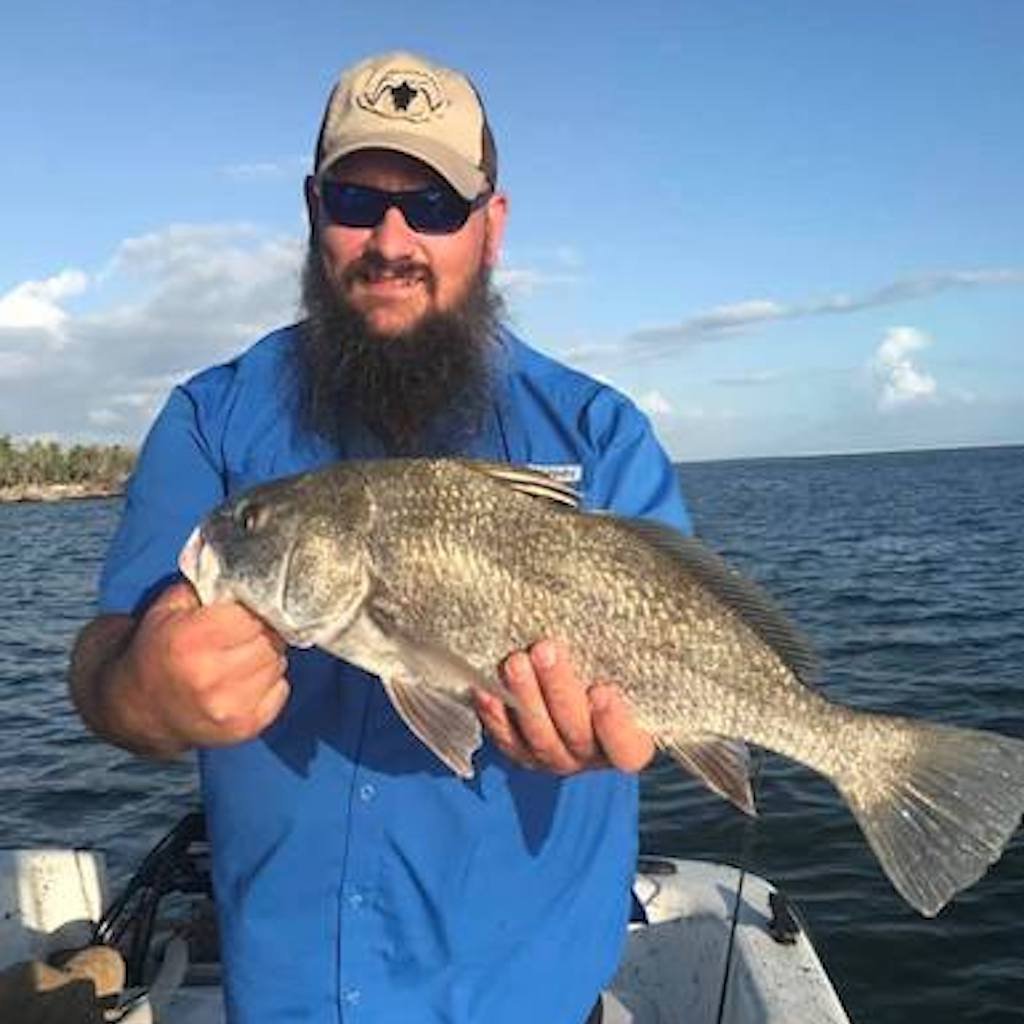
🎣 At a glance
- What it is
- Black drum (Pogonias cromis), a large inshore drum
- Tell-tale
- Chin barbels; gray-black body; audible low drumming
- Where
- Oyster bars, dock structure & island passes
- When
- Big fish move into the passes in cooler months
- Rule
- Regulated & seasonal; your captain handles licensing
How to identify a black drum
Black drum share the deep, humped body shape of their cousin the sheepshead, but in a heftier, grayer package. Young drum can show dark vertical bars that fade with age, which sometimes fools people into calling them sheepshead — until you check the chin. Black drum carry a fringe of short barbels, like a little gray beard, under the lower jaw; sheepshead have none. The body runs gray to coppery-black with a high arched back.
And then there's the namesake sound. Black drum produce a deep, resonant drumming with muscles against their swim bladder, and a school of them working a bar can send a low hum right up through the boat. It's one of the more memorable things you'll hear on the water.
Where black drum hold around the islands
Like sheepshead, black drum love structure with food on it. They root for crabs, shrimp and shellfish along oyster bars, around dock pilings, and over the hard bottom of the bays. The difference is the big ones: the heavyweight drum tend to move into the deeper, current-swept island passes when the water cools, and that's where you go to tangle with a real bruiser.
We fish them on or near the bottom, often right alongside where we'd target redfish, since both love an oyster bar. The maze of passes through the Ten Thousand Islands gives them plenty of moving water to set up in, and our captains know which bars and passes turn on as the season cools.
What it takes to land one
Black drum aren't subtle nibblers like sheepshead — they thump a bait and lean into it. A piece of shrimp or a small crab fished on the bottom near structure is the ticket. The bite is a solid knock, and then the fight is pure stubborn power: head down, no flashy jumps, just a heavy, dogged pull that tests your back on a big fish. Smaller drum are spunky and fun; the giants are a workout.
Black drum are regulated and seasonal, so we go by the current rules and your captain handles licensing, since the charter covers everyone aboard. The smaller fish make fine eating; the largest are usually best photographed and released. For more cool-season action, browse our inshore charters.
| Feature | Black drum | Sheepshead |
|---|---|---|
| Chin barbels | Yes — a little gray beard | None |
| Color | Gray to coppery-black | Silver-white, bold stripes |
| Size | Can get very large | Usually moderate |
| Sound | Audible low drumming | Quiet |
Are black drum good for kids?
The smaller “puppy drum” are a great kid fish: willing biters with a fun, manageable pull. The big bull drum, on the other hand, are a genuine arm-burner better suited to anglers who want a tussle. We'll match the fish to your crew — steady action for the little ones, a heavyweight if someone wants a battle. See our family fishing trips and pair drum with the easygoing seatrout, then book a charter and we'll build the day around your group.
From the Helm: Working the pilings under the Goodland bridge on a dead-low tide
We like to ease up on the pilings under the Goodland bridge just as the tide bottoms out, engine barely ticking over so the current doesn’t cover the sound of a fish working the barnacles. Once the barnacle line on those pilings shows dry above the waterline, bait starts sliding loose into the current and drum stack up in the shadow to meet it, and you can watch a school pile in before a bait ever hits the water. We hold the boat off the structure on a quiet trolling motor, close enough to reach the pilings, far enough that the hull doesn’t spook a fish sitting six feet down in the current.
Our go-to rig is a simple knocker — a sliding egg sinker resting right against the eye of a circle hook, tied to a length of fluorocarbon leader so the weight stays snug to the bait and telegraphs every nudge back up the line. We bait it with a chunk of fresh shrimp or a thumbnail of blue crab, since drum key on scent more than flash in that dark water under a bridge deck. Circle hooks matter here almost more than the rig itself: they find the corner of the jaw on their own, so you rarely gut-hook a fish you’re planning to let swim off healthy.
The bite itself is almost polite at first — a soft tap-tap-tap as the drum mouths the bait, nothing like the savage strike you’d get from a snook working the same pilings. Then the rod loads up slow and heavy, more weight than fight, like you’ve hooked the piling itself. We tell you not to horse it; black drum don’t run far, they just lean into the current and grind, and rushing a big one on light gear usually just buries you in the barnacles. Patient, steady pressure wins the fight, and most guests are surprised how much muscle a slow-feeling fish can put on the line.
Once a drum’s boatside, we lead it into the net headfirst rather than tail-first — try it the other way and it kicks free at the last second nine times out of ten. We keep the bigger, heavier fish in the water alongside the gunwale for a photo rather than lifting them aboard, since a fish that size can genuinely hurt itself flopping on a hard deck. If you’re after more than one species in a morning, this same stretch of backwater sits inside the run for most of our fishing charters, so a drum bite often turns into a mixed bag by the time we head in.
When the pilings go quiet — slack water, or a front’s flattened the current out — we’ll shift off the bridge and idle a nearby mangrove point instead, where drum tail up in skinny water grubbing through the mud for crabs at low light. It’s a different game there: sight-casting instead of soaking bait, and a spookier fish instead of a patient one. We make that call early rather than burn an hour hoping the bridge turns back on, because a black drum morning runs best when we’re willing to move the moment a spot stops producing.