
☀️ At a glance
- Tide pattern
- Evening negative lows near the new & full solstice moons; mornings ride higher water
- Water temp
- Mid-to-upper 80s Gulf water — barefoot wading, no wetsuit needed
- Weather
- Hurricane season opens June 1; afternoon sea-breeze storms are routine, mornings run clearest
- Best islands
- Keewaydin, Kice & Cape Romano — boat-only barrier islands
- Crowd level
- Building toward summer, still lighter than July & August
- Rule
- Empty shells only in Collier & Lee County
Is June a Good Time to Shell on Marco Island?
June sits right at the hinge of the calendar down here. School lets out, the water goes properly warm, and the tide chart flips from winter’s morning script to summer’s evening one. That swap is the whole story of shelling in June: the negative low tides that expose the outer sandbars and the tucked-in coves on the boat-only islands stop showing up around dawn and start showing up closer to late afternoon, timed to the new and full moons bracketing the summer solstice. It’s not a lesser month — it’s a different clock.
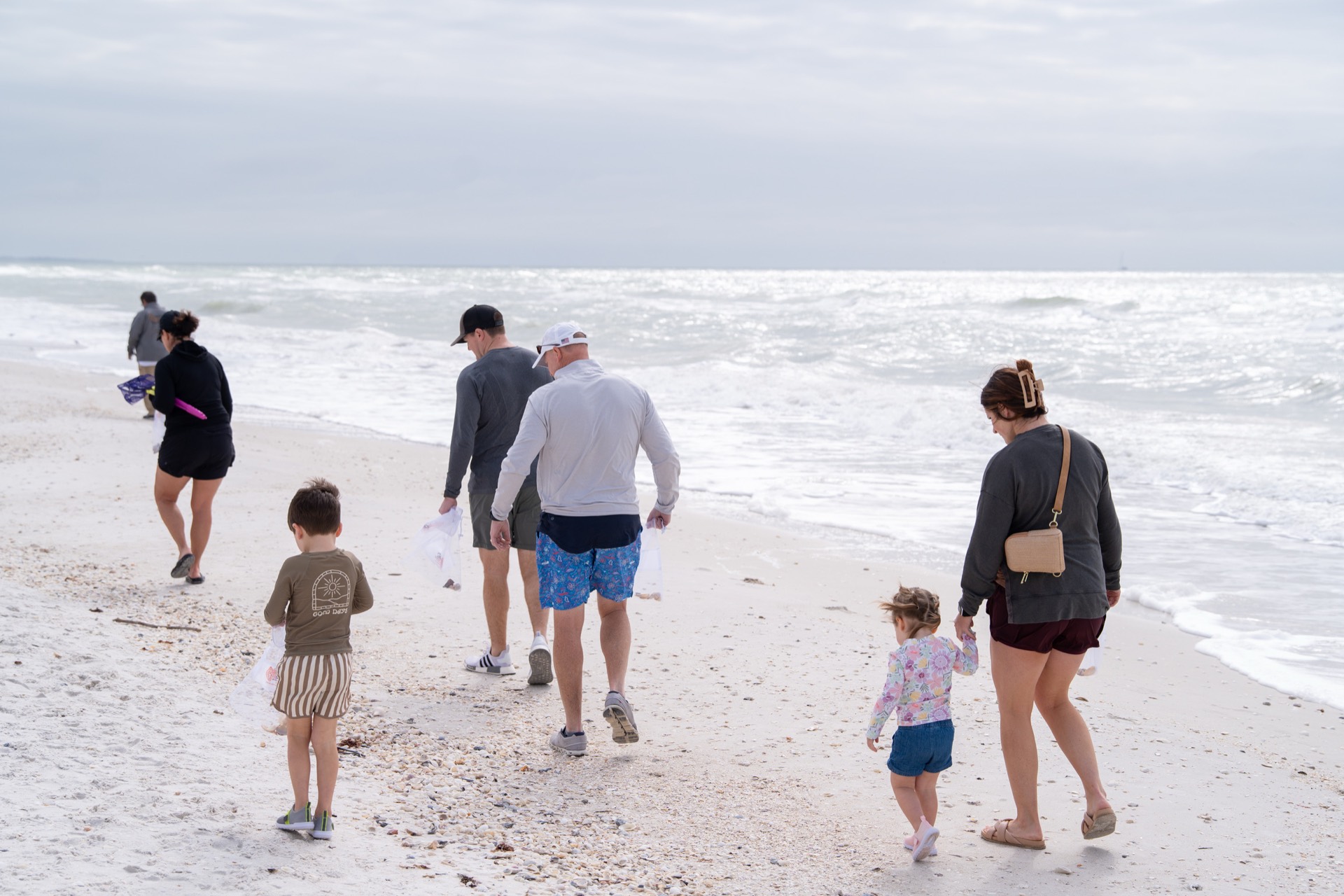
What makes June distinct from the deep-summer months that follow is timing more than intensity. You’re not fighting a big holiday-week crowd yet, and the Gulf hasn’t fully settled into the daily thunderstorm pattern that builds through the rest of summer. Most June mornings still open clear and glassy, which is exactly why our captains run a good share of June trips early — not because the tide demands it, but because the ride out is calmer and the light is better for spotting shells sitting right on the sand.
June’s Tide Script: Evening Lows Near the Solstice
Here’s the mechanic behind it. Tides are driven by the sun and moon pulling together, and as the calendar rolls toward the June solstice, the alignment that produces the day’s lowest tide shifts later in the clock. In winter that alignment lines up closer to sunrise; in June it lines up closer to sunset. So if you want the maximum exposure — sandbars stretching further out, the swash zone dropping back to reveal what the last few tides buried — you’re looking at a late-afternoon-into-evening low, usually tightest around the new and full moon each month.
That doesn’t mean morning trips come up empty. A rising tide still turns shells over, and a calm morning Gulf makes it easy to spot color and shape against the sand. What it means is our captains run two different kinds of June trips: an early one built around comfort, wildlife and easy wading, and a late-day one timed to the actual low, often paired with the golden light heading into a Gulf sunset. Check the day’s tide chart before you book and we’ll steer you to the window that matches what you’re after.
| Window | Tide | Conditions | Best For |
|---|---|---|---|
| Early morning (dawn to 9 a.m.) | Rising or moderate tide, not the day’s low | Glass-calm Gulf, cooler air, best light for spotting shells | Families, wildlife watching, easy wading |
| Late afternoon into evening | The day’s negative low, tightest near new & full moons | Warmest water, storms usually cleared, sunset light | Maximum shell exposure, serious shelling |
Water, Weather and Naples’ Storm-Season Timing
June 1 is the official start of Atlantic hurricane season, and honestly, that’s more of a calendar marker than a daily threat this early in the summer. What it does mean, reliably, is the daily sea-breeze pattern kicks into gear: mornings build up clear and warm, humidity stacks through midday, and clouds tend to organize into scattered afternoon storms before clearing out again toward evening. It’s a Florida-summer rhythm more than a tropical-storm one, but the two overlap enough that we watch radar closely all June.
Because of that pattern, our captains build June trips around the weather rather than through it. Morning departures usually dodge the worst of it entirely. Evening low-tide trips often slide in after the afternoon storms have cleared, which is part of why summer shelling trips lean later in the day. If weather does roll into your scheduled window, we reschedule freely rather than push a boat out into it — the islands aren’t going anywhere.
What Turns Up on a June Low Tide
Warm water in June means an active Gulf, and the shell line reflects it. Fighting conchs, lightning whelks, augers, olives and cockles are all realistic finds on the boat-only islands, especially right along the tide line where the last low tide left its debris field. Keyhole urchins — our local sand dollar — show up regularly too, though Collier and Lee County law is clear that anything alive stays in the water; if you see tube feet moving or any color, it goes back exactly where you found it. A junonia, the deep-water shell that only washes ashore after a real storm event, is always a long shot — if you find one in June it’s a story you’ll be telling for years, not something to plan a trip around.
You’ll also run into the everyday cast of a Ten Thousand Islands low tide: hermit crabs shuffling through empty shells, moon snail sand collars, the occasional horseshoe crab molt, and fiddler crabs skittering through the mangrove mud at the island’s edge. None of it is promised on any single trip — shelling here has always been a bit of a treasure hunt — but June’s warm, shallow water and long daylight give you more comfortable hours to work a beach than almost any other month. For a deeper look at what’s realistically out there, our seashell guide breaks down the full lineup species by species.
Where Our Captains Run in June
The same boat-only islands that produce all year keep producing in June: Keewaydin Island and Kice Island are the workhorses, far enough from the mainland that foot traffic stays light even as the calendar fills in. Cape Romano stays on the list too, mostly for the view now — the famous dome houses were toppled by Hurricane Ian in 2022 and sit as half-submerged ruins offshore, a striking stop even though the shelling itself is secondary to the sight. Which island we run to on a given June morning or evening comes down to the tide, the wind direction and what the last few days have delivered.
If June is your window, the smartest move is to lock in a shelling tour and let the captain match the departure time to that week’s actual tide chart rather than guessing at a generic booking slot. Our full seasonal guide lays out how every month compares if your dates are still flexible, the June boat tours overview covers the rest of the month’s trips beyond shelling, and our breakdown of the best shelling beaches in the Ten Thousand Islands goes deeper on exactly which islands are worth the ride.