
🏝️ At a glance
- Top picks
- Jupiter, Blowing Rocks, Cocoa Beach, Amelia Island
- Best for
- Sea glass, shark teeth, rugged scenery
- Expect
- More broken shells (rougher Atlantic surf)
- For whole shells
- Cross to the Gulf coast instead
- Rule
- Empty shells only; check each park's rules
The best east-coast shelling beaches
The Atlantic shore rewards beachcombers who like a little grit. Jupiter and nearby Hobe Sound draw collectors for variety washed up by the strong surf. Blowing Rocks Preserve on Jupiter Island is the most dramatic spot on the list — an Anastasia limestone outcrop where, on a high winter swell, the sea shoots geysers through the rock, with shells and sea glass tucked in the pockets below. Up north, Amelia Island near Fernandina Beach has long, walkable sand and good shark-tooth hunting, while the Cocoa Beach stretch on the Space Coast is reliable, accessible Atlantic combing.
| Beach | Area | Known for |
|---|---|---|
| Jupiter / Hobe Sound | Treasure Coast | Variety, sea glass, surf-washed finds |
| Blowing Rocks Preserve | Jupiter Island | Rock formations, sea glass pockets |
| Amelia Island | Northeast FL | Long sand, shark teeth |
| Cocoa Beach | Space Coast | Accessible, reliable combing |
What you'll actually find over there
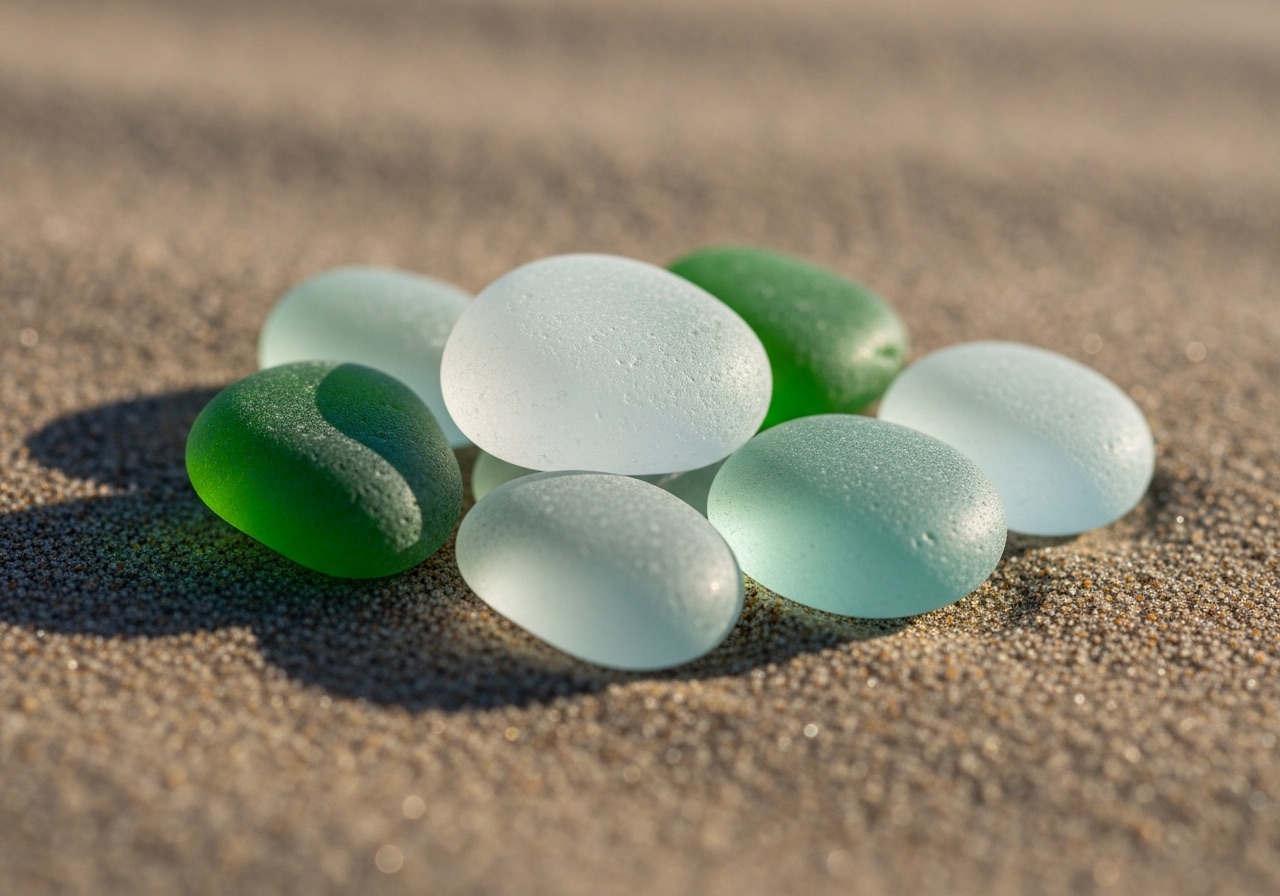
The Atlantic plays to different strengths than the Gulf. The rougher surf that breaks shells is the same surf that tumbles broken glass into beautiful frosted sea glass — the east coast genuinely beats the Gulf for that. You'll also find more fossilized shark teeth churned up in places, plus common Atlantic shells like coquina, augers and the occasional whelk. What you won't find as easily is the flawless, palm-filling whelk or conch the Gulf is famous for. Over here, a whole shell is a lucky day rather than the norm.
The honest Gulf comparison
We'll always shoot straight: if intact shells are the goal, the calm Gulf coast wins, and it's not particularly close. The barrier islands and gentle water deliver whole shells the rough Atlantic can't. For the full breakdown, see our Gulf vs. east coast comparison. The east coast earns its spot for sea glass, scenery and a statewide road trip — but the boat-only islands off Marco and Naples are where serious shellers go for the trophies. That's the water we run, and our shelling tours put you right on it. Wherever you collect on either coast, keep it empty-only and mind each park's rules; here's the Florida shell-collecting law.
From the Helm: why we run Big Marco Pass instead of an Atlantic wave line
Before we ever throw a line off the dock, we read wind and swell, not just tide. Cross the state to the Atlantic side and you’re shelling against real wave energy — groins and jetties funnel a strong longshore current that piles material up fast, then grinds it just as fast. Our own run out through Big Marco Pass is a different animal entirely: the barrier islands soak up most of the open-Gulf fetch before it ever reaches the sand we drop guests on, so what lands there had a gentler trip in.
That difference shows up the second a shell hits your palm. A whole lightning whelk that rode in on our side still has its lip intact and its spire sharp; the Atlantic equivalent more often arrives chipped, tumbled, sometimes worn to a nub before it ever reaches dry sand. We’re not knocking the east coast — the sea glass and shark-tooth hunting over there is genuinely its own reward — we’re just telling you plainly why we built this business on this coast instead.
The approach itself changes what we can offer you. Because our water stays comparatively flat, we can nose the bow straight onto a sandbar and drop a boarding ladder off the side rather than timing a landing through breaking surf the way an Atlantic-side boat would have to. That calm approach means more minutes with your head down at the wrack line and fewer spent bracing against chop, which matters more than people expect on a morning built around bending over for an hour.
Timing plays into that same math. We run these mornings early, well ahead of the afternoon sea breeze that fills in most days along this stretch of coast, because even our comparatively calm water can pick up a wind-driven chop once that breeze builds past midday. An Atlantic beach doesn’t get that same grace period — ocean swell shows up on its own schedule regardless of the local wind — which is one more reason our low-energy mornings hold up so consistently for whole, unbroken shells.
We still get asked, often enough, whether a shelling trip is worth planning around a drive across the state. Our honest answer: only if you want sea glass or shark teeth specifically, since that’s genuinely an Atlantic strength. For whole shells and quiet water you can actually stand in, we’d rather run you out past Big Marco Pass ourselves. It’s the same reason our own boat-only stretches of the Ten Thousand Islands keep pulling people back season after season.
If a two-coast trip is what your vacation actually calls for, plan the Atlantic leg for the glass and teeth, and save your shelling energy for us. Book a shelling tour with one of our captains and we’ll put you exactly where the calmer water has been quietly stacking whole shells while the Atlantic side keeps churning through its own. Whichever coast you’re on, the rule’s the same: only pick up what’s already empty.