
🏝️ At a glance
- Access
- Drive-up, off John Morris Rd near the Sanibel causeway
- Type
- Tidal mudflat — not a classic sandy beach
- Best finds
- Cockles, scallops, ark shells, crown conchs, jingle shells
- Best time
- The lowest tides of the day; check a tide chart first
- Rule
- Empty shells only — live collection banned in Lee County
What you'll find at Bunche Beach
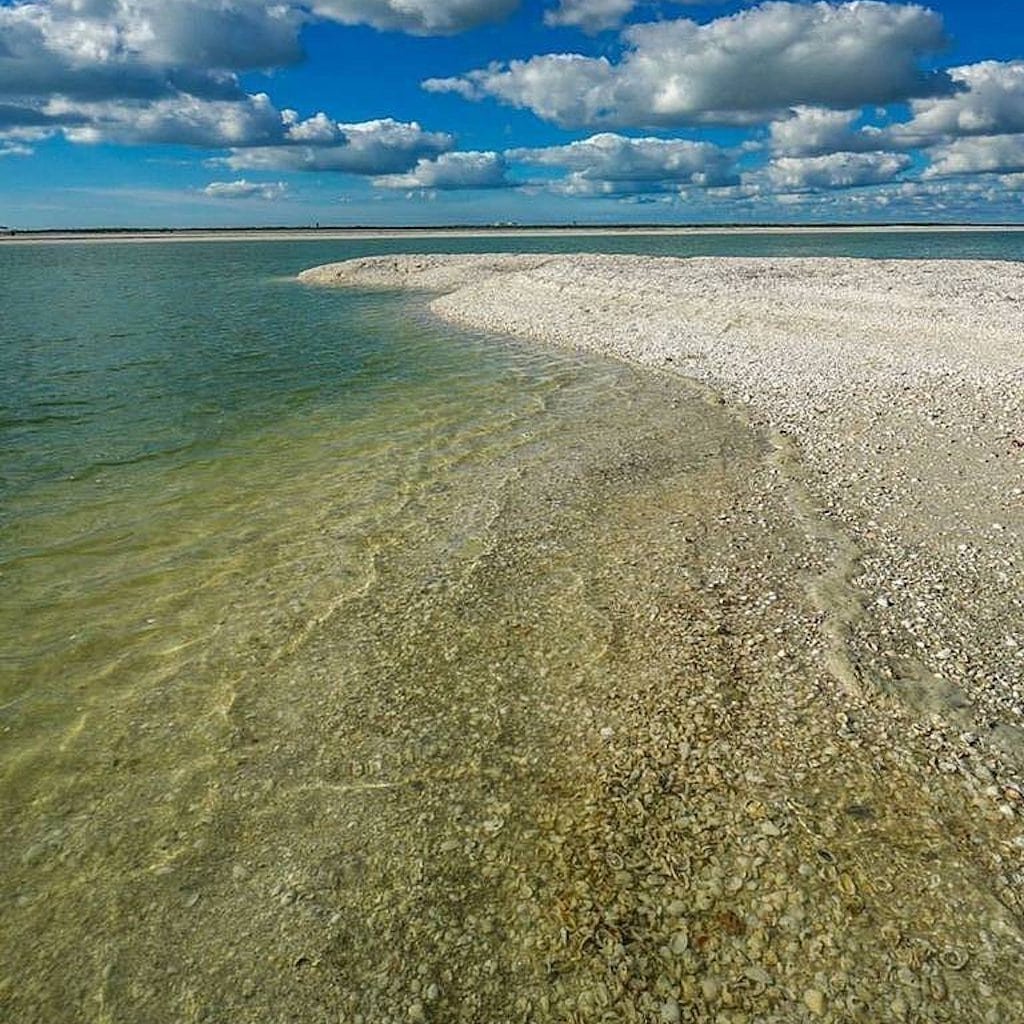
Bunche is a flat, not a slope, so the shells sit scattered across exposed bars and seagrass rather than stacked in a wrack line. Walk the wet sand at low water and you'll spot cockles, calico scallops, ribbed ark shells, jingle shells, and the dark, knobby crown conch that loves these brackish flats. Fiddler crabs scuttle across the mud and the whole place hums with life when the water drops.
It's an honest beach: the variety is great, but you have to work the tide and watch your footing on the soft mud. Old water shoes beat flip-flops here every time.
Why low tide is everything at Bunche
If there's one rule for Bunche, it's this: check the tide chart before you leave the house. At high tide there's almost nothing to walk — the flats are underwater. Near the bottom of a strong low, hundreds of yards of sandbar and grass open up, and that's where the shells are. Aim for the lowest tide of the day, and you'll get an hour or two of prime ground.
Winter cold fronts and big tidal swings improve the haul, the same way they do on the rest of the Gulf coast.
| Factor | What to know |
|---|---|
| Access | Drive-up near the Sanibel causeway, Fort Myers |
| Best tide | The lowest tide of the day — essential |
| Top finds | Cockles, scallops, ark shells, crown conchs |
| Also great for | Wading birds and shorebirds |
| Collecting | Empty shells only (Lee County) |
Birds and the flat
Bunche is as famous with birders as it is with shellers. The exposed flats draw herons, egrets, willets, plovers, roseate spoonbills and skimmers feeding in the shallows, so bring binoculars along with your mesh bag. If wildlife is your thing, you'll love what comes alive on the water with us, too — our captains point out the same wading birds on every trip.
Bunche sits up in Lee County, well north of our Marco and Naples home water. If you want that same low-tide-shelf magic without driving and without fighting the tide chart, our shelling tours drop you on the boat-only islands south of here. For a closer drive-up alternative, compare it on our best shelling near Fort Myers roundup, and see how the boat-only barrier islands stack up on the best boat-access beaches guide.
From the Helm: Bunche Beach’s dead-low window, and the flat we work instead
Guests bring up Bunche Beach more than you’d guess, usually after reading that the mudflat only pays off at the bottom of the tide. We tell them straight: Fort Myers and the Sanibel causeway sit north of our home water, past San Carlos Bay, farther than we’ll run a half-day charter for one flat. The tide math that makes Bunche work is the same math we lean on every week, just closer to Marco — so if the real draw is a low-tide flat crawling with shell, we can put you on one without the drive.
Our version sits inside the boat-only islands south of Marco, where a grass flat off Dollar Bay goes nearly bare in the last hour of a strong outgoing tide. We idle across it on the trolling motor rather than run wide open, easing the hull over the grass until it’s inches off the bottom, then let guests step down into water that’s barely ankle-deep. Cockles, small lightning whelks and the occasional fighting conch sit right on top of that exposed grass, not buried — the same shallow-water payoff Bunche Beach is known for, minus the causeway traffic.
A shell pulled straight off a dropping flat like that feels different in the hand than one picked off a sun-baked beach at noon — still cool, a little sandy-wet, the color not yet bleached out by hours of direct light. That’s the tell we point out to guests at the rail before anyone steps off: work the flat while it’s fresh off the tide, because once the sand cakes and dries, the good ones have usually already been picked over by the birds working that same window.
We watch birds almost as much as the tide chart. Egrets and ibis wading out onto ground that was underwater an hour earlier is as good a signal as any gauge that the bottom’s dropped enough to fish. When the wading birds commit, we start easing the boat in behind them, a habit that beats guessing at exactly which ten minutes of the outgoing tide expose the good sand.
Some falling tides move faster than others depending on wind, and a stiff onshore breeze can hold water on a flat longer than the chart predicts. When that happens we usually shift the stop to a nearby oyster-bar edge that clears regardless of wind, rather than sit and wait on a flat that isn’t cooperating. Nothing here is guaranteed — some days the flat is thin, some days it’s thick with cockle shell — but it’s the same honest low-tide gamble Bunche Beach offers, run on water we’re already on most weeks.
If a Fort Myers mudflat appealed mostly for the tide-exposed shell and not the specific address, that’s exactly what we build into a shelling tour out of Marco — empty shells only, same rule as Lee County, on a flat that’s ours to read all season. The shelling beaches guide covers the rest of the islands we rotate through.