
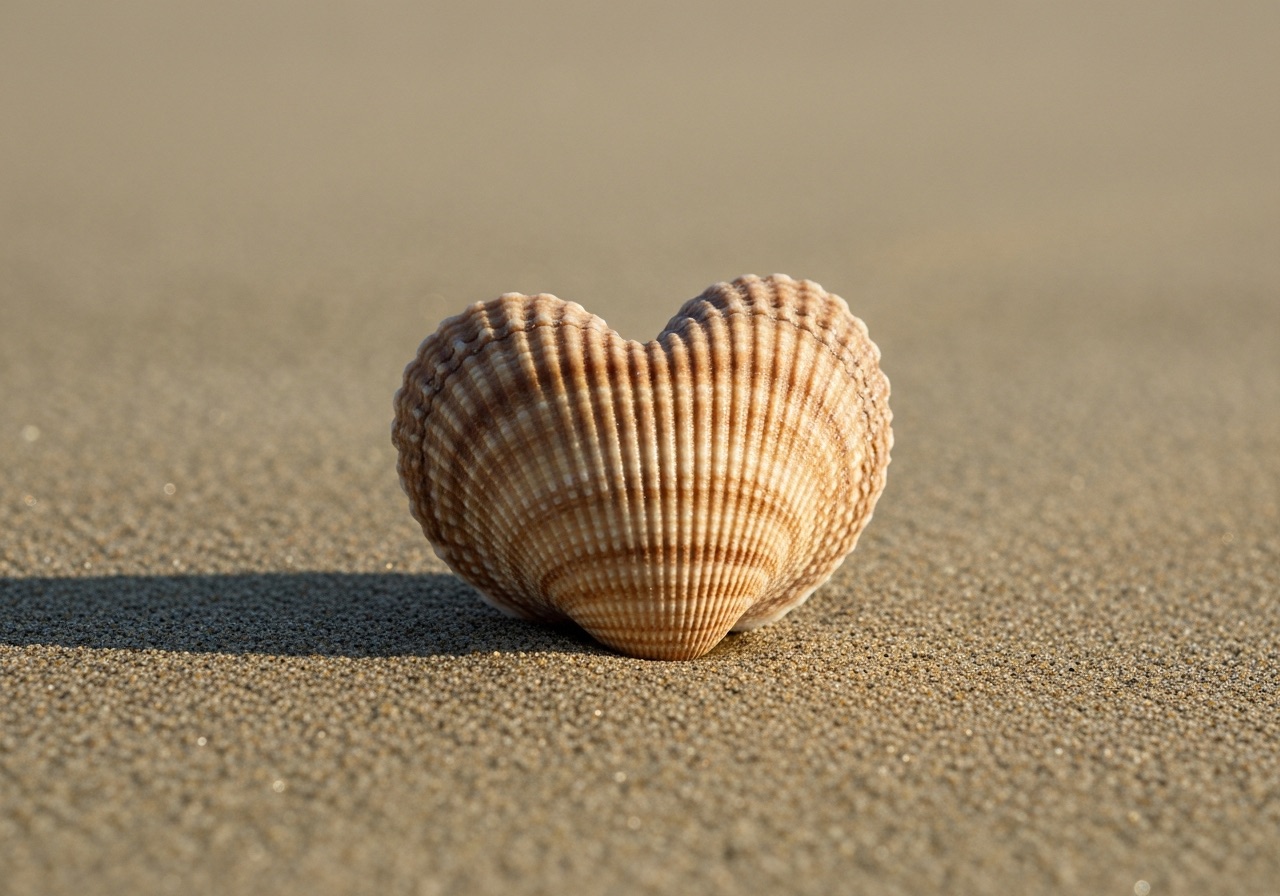
🐚 At a glance
- Family
- Cardiidae — the cockles
- Shape
- Plump, ribbed, heart-shaped from the side
- Size
- Yellow ~1–2 in; giant Atlantic up to ~5 in
- Tell-tale
- Strong radiating ribs; both halves match (it's a bivalve)
- Where & when
- Sandy Gulf flats off Keewaydin, Kice & the Ten Thousand Islands
How to identify a cockle
Cockles are bivalves, so you're looking for one half of a matched pair: a rounded, slightly fan-shaped valve with bold ribs running like rays from the narrow hinge out to the scalloped edge. The classic test is to set a single valve on its pointed end and look at the silhouette — that curved heart shape is the giveaway, and it's why old naturalists called them “cockle hearts.” Run your thumb across the ribs; on most cockles they're chunky and easy to feel.
Don't confuse them with scallops, which have flat little “ears” on either side of the hinge, or with the smaller, smoother coquina clams that paint the surf line in rainbow colors. A cockle is heavier, deeper-cupped and more obviously ribbed than either.
The three cockles you'll find
Three turn up most on our beaches. The giant Atlantic cockle is the headliner — a hefty shell that can reach about five inches, mottled tan and brown, sometimes with a purplish wash inside. The yellow cockle is smaller and more delicate, a clean pale gold to white. The prickly cockle looks similar in shape but its ribs carry rows of little scaly spines, so it actually feels prickly in your palm.
| Cockle | Size | Quick tell |
|---|---|---|
| Giant Atlantic | Up to ~5 in | Big, brown-mottled, deep heart shape |
| Yellow | ~1–2 in | Smaller, pale gold to white, smoother |
| Prickly | ~1.5–2.5 in | Ribs lined with tiny scaly spines |
Where we find them
Cockles live just under the sand on the open Gulf flats, so the wide, sandy barrier-island beaches are where their empty valves pile up. On our shelling tours we run to Keewaydin Island, Kice Island and the Ten Thousand Islands, where the tide reloads the sand all day long. The hauls jump after a winter cold front, and matched pairs still joined at the hinge — what shellers call a “butterfly” cockle — are the prize. Just remember Collier County is empty-shells-only, so check that nobody's home inside before it goes in your bag.
From the Helm: Reading Keewaydin’s Outside Bar for Cockles After a Front
We like to start a cockle hunt on Keewaydin Island’s outside bar, the stretch that takes the full push of the Gulf. Let a front roll through with the wind swinging north or northwest overnight, and by the next falling tide that bar has scoured itself clean — cockles and clam hash pile into loose ropes of wrack right where the swash used to run. We watch the wind forecast for this hunt more than the tide chart, because without that northerly push turning the shell bed over, you’re mostly just walking flat sand with nothing to show for it.
Pick one up and you’ll know in half a second whether it’s worth bagging. A fresh-dead giant Atlantic cockle sits heavy for its size, the ribs standing proud enough to count under a thumbnail, and inside the hinge there’s often a faint violet blush still holding its color. A surf-tumbled one feels wrong the moment your fingers close around it — thin at the edge, bleached to a flat chalk white, light as a poker chip. We hand guests one of each side by side so the difference registers in the hand before we ever explain it in words.
We time the stop for the back half of the ebb, once Keewaydin’s outside bar has fully shed its skin of water but before the sand cakes back over what the tide just uncovered. Show up too early and you’re wading instead of walking; wait too long and the next push of tide starts burying the good stuff all over again. If that stretch of Keewaydin has already been picked over — a busy weekend does that fast — we’ll idle down to the quieter swash off the island’s south tip instead, same bar, same wrack line, usually a fresh run nobody’s touched yet.
The hand-off at the rail is half the fun of this stop. We’ll cup a double handful of hash, tip it into a guest’s palm, and watch them start sorting it themselves — heavy from light, colored from bleached — without us saying another word. It’s the fastest way to teach that fresh-versus-tumbled read before anyone’s hunting solo on the sand later in the trip. Whatever ends up staying in the bucket has to be a shell with nobody home in it — that’s just how it works on our Collier County beaches.
Cockles rarely travel alone on that bar — the same falling water that uncovers them tends to turn up coquinas and cross-barred venus clams in the same wrack, so we’ll often work all three at once while the tide’s still cooperating. That combination stop is baked into most of our shelling tours, and it’s the version we run whenever someone tells us cockles are the one shell their kids actually keep on a shelf back home.