
🏝️ At a glance
- Location
- Sanibel's east tip, under the historic 1884 lighthouse
- Access
- Drive-up; paid lot, short walk to sand
- Why it works
- Two shorelines (Gulf + bay) drift shells onto one point
- Best for
- Families and first-time shellers
- Rule
- Empty shells only — Lee County, nothing live
The two-bay advantage
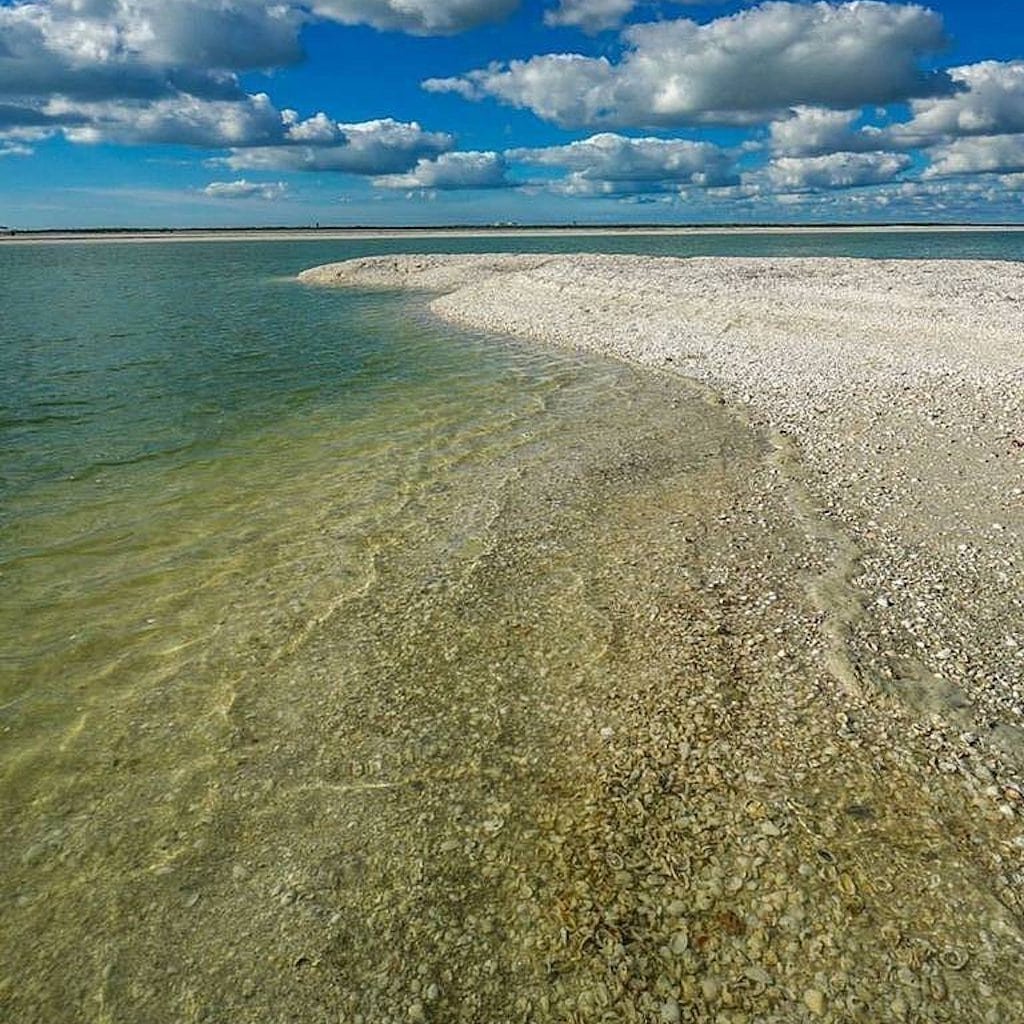
Lighthouse Beach sits right on the corner where the Gulf of Mexico bends into San Carlos Bay. That geometry is its superpower: shells drift in from the open Gulf on one side and from the calmer bay-and-pass water on the other, meeting at the point. You end up with a generous, varied shell line and an easy, gentle slope into the water — which is exactly why it's the go-to for families. Little hands can fill a bucket with coquinas, calico scallops, jingle shells and small fighting conchs without much hunting.
Where to walk
From the lot, head toward the point under the lighthouse first — the convergence corner usually holds the densest drift. From there you can work either direction: the Gulf side for the classic open-water shells, or around toward the bay and fishing pier for a different mix. The fishing pier area can be busy, so if you want quieter sand, walk the Gulf shoreline away from the crowd. As anywhere on Sanibel, do the Stoop, watch the freshest wet wrack line, and check the little troughs the receding tide leaves behind.
Best tide & season
Same playbook as the rest of the island: low tide for exposed shell bars, and winter (December through March) for the cold fronts that restock the beach overnight. The morning after a front is the prime window. Because Lighthouse Beach is the most popular first stop, it also gets picked over fastest — arrive at or before sunrise on a good morning if you want the cream of the line.
| Beach | Vibe | Best for |
|---|---|---|
| Lighthouse Beach | Easy, family, two-bay drift | First-timers, kids |
| Bowman's Beach | Boardwalk, quieter | Walk west for rarer finds |
| Blind Pass | Current-fed | Intact, rarer shells |
Empty shells only
Lighthouse Beach is in Lee County, which means empty shells only — no live shells, sand dollars or starfish. With so many families collecting here, it's worth teaching kids the flip-and-check habit early: turn each shell over, and if anything's living inside, it goes home to the water. A living sand dollar is brown and fuzzy; a keepable one is bleached white. Modeling the rule is half the fun — and it's how the beach stays this good.
Lighthouse Beach is a perfect first taste of shelling, but it's a real drive from Marco and Naples and it gets combed early. For a first stoop that nobody's beaten you to, our captains run family shelling tours to boat-only islands where the line is fresh and your kids get the whole beach. Prefer to compare drive-up options first? See our best family shelling beaches roundup.
From the Helm: Crossing San Carlos Bay to Sanibel’s lighthouse point on a calm-wind custom run
We don’t put a Sanibel run on the schedule lightly. Lighthouse Beach sits well north of our home waters around Marco and Naples, which means getting there by boat is a genuine crossing of open San Carlos Bay rather than the back channels and passes we run every single day. When a guest asks us to build that into a custom day on the water, the first thing we check isn’t the tide table taped by the helm — it’s the wind forecast three or four days out, because that stretch of bay turns choppy fast the moment a breeze swings onshore.
On a calm morning the crossing itself becomes the interesting part of the day. The channel markers sit farther apart than we’re used to, the water runs noticeably deeper, and right where the Gulf trades water with the bay near the point there’s a current that will push a boat sideways if you let it. We ease off well before we’re committed, let that drift show itself, and correct for it the same unhurried way we’d read any pass back home — slow in, eyes on the water, no guessing.
From out on the water, the lighthouse itself shows up as a small red-and-white tower well before any sand does, and it makes an honest landmark for lining up the run without leaning only on a chart plotter. We tend to hold a little farther offshore here than we would at Kice or Keewaydin, simply because we haven’t spent years learning exactly where this particular sandbar shifts season to season, and we’d rather ease in cautious than pretend a familiarity we don’t actually have.
If the wind won’t lay down, we don’t gamble the crossing on a forecast that’s already turning. That’s the morning we’d steer a private charter back toward our own islands instead — still a full day out, still real shelling, just without betting an open-bay run on weather we can’t control. Most guests don’t mind the swap once they’re standing on a beach that hasn’t seen another set of footprints since the last tide went out.
A day like this belongs in our private charters lineup rather than the standard shelling schedule — built around your itinerary, your wind window, and how far you actually want to run, instead of a fixed departure time. If a long open-bay crossing isn’t what you’re after, our regular shelling tours stay closer to our home waters around Marco and Goodland and still send you home with a mesh bag worth rinsing off, without ever betting the morning on a bay that isn’t ours to read as well.