
🐚 At a glance
- Scientific name
- Donax variabilis
- Size
- Tiny — usually about ¼ to ¾ in
- Tell-tale
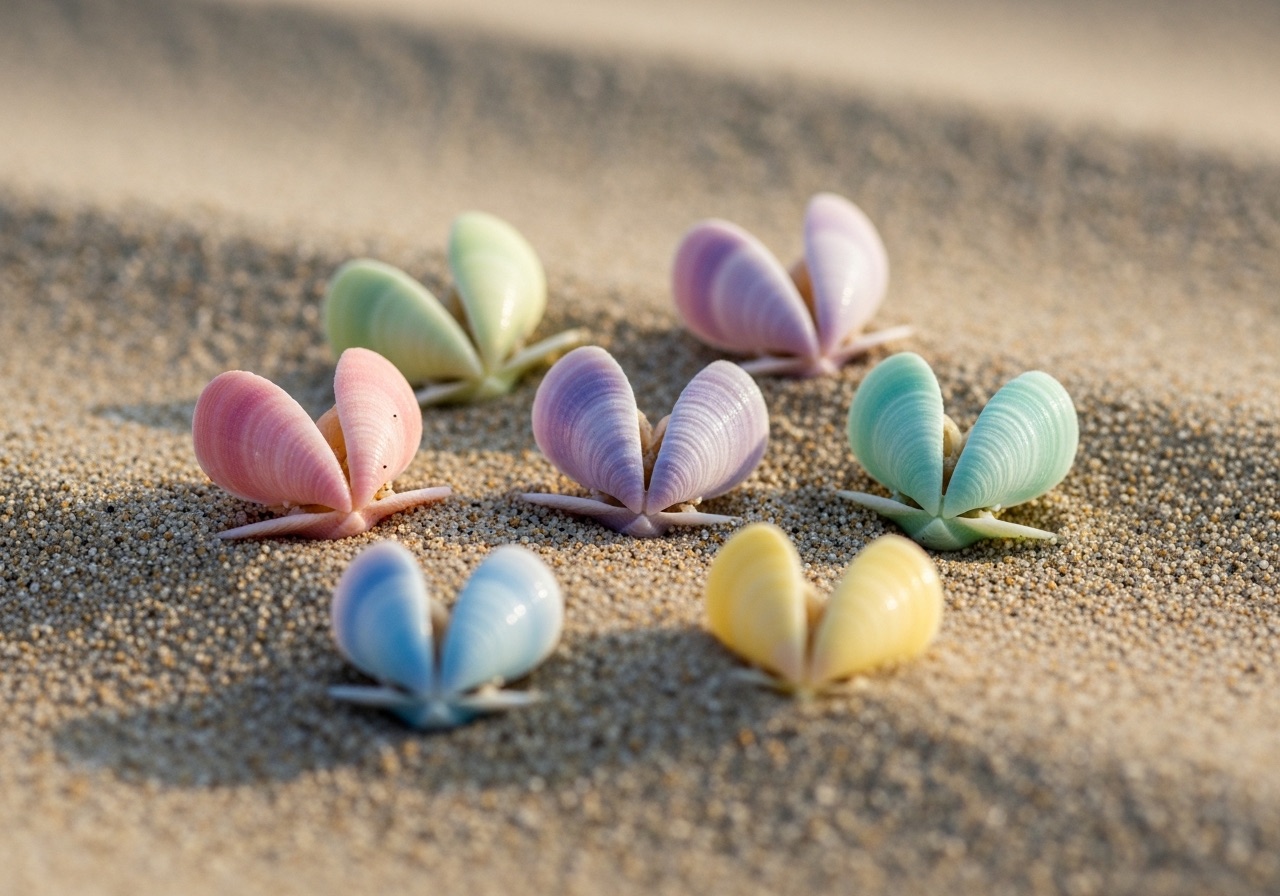
- Every pastel color; paired empties open like a butterfly
- Where & when
- Live ones burrow at the waterline in the swash zone
- Rule
- Empty paired valves are the keepers — leave live ones
How to identify a coquina
Coquinas are small wedge-shaped clams, smooth and glossy, and their superpower is color: no two seem to match. You'll find them in pink, coral, lavender, butter yellow, peach, white and gray, many wearing thin rays or concentric bands. The species name variabilis says it all. When an empty shell is still hinged, the two valves fan open into a perfect little butterfly — that's the shape collectors hunt and kids string by the dozen.
They're far smaller and more colorful than chunkier clams like the cross-barred venus or the heavy southern quahog, so once you've seen a handful of coquina butterflies you won't mistake them.
The dance at the waterline
The best way to find coquinas is to watch the swash zone — that thin sheet of water sliding up and back. As a wave pulls out, live coquinas pop up, ride the backwash, then dig down again in a blink, sometimes by the hundreds. It's one of the most charming things on a Gulf beach and a favorite moment for kids on our trips. Watch them, scoop a handful of wet sand to see them burrow, then let them go: live coquinas are part of the living beach, and Collier County is empty-shells-only. The colorful empties in the wrack line are yours to keep.
Where to find them
Coquinas love clean, wave-washed Gulf sand, so you'll find them right at the waterline on the open beaches our captains reach by boat — Keewaydin Island, Kice Island and the barrier-island stretches of the Ten Thousand Islands. Comb the upper wrack line for the empty butterfly pairs, and watch the swash for the living show. Our shelling tours put you on those quiet stretches at the right tide. Keep the empties, leave the live ones, and check our Florida shelling rules before you bag anything.
From the Helm: Catching the Wave Wash at Tigertail’s Sand Spit for Coquinas
Most guests kneel down at the swash on Tigertail’s sand spit expecting to see plain gray sand, and then a wave pulls back and the whole wet stretch seems to shimmer and disappear at once — that’s a bed of live coquinas burrowing for cover in under a second. We let people watch that first wave a couple of times before we say anything, because the reaction is half the reason we bring people to this exact stretch of sand spit instead of the open beach further down.
Live coquinas rebury themselves the instant the water recedes, so we’re not digging for those — we’re working the drier sand just above the active wash, where spent shells wash up and dry out enough to sit still. A hinged, matched pair tells us the animal’s long gone and the shell has had time to settle; that’s the tell that separates a keeper from something we’d rather leave burrowing in the swash for the next wave to cover back up.
We don’t bring gear ashore for this one beyond cupped hands, which turn out to be the best tool anyway — fingers spread just enough to let water and loose sand fall through while the shells catch in your palm. A kitchen strainer works fine too if a guest brings one, but bare hands teach the motion faster, since you can actually feel the moment a fistful of wet sand turns into a fistful of shell instead of watching for it.
We work an incoming tide for this one rather than a falling one, because a rising wash keeps depositing fresh empty pairs at the upper edge of the wet sand every few minutes instead of just re-sorting what’s already there. Cup a handful of that upper wash and you’ll usually turn up five or six colors at once — pink, lavender, peach, sometimes a soft yellow — in shells barely bigger than a fingernail. It’s the fastest color payoff of any stop we run.
If the spit’s crowded with foot traffic on a busy day, the wash gets churned and murky fast, so we’ll shift a little further out toward the lagoon-side edge of the spit where fewer people walk and the water stays clear enough to actually see the colors before they wash past your hand.
We build this stop into a lot of our shelling tours because it’s an easy one for kids to do solo right at the water’s edge while we keep an eye from a few steps back. Pair it with a stop for cockle shells further down the same beach and you’ve got two very different textures in one bag by the end of the morning.