
🏝️ At a glance
- Access
- Drive-up county beach — paid parking, restrooms, cafe
- The move
- Wade the lagoon, walk north to Sand Dollar Spit at low tide
- Best tide
- Low tide — the spit and flats only show then
- Crowds
- Marco's busiest shelling beach — go early
- Rule
- Empty shells only (Collier County)
The lagoon and the spit
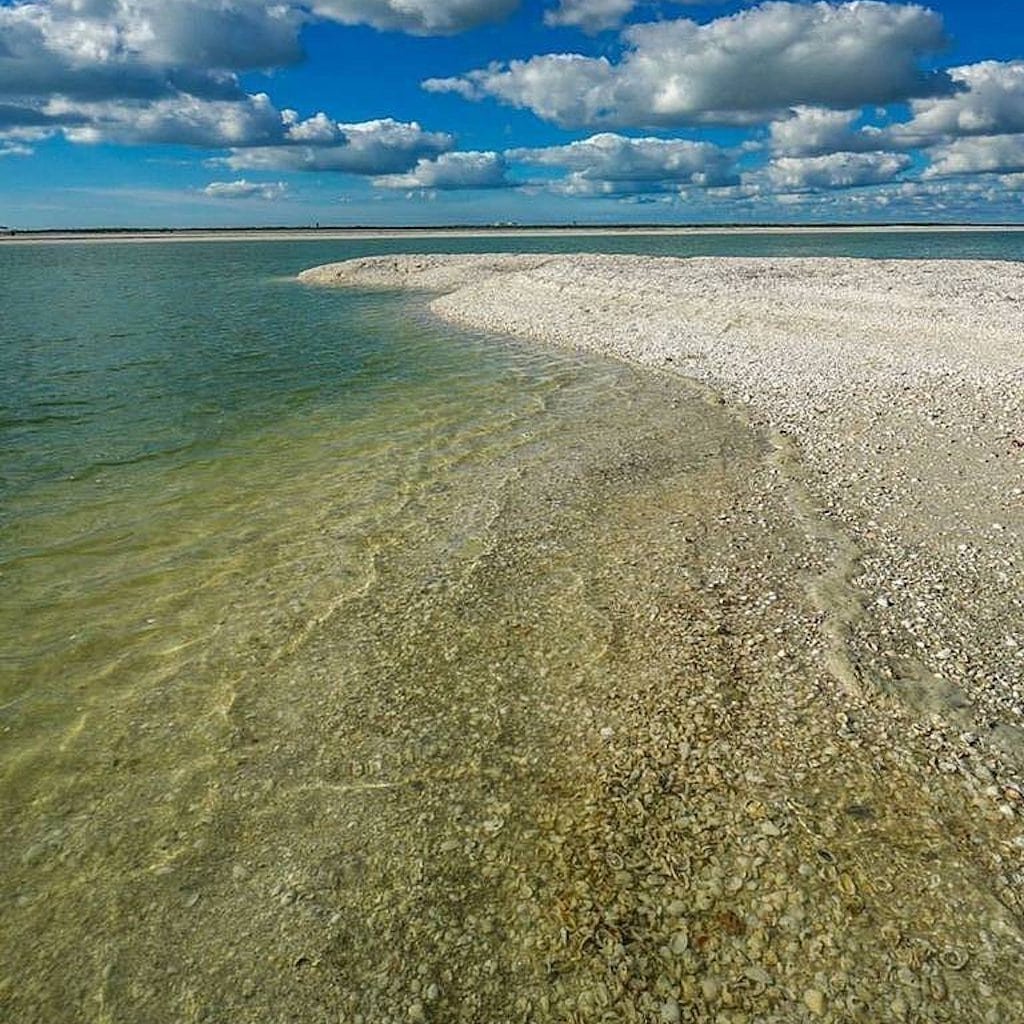
Tigertail's layout is the whole story. You park at the county lot, and instead of open Gulf you're first met by a shallow tidal lagoon backed by mangroves — great for kids and birds, not the main shelling event. The good shelling is across that lagoon and north along the Sand Dollar Spit, the shifting sandbar that runs off the north end. At low tide you wade the lagoon (warm, shin-to-knee deep) and walk the spit, and the farther you walk from the parking lot, the better the line, because fewer people make the trek. That little bit of effort is your edge on a crowded day.
What washes up at Tigertail
The Tigertail flats and spit catch Marco's standard, friendly mix: fighting conchs, lettered olives, cockles, kitten's paws, jingle shells, and bleached keyhole sand dollars out on the spit. On a good low tide you'll turn up a lightning whelk or a knobbed whelk, and after a winter front the drift gets heavier and more varied. It's not the wild, untouched haul of a boat-only island — this beach gets walked hard — but for a free, easy, drive-up morning, it genuinely delivers. Just remember the spit's sand dollars: bleached white empties are keepers, anything brown and alive stays put.
Tide, parking, and crowds
Three things make or break a Tigertail trip. First, tide: come at low tide or you'll find the spit underwater and the flats gone — check the chart and aim for the hours around dead low. Second, parking: the county lot fills early on weekends and in season, so arriving at or before sunrise both gets you a spot and puts you on the line before it's picked. Third, crowds: this is Marco's most popular shelling beach, full stop, and we'd be lying to tell you otherwise. The early, low-tide, far-walk combination is how you beat all three.
| Tigertail (drive-up) | Keewaydin / Kice (boat-only) | |
|---|---|---|
| Access | Free, drive-up | Boat only |
| Crowds | Heavy — go at dawn | Almost none |
| Shell lines | Picked fast | Fresh & untouched |
| Effort | Lagoon wade & walk | Just step off the boat |
When to go boat-only instead
We love Tigertail and recommend it for an easy, free morning — but we'll be straight with you about its ceiling. If you want the kind of shell line nobody has touched, the answer is to get off the mainland, and the classic question is Keewaydin vs Tigertail. The boat-only islands like Keewaydin and Kice see a fraction of the foot traffic, so their drifts stay full all morning. That's exactly what our shelling tours are built for: we run you out to fresh sand the tide just refilled, no dawn parking scramble required. Whichever you choose, the rule's the same — Collier County, empty shells only.
From the Helm: Reaching Tigertail’s Sand Dollar Spit from the Gulf side through Big Marco Pass
From the water, Tigertail doesn’t look like the beach most people picture from the county parking lot. Our captains come at it from the Gulf side, running out through Big Marco Pass and swinging north along the outside of the barrier island until the long pale finger of the Sand Dollar Spit opens up ahead of the bow. There’s no lagoon to wade and no half-mile walk north along the shoreline — just open water, a sandbar building out from the tip of the island, and a stretch of sand that hasn’t seen a single set of footprints yet that morning.
That Gulf-side approach means we’re not chained to the lagoon’s tide the way a walker is. Wading Tigertail’s inside water only works within a narrow window around low tide; coming in from outside, our captains care more about wind and swell than the clock on the tide table. A light onshore breeze still lets us idle up comfortably; anything stacking real chop against that open beach pushes us to hold off or pick a different stop entirely, since nosing a boat onto an exposed spit in a rolling swell isn’t worth the risk to the hull or the ladder.
Guests notice the quiet first — no cars, no crowd, just gulls working the tideline and the hull settling into the sand. We cut the motor well before the shallows show color, then coast in on momentum for those last few boat-lengths off the spit so nobody’s bracing at the bow for a hard stop. Kids usually spot the spit’s sandbar birds before they spot a single shell, and we let that moment sit for a second before anyone climbs down the ladder — there’s no rush once the anchor’s set and the whole spit is sitting there empty.
We run a shallower-draft boat for this approach specifically, because the sandbar off the spit builds out further some seasons than others, and a deeper hull means anchoring further out and wading in anyway. If the Gulf swell is up enough to make that landing rough, our plan B is simple: we swing around into the calmer lagoon side instead and work the inside wade everyone else is already doing, just timed to the tide instead of the wind. It’s a different feel — slower, shallower, more foot traffic — but it beats fighting chop for a spit that isn’t cooperating that morning.
Either way in, the same rule holds on every shell that comes off that spit: check it, and if anything’s still home, it goes back exactly where it sat. Collier County doesn’t make exceptions for a good-looking sand dollar just because a boat got you there instead of a mile of walking. If the open-water approach is what you’re after, book it as one of our shelling tours; guests weighing whether to wade the lagoon instead can see how it stacks up on our Tigertail vs. South Marco comparison.