
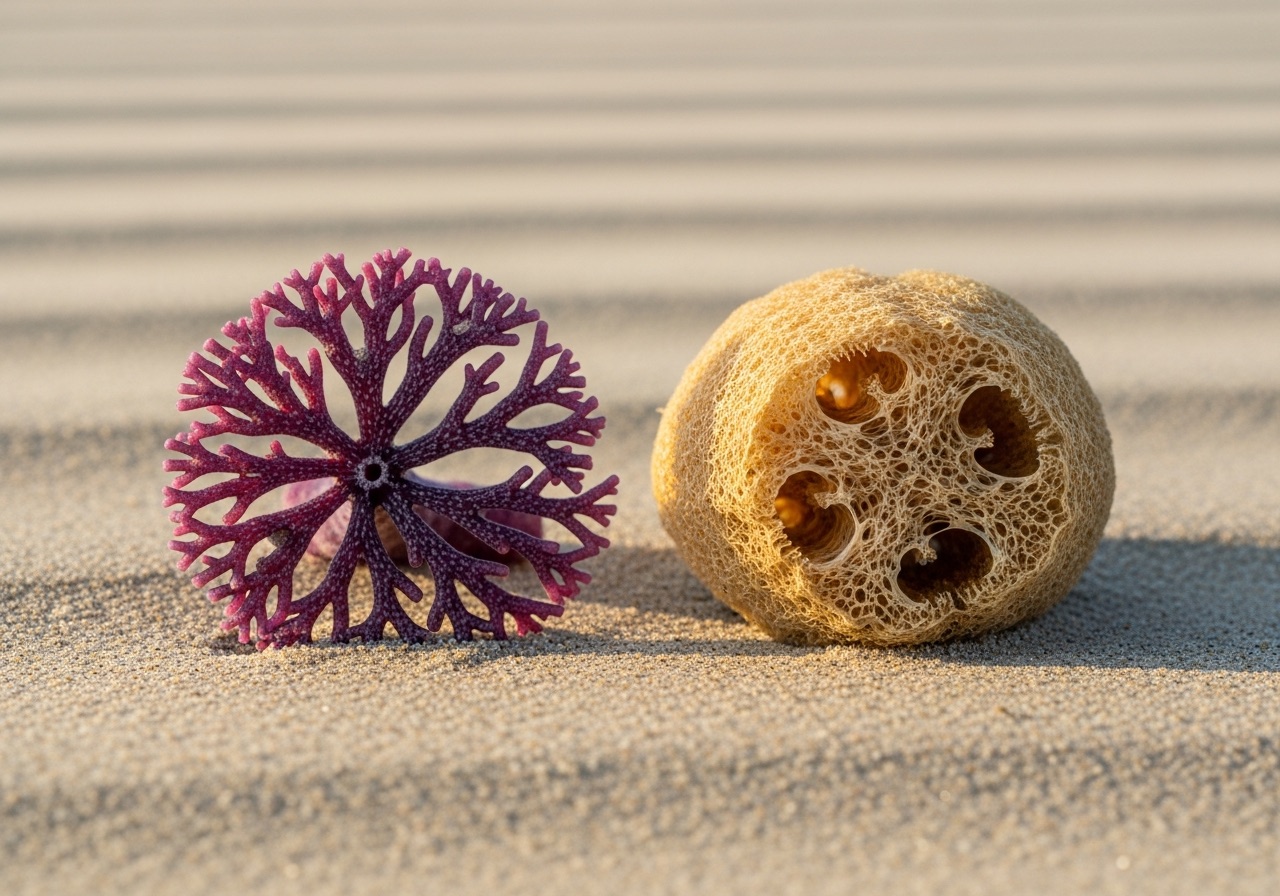
🐚 At a glance
- Sea whips
- Soft corals — stiff, branching, often purple or tan
- Sponges
- Filter feeders — springy, full of holes, loofah-like
- Why they wash up
- Storms tear them off the bottom and pilings
- Where & when
- Island wrack lines after a front or tropical system
- Rule
- Dried, dead pieces only — never take a living colony
Sea whips: the soft corals
Pick up a stiff, branching twig that's purple, plum or tan and slightly rubbery, and you're holding a sea whip — a kind of soft coral, cousin to the sea fans you've seen in photos. Alive on the bottom, each whip is a colony of tiny polyps feeding in the current, swaying like a little underwater bush. When a storm rips one loose, the polyps die off and the flexible inner skeleton washes ashore, often bleaching to a pale tan in the sun. They feel almost like dried licorice. Finding one is a sign the storm reached down deep enough to stir the reef bottom — the same churning that brings in the best rare shells.
Sponges: the Gulf's filter feeders
Sponges are even older and stranger — among the simplest animals in the sea, just colonies of cells pumping water through a maze of holes to filter out food. The ones you'll find here look like a yellow or brown loofah, a clump of fingers, or a crumbly chunk full of channels. That's no coincidence: the natural loofah in your shower is a dried sponge. On the beach they're light, springy and bone-dry once the sun's had them. Give one a sniff-free squeeze and you'll feel why they soak up water so well. They roll in alongside sea beans and other storm debris in the same wrack line.
| Find | What it is | Feel & look |
|---|---|---|
| Sea whip | Soft coral (animal colony) | Stiff branching twig, rubbery, purple-tan |
| Sponge | Filter-feeding animal | Springy, holey, loofah-like, yellow-brown |
What you can take home
Simple rule, and an important one: take only the dried, dead pieces the tide has already thrown up on the sand. A bleached sea-whip branch or a sun-dried sponge chunk is fair game and makes a great natural keepsake. What you should never do is pull a living, brightly colored sea whip or sponge off the bottom, a dock piling, or a rock — those are living animals doing the slow work of keeping the Gulf clean, and Collier County keeps things empty-and-dead-finds-only for exactly that reason. We point these out all the time on our shelling tours and around the Cape Romano outer beaches after weather, because they tell the story of the whole reef floor most visitors never see.
From the Helm: What Kice Island's Outside Bar Gives Up After a Blow
We watch the forecast for a strong afternoon storm cell or a stiff onshore wind, because that's what stacks sponges and sea whips onto the outside bar at Kice Island rather than leaving them scattered thin along the regular beach. A build like that churns bottom structure well offshore and pushes the loose, dead pieces onto the Gulf-facing sandbar in a single dense line. We run out to Kice specifically after that kind of blow, and we time the stop for when the outside bar itself starts to crest dry on the ebb — wade out too early and you're still working the edge from the boat, wait for the sand to show and you're standing on the ridge instead of swimming over it. A wind that hits the bar straight on piles the heaviest drift into one thick ridge; a wind angled down the beach spreads it thinner over a much longer stretch, so we watch which way the last blow came from before deciding exactly where to anchor.
We hand guests a small mesh dip net rather than let them wade straight in, since a lot of what washes up is still waterlogged and easy to miss underfoot in the shallows along that bar. Once something's netted, we look it over at the rail before anyone pockets it — a true sea whip feels like a stiff rubber cord with no give left in the branch, while a sponge compresses like a dry kitchen scrubber and springs back the second you let go. That squeeze test is the whole trick, and it takes about two seconds once you've felt it once.
The mistake we correct most is guests grabbing anything colorful still attached to a rock or piling, thinking it's a loose find. A living sea whip or sponge colony is soft, wet through, and often still faintly colored purple or gold; a dead, wrack-worthy piece is bleached pale, dry-feeling even when wet, and comes free with no resistance at all. We only ever bag the second kind, and in Collier County that's the only kind that's legal to keep — the living colonies stay right where the bar put them.
If the outside bar at Kice is still buried when we get there, we swing the boat around to the lee side wrack line instead, where a smaller but steadier trickle of the same debris collects on calmer days without needing a storm to deliver it. It's a thinner pick, but it keeps the stop from being a total skip on a morning when the bar hasn't cleared yet.
This stop pairs naturally with the rest of a run through the boat-only shelling beaches, since the same dropping water that bares Kice's outside bar for sponges also opens up shell wrack a short walk down the beach. Ask your captain to work both into one shelling tour stop if a storm's come through recently — that's the pairing we look for.