
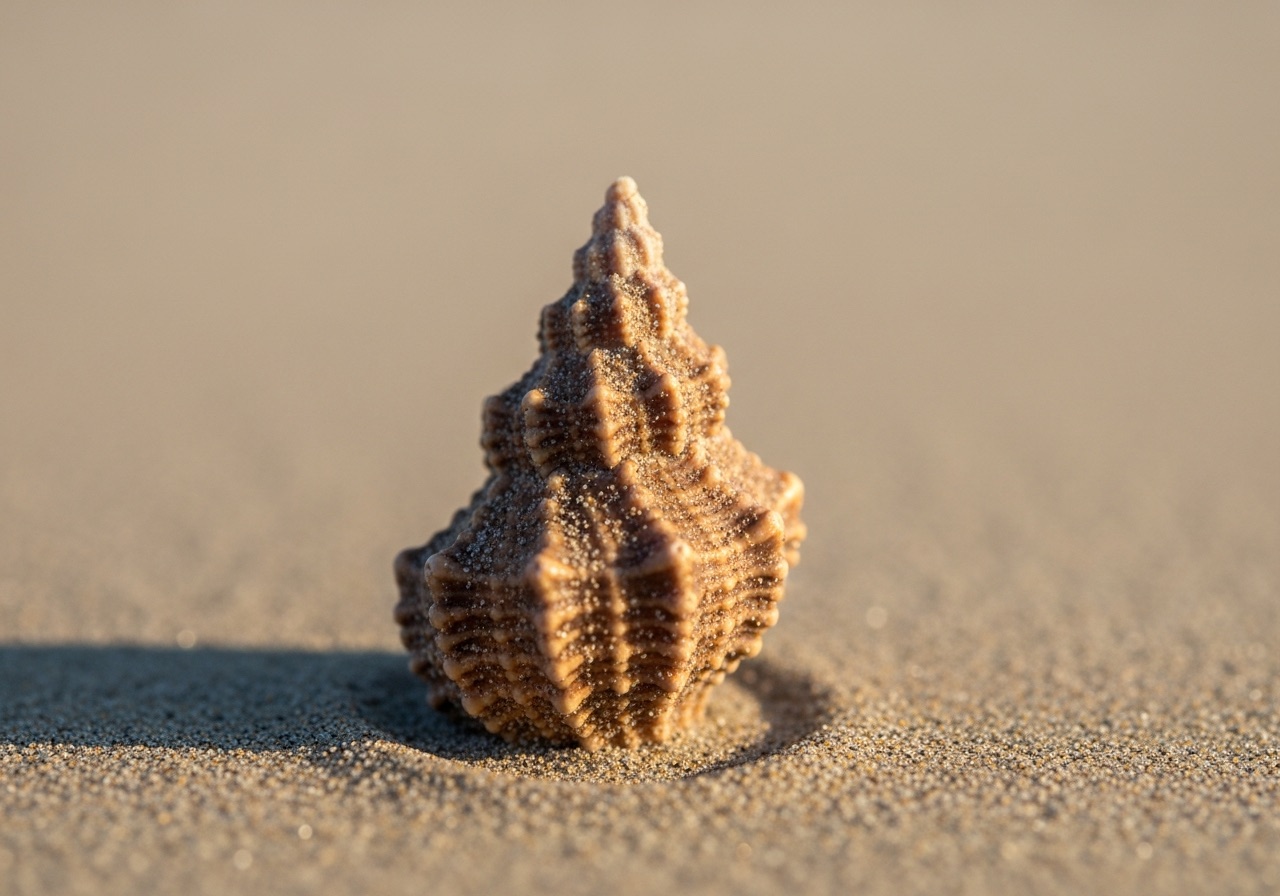
🐚 At a glance
- Scientific name
- Cerithium spp.
- Size
- Usually ¼–1 in — a true micro-find
- Tell-tale
- Beaded sculpture on a tall, pointed spire; dull colors
- Where & when
- Wrack line on Keewaydin, Kice & the Ten Thousand Islands — super abundant
- Rule
- Empty shells only in Collier & Lee
How to identify a cerith shell
Start with the shape: a cerith is a tall, narrow cone that comes to a sharp point, with a small oval opening at the wide end and a tiny notch at the bottom of the lip. Now look closer — the whole surface is covered in fine beads, little raised bumps lined up in spiral rows and crossed by vertical ribs, so the shell almost looks knitted. The colors are quiet: muddy gray, tan, dull brown, sometimes faintly banded. They're not flashy, but that beadwork is unmistakable once you've held one. If the terms trip you up, our seashell anatomy glossary breaks down spire, whorl and aperture in plain English.
Cerith vs. auger: the one tell
The shell people most often confuse with a cerith is the auger, because both are pointed little spires. Here's the decisive test: the auger is longer, more slender and smooth, like a screw or a tiny ice-cream cone, while the cerith is shorter, chunkier and covered in beads. Feel the surface with your thumb — bumpy means cerith, slick means auger. Get that one habit down and you'll never mix them up again.
| Shell | Surface | Shape |
|---|---|---|
| Cerith | Beaded, bumpy rows | Shorter, stouter cone |
| Auger | Smooth, slick | Long, slender screw-like spire |
Where we find them
Ceriths are about as common as a Gulf shell gets — they pile up in the wrack line, the ribbon of seagrass and shell the tide leaves behind. On our shelling tours we point them out as “the little beaded ones,” and kids love sorting handfuls of them. The richest hunting is on the boat-only barrier islands like Keewaydin Island and out through the Ten Thousand Islands, where the tide restocks the sand faster than anyone can pick it clean. They're a great way to teach the Sanibel stoop — that bent-over shelling posture — without holding out for a trophy. Just remember Collier County is empty-shells-only, so check that nothing's living inside before it goes in your bag.
From the Helm: Scooping Ceriths From the Wrack Below Dismal Key
We skip the open Gulf beach wrack for this one and work the quiet bay-side wrack line below Dismal Key instead, where cerith shells pile into the mud-and-grass edge at the last of a falling tide. That back-bay water moves slower than the Gulf-facing shoreline, so ceriths that would get scattered thin by surf out front pile into dense little drifts against the grass roots here, sometimes several dozen turning up in a single patch of mud. A tide that's been falling for at least an hour works best, since any earlier and the mud along that grass edge is still too loose and flooded to hold a drift in place.
We hand guests a small kitchen sieve for this stop rather than fingers alone, since the ceriths sit mixed into soft mud and silt that's easy to lose a handful of shell in without something to strain it through. Dip the sieve at the grass edge, swirl it once in the shallow water, and the mud washes clear while the shells stay caught in the mesh — a trick that works better here than anywhere else we stop, since the bottom elsewhere is mostly clean sand with nothing to strain out.
In the hand, a cerith from this wrack line feels almost sandy to the touch even after a rinse, the beaded ridges catching against your fingertip in a way a smoother shell never does — it's more a texture you notice than a detail you have to look for. Most come up a dull gray or tan, and we tell guests not to expect the flashier colors other shells here have, since a cerith's whole appeal is the quantity and the texture, not a single showpiece. We also point out the little coffee bean snails that turn up mixed in the same mud, since the two get scooped up together constantly and only the cerith carries that ridged, beaded spiral the whole length of the shell.
If the wrack line below Dismal Key is still too flooded on the tide we've got that morning, we shift a little further along the bay shoreline to a shallower grass pocket that drains sooner, which gives up a thinner but still steady scatter of the same shells. It's a smaller pile by the end of the stop, but it keeps things moving instead of waiting out a tide that isn't ready yet.
Ceriths make a nice contrast stop alongside the bigger single finds we chase on a typical shelling tour, since filling a jar with a hundred tiny shells feels different than hunting one perfect specimen. If you want to see how they stack up against the Gulf's showier finds, the full seashell guide covers the rest of what turns up alongside them.