
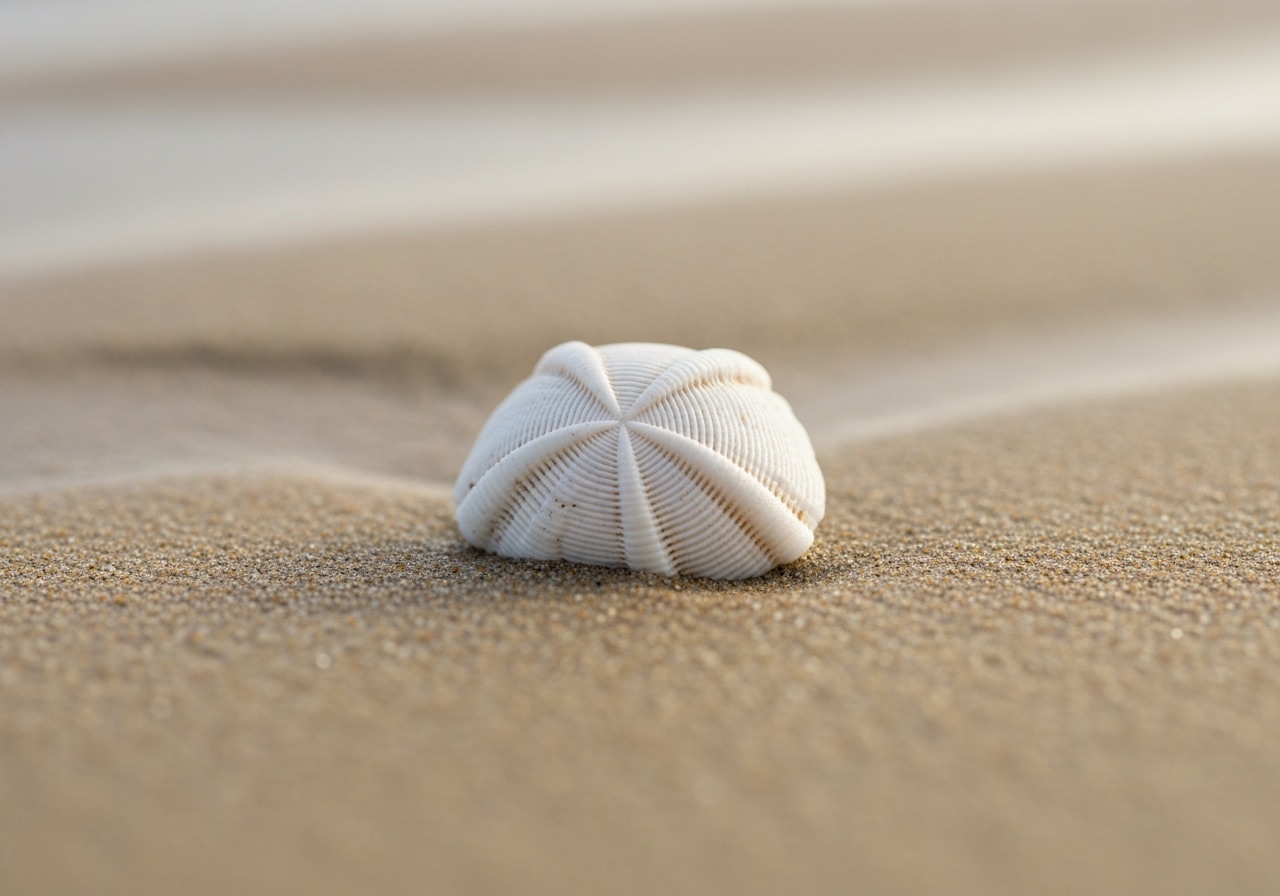
🐚 At a glance
- Scientific name
- Chione cancellata
- Size
- Small — usually about 1 to 1½ in
- Tell-tale
- Sculpted lattice (cancellate) of crossing ribs; often purple-tinged inside
- Status
- One of the most common SW Florida clams
- Rule
- Empty shells only in Collier & Lee
How to identify a cross-barred venus
This is a chunky, thick little clam shaped like a rounded triangle, usually gray-white or tan on the outside and often tinted purple inside the margin. The signature is the sculpture: bold concentric growth ridges run one way while finer radiating ribs run the other, and where they cross they raise the surface into a neat lattice — the “cancellate” pattern that gives the species its name. It's sturdy, so whole valves survive the surf well and turn up in good numbers.
Because it's so common and so distinctive, it's a great anchor shell while you're still learning. Once you can pick a cross-barred venus out of a handful, telling apart the smoother sunray venus or the colorful coquina gets a lot easier.
Let your fingertips do the ID
Here's the local trick: don't just look, feel. Close your eyes and run a thumbnail across the shell. The cross-barred venus has a distinct waffle grip, like fine corduroy crossed both ways, that you can identify in the dark. That texture-first habit is exactly how experienced shellers sort a fistful of clams fast, and it's why we hand kids a cross-barred venus first — it teaches the eye and the hand at the same time.
| Clam | Surface | Quick tell |
|---|---|---|
| Cross-barred venus | Lattice / waffle | Crossing ribs you can feel; purple inside margin |
| Sunray venus | Smooth, glossy | Elongated valve with violet-tan rays |
| Coquina | Smooth, tiny | Fingernail-size, every pastel color |
Where to find them
Cross-barred venus clams live in the shallow sandy and grassy bottoms all through our waters, so their empty valves wash up just about everywhere our captains go — Keewaydin, Kice and the sandbars of the Ten Thousand Islands. They're so abundant you'll fill your hand without trying, which makes them perfect for practicing your ID before you go hunting the showpieces on our shelling tours. Empty shells only, as always in Collier County — check that nothing's living inside.
From the Helm: Digging the Shoal Edge Inside Caxambas Pass for Cross-Barred Venus Clams
Cross-barred venus clams turn up thick in the loose shell hash at the shoal edge just inside Caxambas Pass, so instead of walking the open beach we like to nose the boat up to that edge and work the wet sand there on a falling tide, when the last few inches of water are sliding off the shoal and leaving a firm, workable strip of shell hash behind. That inside edge holds more shell than the pass’s open mouth does, since the current slows down right where the shoal breaks the flow, dropping shell and sand together instead of sweeping everything straight out to the Gulf.
We carry a small hand rake for this stop, working just the top inch of loose shell hash rather than digging down into packed sand where a live clam might still be sitting. A light rake pass turns up empty shell quickly without disturbing anything still buried and working, and it’s gentle enough that even a first-timer can sift through hash without crushing a find before they’ve even seen it.
Fresh ones have a waffle texture you can feel like corduroy under a fingertip — the raised growth lines crossing those fine radiating ribs stay sharp right after the shell’s been sitting in place. Give one a season of tumbling in the pass current, though, and that same texture wears down to a soft nap, still patterned but blunted, the way a rope goes fuzzy with age. We’ll have guests close their eyes and feel the difference between a crisp one and a worn one before they ever look at either.
If the shoal edge is running soft and silty after a heavy rain, we’ll move a little further into the pass to firmer sand near the channel marker, since this hash needs enough current to keep the bottom from turning to mud. Firm sand with a little shell hash mixed in is the read we’re looking for before we ever drop the rake.
We let guests take a turn with the rake themselves once we’ve shown the motion — a short, shallow pull rather than a deep scoop, since forcing the rake down into packed sand does more harm than good. Most people find their rhythm within a few passes, and there’s a real moment of satisfaction the first time someone feels shell hash catch on the tines instead of just sand sliding through. It’s one of the more hands-on stops we run, and kids especially like having a job to do at the rail instead of just watching.
This is one of the easier stops to fold into a shelling tour heading toward the islands, since Caxambas Pass sits right along most of our regular routes anyway. It pairs naturally with a stop for common nutmeg shells further along the same run, since both reward a slow hand more than a long walk.