
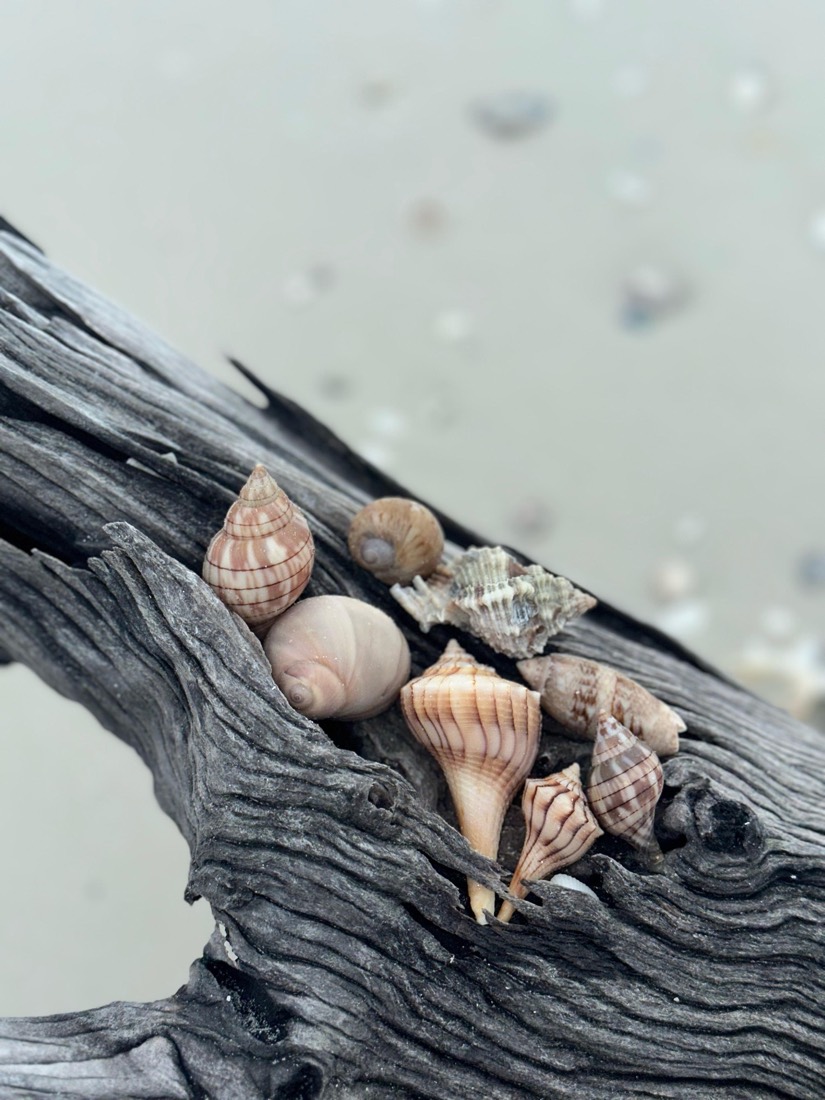
🐚 At a glance
- Scientific name
- Hexaplex fulvescens
- Size
- Up to ~7 in — the largest murex in the western Atlantic
- Tell-tale
- Heavy shell, blunt knobby spine rows, aperture flushed orange-pink
- Where & when
- Outer bars off Cape Romano & Kice Island, after strong fronts or storms rework the bottom
- Compare to
- Dwarfs the apple murex (~2-3 in) and lace murex (~2 in)
- Rule
- Empty shells only in Collier & Lee
What Is a Giant Eastern Murex?
Pick up a Gulf of Mexico murex big enough to need both hands, and you're very likely holding a giant eastern murex — Hexaplex fulvescens, the largest murex species in the western Atlantic. It's a predatory sea snail, not a filter feeder, which means the animal itself hunts down clams and other bivalves, works a hole or forces the two valves apart, and feeds on the soft body inside. That's a job better suited to deeper water than a wave-washed beach, and it's exactly where you'll find the giant eastern murex living — on sandy and muddy bottoms out past where most people ever wade or snorkel. Compare that offshore lifestyle to the apple murex and lace murex, two smaller Gulf cousins you may already have in a shell box from a morning on Keewaydin or Kice, and the giant eastern murex starts to look like the family's heavyweight: bigger shell, thicker walls, blunter armor, and a much harder shell to find intact on the sand. Our seashell guide covers the full run of Gulf species you're likely to meet on a Marco Island beach, but this one is the trophy tier.
How to Identify a Giant Eastern Murex Shell
A giant eastern murex shell is hard to mistake once you've handled a few smaller murexes. The exterior runs dirty white to grayish tan, sometimes with faint brown mottling, and the shell itself is genuinely heavy for its size — pick one up and the weight alone tells you it's not an apple murex. Look for several rows of blunt, knobby spines that spiral around the body whorl. Unlike the frilly, paper-thin fronds on a lace murex, these are stout and rounded, built more like knuckles than fins. A full-grown specimen can reach roughly 7 inches, making it the biggest murex in the western Atlantic and a shell that dwarfs almost everything else in a typical shelling bucket. Turn the shell over and check the aperture, the opening where the animal once lived. On a giant eastern murex it's often flushed with a warm wash of color, anywhere from pale salmon to deeper orange, a nice contrast against the chalky exterior and one of the fastest ways to confirm the ID. The siphonal canal, that narrow spout at the base of the shell, runs long and slightly curved, another holdover from a life spent digging and hunting on the bottom.
Why Does It Have Those Blunt Spines?
Every knob and ridge on a murex shell has a job. Marine biologists generally treat those spiny rows as a defense against crabs and other shell-crushing predators: a spiky, irregular profile is simply harder to get a grip on than a smooth one, and a thick shell wall backs that up with sheer bulk. The giant eastern murex takes that strategy about as far as it goes in Gulf waters, building shell material that's noticeably thicker and heavier than an apple murex or lace murex of the same age. There's a growth story here too. Murex shells build outward in stages called varices, each one a pause in growth where the snail thickened its outer lip before pushing forward again, and the spine rows mark those pauses much like growth rings on a tree. Count the varices on a giant eastern murex and you're looking at a rough timeline of a life spent almost entirely offshore, out of sight, which is exactly why an intact one on the beach feels like such a find.
How It Compares to the Apple Murex and Lace Murex
Size is the fastest way to sort a giant eastern murex from its Gulf relatives, but the spines and color finish the job. The apple murex stays compact and round, with short, evenly spaced spines and warm brown banding. The lace murex earns its name from delicate, almost lacy fronds that look more decorative than defensive. The giant eastern murex leaves both behind: bigger, heavier, and armored with blunt knobs instead of frills or fronds.
| Species | Typical size | Spines | Color |
|---|---|---|---|
| Giant eastern murex | Up to ~7 in | Blunt, knobby rows | Dirty white/tan, aperture flushed orange-pink |
| Apple murex | ~2-3 in | Short, even spines | Warm brown banding |
| Lace murex | ~2 in | Delicate, lacy fronds | Pale gray-white |
Where and When It Turns Up on Southwest Florida Beaches
The giant eastern murex isn't a shell you plan a trip around finding — it's one you get lucky on. Because the animal lives offshore on sand and mud bottoms rather than in the intertidal zone, an intact shell only reaches the beach when something big enough to move the bottom does the work for you: a strong winter cold front pushing a hard northwest wind, or the aftermath of a tropical system. When that happens, our captains keep an eye on the outer bars off Cape Romano and the boat-only stretches around Kice Island, where deeper Gulf water meets shallow sand and storm-tossed shells pile up along with everything else the front dragged in. That makes a giant eastern murex a genuine storm-week trophy rather than an everyday pickup. If you find a whole one, especially with the spines still intact, you've beaten real odds. For a broader rundown of what else counts as a genuine rarity out here, our rare Southwest Florida shells guide puts the giant eastern murex in context with junonias, lion's paws and the other shells serious collectors chase. And as always in Collier and Lee County, the rule is empty shells only: if there's still an animal living inside, it goes back in the water, no exceptions. The best way to actually reach these outer bars is by boat; wading distance from a public beach access rarely gets you anywhere close to where a giant eastern murex washes up. Book a spot on one of our shelling tours and let a captain who reads these bars for a living put you on the best boat-only islands the tide has just refilled, then check the shelling beaches guide for what else typically turns up alongside it.